


Finding Land For Sale: A Guide to Smart Property Buying
Ross AmatoSo, you’re ready to find that perfect piece of land. It all starts with a search, but the secret isn't just typing "land for sale" into Google. The real key is blending a wide digital search with focused, local detective work. You’ll want to cast a big net online first, then zero in on the best spots using local resources. This approach ensures you find a property that truly fits your vision and budget.
Starting Your Search for the Perfect Land Parcel
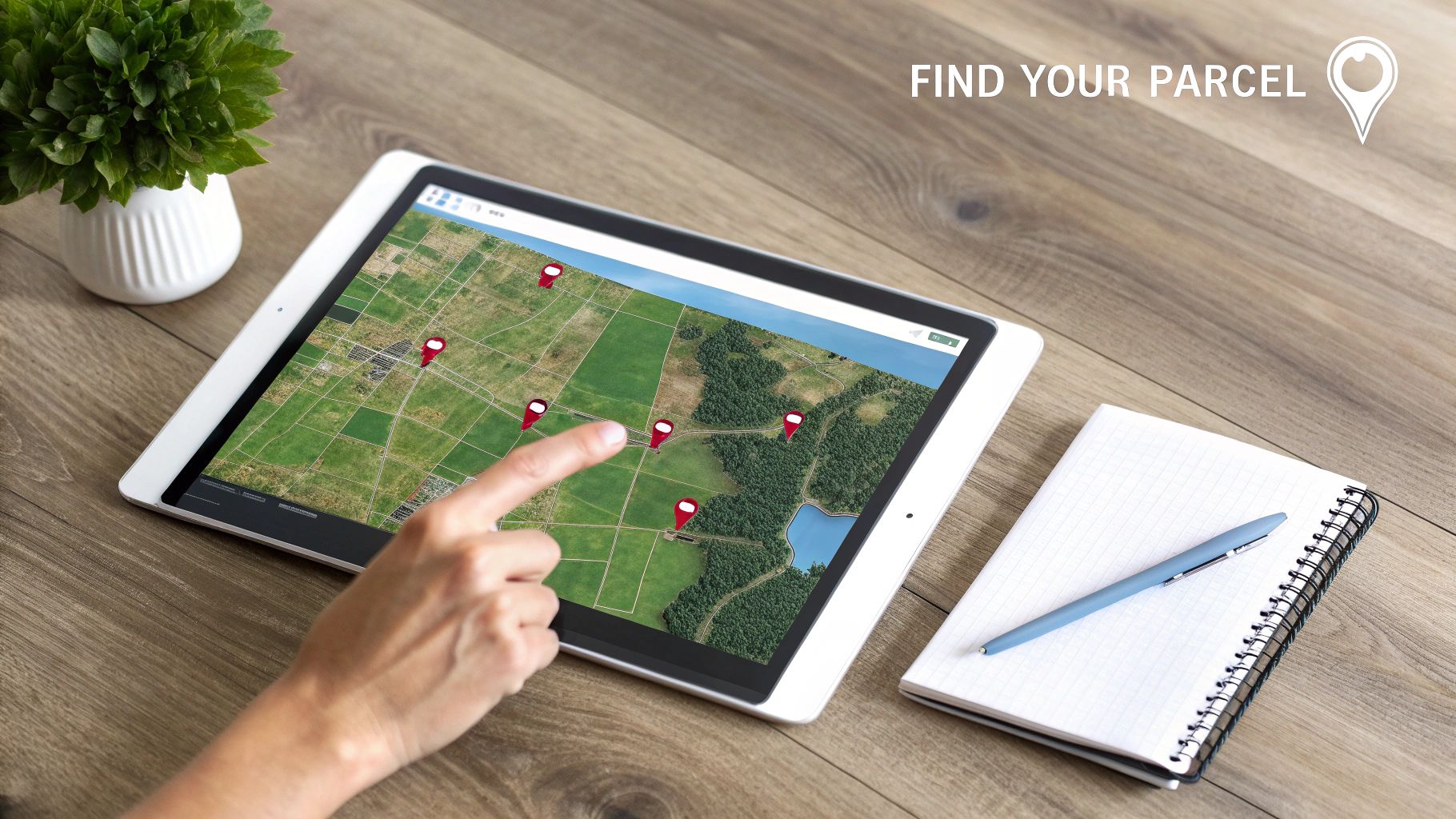
The journey to owning land can feel a little overwhelming at first, but a smart strategy makes it manageable, even if you’ve never done it before. Today’s market gives you more tools than ever, mixing powerful websites with timeless, on-the-ground research.
Your goal is to move from a vague idea—"I want to buy some land"—to a focused hunt for specific properties that fit your vision and your wallet. Think of it as a two-step dance: discovery, then verification.
Online Marketplaces: The Digital Starting Point
For most folks, the internet is ground zero. Online platforms and land-specific websites have completely changed the game, creating a huge, accessible marketplace. These sites list over 10 million global properties, which is a 15% jump from previous years, making that initial search a whole lot easier. You can dig into the numbers on the growing global property market on Grand View Research.
What makes these platforms so useful are their search filters. You can slice and dice the listings by:
- Location: State, county, or even down to the zip code.
- Acreage: From small half-acre lots to sprawling 40+ acre tracts.
- Price: Set your budget so you only see what you can comfortably afford.
- Financing: Specifically look for sellers offering owner financing.
Sellers like Dollar Land Store cut out the middleman by listing their own inventory with clear pricing and simple terms. This direct-to-buyer approach means you can skip the agents and browse properties right from your couch.
Offline Methods: Uncovering Local Opportunities
While online searching is a great first step, don’t sleep on the classic offline methods. This is where you can find hidden gems that never make it to the big websites.
A common mistake is relying only on national listing sites. Some of the best deals are found through local channels where there’s less competition and sellers might be more motivated to make a deal.
Try digging into these local resources:
- County Records: Head to the county assessor or clerk’s office. They can provide lists of tax-delinquent properties, which are often sold at auction for a fraction of their market value.
- Local Publications: Don't forget the small-town newspapers or community bulletin boards. You’ll sometimes find “for sale” ads from local owners who prefer to keep things simple.
- Driving for Dollars: It sounds simple, but just driving through an area you like can turn up “For Sale By Owner” signs on properties you won’t find anywhere online.
When you mix a broad digital search with focused local legwork, you build a powerful strategy that dramatically increases your odds of finding that perfect piece of land.
Comparing Online vs Offline Land Search Methods
Choosing where to focus your time can be tough. This table breaks down the main ways to find land for sale so you can decide what works best for you.
| Search Method | Best For | Pros | Cons |
|---|---|---|---|
| Online Marketplaces | Casting a wide net, comparing prices, and finding owner-financed deals quickly. | Huge selection, powerful filters, convenient, great for remote searching. | High competition, potential for outdated listings, less personal interaction. |
| Local Real Estate Agents | Buyers who need expert guidance and access to the local Multiple Listing Service (MLS). | Local market knowledge, negotiation support, access to exclusive listings. | Agent commissions can add to costs, may not focus on raw land. |
| County Records/Auctions | Finding motivated sellers and potentially securing land below market value. | Can uncover incredible deals, less competition than public sites. | Requires more research, process can be complex (auctions, tax liens). |
| "Driving for Dollars" | Discovering unlisted properties and getting a true feel for a specific area. | Finds off-market deals, allows for on-the-ground assessment. | Time-consuming, limited to a small geographic area, hit-or-miss. |
Ultimately, a blended approach is your best bet. Start online to get a feel for the market, then use offline methods to uncover opportunities others might miss.
How to Decode a Land Listing Like an Expert
A land listing is more than just a price and a pretty picture. Think of it as a puzzle—packed with clues about the property's real value and potential headaches. Learning to read between the lines is the first skill you need to develop, because it lets you spot the good ones and toss the bad ones without wasting your time.
The description is where the real story is. You have to learn to look past the flowery language about "stunning views" and zero in on the hard facts. A good, honest listing will be upfront about the most important details.
Key Details to Uncover
When you're scanning a listing, a few key terms should immediately jump out at you. These are the non-negotiables—the pieces of information you absolutely need to evaluate a property from your computer, long before you even think about driving out for a visit.
Here’s your initial checklist:
- Legal Access: Does the listing clearly state deeded access or road frontage? If not, you could be looking at a landlocked parcel, which means you can't get to it without crossing a neighbor's land. Be wary of vague phrases like "access nearby"—that’s a huge red flag.
- Zoning and Land Use: The listing should tell you the zoning. Is it Residential? Agricultural? Recreational? This single detail determines what you're legally allowed to do, from building a cabin to parking your RV.
- Parcel Number (APN): This is the property’s unique ID, often called the Assessor’s Parcel Number. With the APN, you can go straight to the county’s website and pull up official records, tax info, and satellite maps.
- Utilities: When it comes to raw land, always assume there are no utilities unless the listing says otherwise. A good seller will mention if power is at the lot line, if there’s a well, or if a septic system is needed. If you see nothing mentioned, you’re almost certainly starting from scratch.
A classic rookie mistake is seeing a dirt road on a map and assuming you have access. Always, always confirm the access is deeded and legally recorded. An informal path used for years means nothing if it’s not on paper.
Using Free Tools for Virtual Scouting
You don't need to be a surveyor to get a solid feel for a property these days. There are some fantastic free online tools that can save you countless hours and gas money by letting you do a "virtual visit" first.
Your first stop should be the county's Geographic Information System (GIS) map. Just search for "[County Name] GIS map" online. It’s an interactive map that overlays property lines, zoning districts, and even topography onto an aerial photo. It's an absolute goldmine of information.
Once you have the bird's-eye view, switch over to Google Earth for a 3D perspective. This is where you can really see the lay of the land. Is it on a steep hill? Is it covered in trees or is it a clear-cut lot? You can also spot potential issues that a flat photo would hide, like nearby floodplains or washouts. This digital legwork is a critical first step to finding a piece of land that actually works for you.
Your Essential Due Diligence Checklist Before Buying
Due diligence is, without a doubt, the most critical part of finding land for sale. This is where you roll up your sleeves and verify every single claim made in a listing. It’s your chance to uncover potential headaches and build real confidence before you put any money down. Skipping this is the quickest way to turn a dream property into a financial nightmare.
Think of it as your investigative work—the homework that ensures the land you’re buying is exactly what you think it is. It protects you from legal surprises, unexpected costs, and the disappointment of finding out you can’t use the land the way you planned.
The process isn’t complicated, but it does require attention to detail. You move from hopeful searcher to informed buyer. The infographic below lays out the basic flow from discovery to verification.
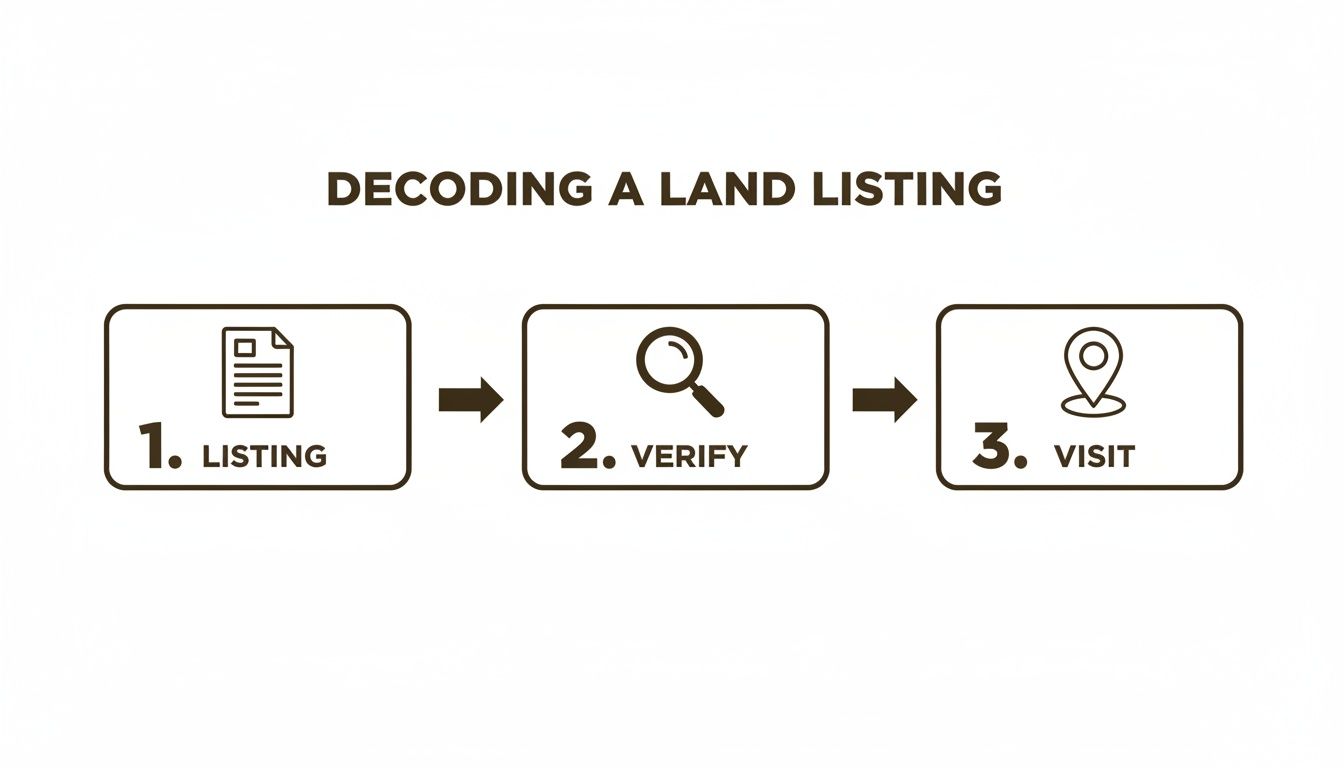
It’s a simple but powerful progression: start with the listing, verify everything with official sources, and then get your boots on the ground to confirm what you’ve learned.
Verify Title and Legal Access
First things first: you need to confirm the seller has a clear title. This means they legally own the property, have the undisputed right to sell it, and there are no outstanding liens or claims against it. A title search is absolutely essential here.
Next, you have to nail down that the property has deeded legal access. As we touched on earlier, a road on a map means nothing. The access has to be a recorded right-of-way that transfers with the land. Without it, your property is landlocked and practically worthless.
Investigate Zoning and Land Use Regulations
Never, ever take a listing’s description of permitted land use at face value. The only way to be certain is to call the county’s Planning and Zoning department yourself. Have the Assessor’s Parcel Number (APN) ready and ask them to confirm a few key things:
- Zoning Designation: Is it zoned for residential, agricultural, recreational, or something else entirely?
- Permitted Uses: Can you actually build a home, camp for more than a few days, or park an RV on the property?
- Building Restrictions: Are there minimum square footage requirements for a home? What about setback rules from the property lines?
A classic mistake is assuming rural land means no rules. Every county has its own set of regulations, and some can be surprisingly strict. A five-minute phone call can save you from years of frustration.
Conduct Environmental and Physical Checks
Once you’ve handled the legal side, it’s time to understand the land itself. A great first step is checking the FEMA flood maps online to make sure your dream spot isn’t in a high-risk flood zone.
A physical visit is non-negotiable. You need to walk the entire property to get a feel for its topography, check the soil quality, and spot any potential hazards like drainage issues or erosion. For a much deeper dive into what to look for when you're on-site, check out our guide on what to look for when buying land.
The market for rural land remains tight. The U.S. housing market recently hit a staggering value of $49.7 trillion, and as development expands, this has a direct impact on land sales. In a state like Montana, for example, only about 600,000 acres were listed for sale statewide, which has kept prices near historic highs. This kind of scarcity makes thorough due diligence even more important—it ensures you're making a sound investment. You can find more insights into these real estate trends over on Nuveen.com.
Budgeting Beyond the Land's Sticker Price

The listing price you see online? That's just the beginning of the story. Any experienced land buyer knows the true cost of ownership goes far beyond that number. Building a realistic budget from the start is what separates a happy land owner from someone who ends up stressed out and in over their head.
It’s easy to get excited about the land itself, but you have to think through the total financial commitment. This helps you avoid the classic mistake of becoming "land rich but cash poor." A solid budget should cover the initial purchase, all the recurring annual costs, and any future development you've got planned. Seeing the whole picture is key to a successful investment.
Factoring in Upfront and Closing Costs
Beyond your down payment, there are a handful of one-time costs that pop up during the purchase. While working directly with a seller like Dollar Land Store helps you sidestep agent commissions, some fees are just part of the process.
Here are a few common upfront costs to expect:
- Document or Closing Fee: This is a standard fee that covers the time and effort of preparing all the legal contracts and deeds.
- Title Search/Insurance: While it isn't always mandatory with cash or seller-financed deals, it's a smart investment. This ensures the title is clean and free of any hidden liens or claims.
- Surveying Costs: If the property lines aren't crystal clear, you may need a survey. Depending on the size and terrain of the parcel, this can run anywhere from $800 to over $5,000.
Ongoing and Future Expenses
Your financial planning doesn't end once you have the deed in hand. You also have to plan for the annual costs that come with owning raw land.
These recurring expenses usually include:
- Property Taxes: This is the big one—a non-negotiable annual expense. You can typically find the current tax amount right on the county assessor's website by looking up the property’s parcel number.
- POA/HOA Dues: If your land is part of a Property Owners' Association, you’ll have monthly or annual dues. These usually cover the maintenance of shared amenities like roads or common areas.
- Development Costs: Thinking of building a cabin, camping, or even just clearing a simple driveway? You'll need to budget for those future improvements. This could mean thousands for a well, a septic system, or running utility lines to your property.
The most overlooked expense is often the carrying costs while you're still in the planning phase. Remember, property taxes and any POA fees are due every single year, whether you've started building or not.
Figuring out your potential monthly payment is also a crucial step. Understanding how seller financing paves the road to land ownership can help you get a clear estimate. A quick calculation—factoring in the loan amount, interest rate, and term—will show you exactly how that piece of land fits into your monthly budget.
What This Means for Buyers
For a first-time land buyer, the process of finding and vetting a property can seem complex. The key takeaway is to be methodical. Start with a broad online search to understand the market, then use county records and virtual tools to narrow down your choices. Most importantly, never skip due diligence. A five-minute call to a county zoning office can save you from a major purchasing mistake.
Remember that the sticker price is only one part of the total cost. Factoring in property taxes, potential POA fees, and future development costs gives you a realistic financial picture. This disciplined approach empowers you to move forward confidently, knowing you’ve covered all your bases and are making a smart, informed investment.
Why Consider Dollar Land Store?
The seller you choose matters just as much as the land itself. When you’re hunting for a piece of raw land, especially for the first time, you need a partner who makes the process clear, simple, and accessible.
At Dollar Land Store, we are not a real estate agency; we are the direct seller. We own every parcel we list, which means you work directly with us—no middlemen, no agent commissions, and no complicated negotiations. Our entire business model is built to make land ownership straightforward and achievable for everyone.
We focus on removing the common roadblocks that prevent people from buying land:
- Affordable Land: We specialize in properties with low down payments and affordable monthly payments.
- Simple Owner Financing: We offer our own financing with no credit checks. We believe your financial past shouldn't prevent you from building your future.
- Transparent Terms: Every listing provides clear pricing, detailed property information, and exact terms upfront. There are no hidden fees or last-minute surprises.
- Fast Contract Setup: Because you deal directly with us, we handle all the paperwork through an efficient digital process. Most sales contracts are completed in just a few business days.
- Broad Inventory: We offer a wide selection of parcels across several states, including Arizona, Colorado, Nevada, and more.
Our goal is to provide a trustworthy and simple way to find and secure the right parcel, helping you achieve your land ownership dream with confidence and ease.
Next Steps on Your Path to Owning Land
You've got the roadmap, and now you know what to look for when finding land for sale. The next part is the most exciting: turning that knowledge into action. This isn't about making a giant, intimidating leap. It’s about taking small, practical steps that move you closer to your goal.
- Browse Available Parcels: Looking at listings is a no-pressure way to see what your budget gets you. You'll quickly get a feel for the market and, more importantly, start to recognize what a good, transparent property listing looks like.
- Learn About Seller Financing: Don't let financing stop you before you even begin. Exploring properties with owner financing can open up a world of possibilities that a traditional bank loan might shut down. This approach often means you don't need a perfect credit score or a massive down payment.
- Ask the Right Questions: A good, honest seller will always be ready to give you straight answers about the important stuff like legal access, zoning regulations, and the purchase process.
- Understand How to Evaluate a Parcel: Remember that you can do this without hiring an agent. For a more detailed breakdown, read our guide on how to buy land without a realtor.
Your path forward is clear. Start looking, get informed, and ask questions. Your piece of the American dream is waiting for you.
Conclusion
Finding the right piece of land for sale is an achievable goal when you combine modern online tools with classic, on-the-ground research. The keys to success are a systematic approach, thorough due diligence, and a realistic budget that accounts for all costs. By understanding how to decode listings, verify property details with county officials, and partner with a transparent seller, you can navigate the process with confidence. Take the first step today by exploring your options and moving closer to owning your perfect parcel of land.
Ready to find your property? Dollar Land Store makes it simple to browse affordable land with clear pricing and easy terms.
Explore seller-financed land options through Dollar Land Store.