

How to Buy Cheap Land: A Guide for First-Time Buyers
Ross AmatoBuying cheap land isn't a secret reserved for the wealthy. The strategy is simple: look where others aren't and be prepared to act when you find the right parcel. The key is knowing how to identify rural areas with potential, work with sellers directly, and understand the difference between a low price and genuine value.
For first-time buyers, this process is far more achievable than most people realize. This guide will walk you through the essential steps, from finding affordable properties to securing them with straightforward financing, so you can make a confident and informed purchase.
Why Buying Affordable Land Is More Realistic Than You Think
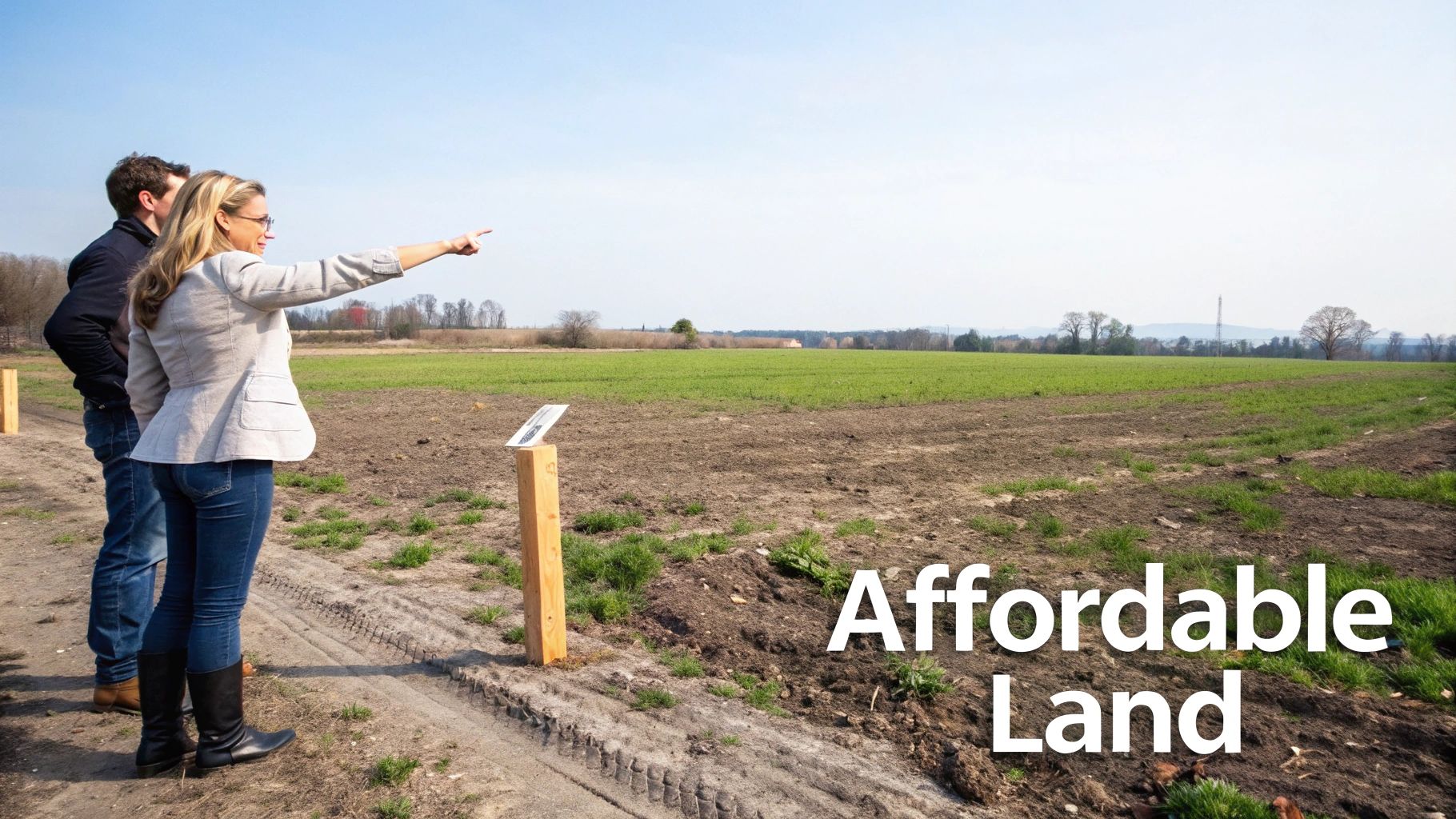
Let's clear up a common misconception: you do not have to be rich to own land. Vast stretches of the United States, particularly in rural and less-developed regions, are filled with incredible opportunities for everyday people and first-time buyers. All it takes is learning where and how to look.
The secret to buying "cheap" land isn't about compromising on quality. It's about understanding how land markets operate. Prices can vary dramatically from one state to another, and even between adjacent counties. For example, a five-acre parcel in a remote part of Nevada might cost significantly less than a small lot near a major city.
This creates a substantial opportunity for buyers willing to explore off the beaten path. These are often the exact kinds of properties perfect for a weekend getaway, a future off-grid homestead, or a solid long-term investment.
Where to Find America's Most Affordable Land
Finding affordable land requires a smart approach. Instead of focusing on popular, high-demand areas, successful buyers target states known for wide-open spaces and excellent value. Here is a look at some of the top states where your budget goes further.
| State | Typical Price Range Per Acre | Key Benefits |
|---|---|---|
| New Mexico | $500 - $3,000 | Expansive desert landscapes, low property taxes, minimal zoning restrictions. |
| Arizona | $1,000 - $5,000 | Sunny climate, ideal for off-grid living, diverse terrain from desert to mountains. |
| Nevada | $1,000 - $4,000 | Vast open spaces, recreational opportunities, growing renewable energy sector. |
| Colorado | $1,500 - $6,000 | Mountain views, four-season recreation, strong potential for long-term value. |
| Arkansas | $2,000 - $7,000 | Abundant water sources, lush forests, low cost of living and property taxes. |
Targeting these regions gives you a significant advantage. The entry costs are lower, there’s less competition from other buyers, and you often find fewer restrictions, giving you more freedom to use the land as you wish. Knowing where to look transforms your search from a hopeful browse into a targeted strategy. You might be surprised how low the cost of an acre of land can be when you focus on the right states.
What This Means for Buyers
For a first-time buyer, the path to land ownership is paved with knowledge, not a massive bank account. By understanding market trends, looking in less-obvious places, and being prepared to act, you can turn the dream of owning land into a reality. The secret isn't luck—it's having a clear strategy and knowing where to find accessible opportunities.
How to Find Hidden Land Deals Beyond Mainstream Listings

If you're hunting for cheap land, mainstream real estate sites like Zillow are often not the best place to start. They are primarily designed for residential homes, and the best raw land deals are rarely featured prominently. To find a quality parcel at a fair price, you need to know where the competition isn't looking.
This means exploring specialized online marketplaces, checking county records, and sometimes even contacting landowners directly. These channels are where you will find motivated sellers, more direct pricing, and far less noise from traditional homebuyers.
Master Specialized Land Marketplaces
The most efficient way to begin is by shifting your search to platforms that deal exclusively in vacant land. Unlike Zillow or Realtor.com, these sites are built for land buyers. They eliminate the residential clutter and provide the details that actually matter, such as acreage, zoning, access, and financing options.
Companies like Dollar Land Store cut out the middlemen entirely. We own every property we sell, which means you’re not dealing with agents or paying their commissions. This direct-to-buyer approach keeps the process simple and often results in more straightforward pricing.
When browsing these sites, use their filters to your advantage:
- Filter by state and county to focus on regions known for affordability.
- Set price alerts to receive notifications when a property in your budget is listed.
- Look for owner financing. This is a strong indicator that a property is accessible and affordable for a wide range of buyers.
By focusing on niche land-selling websites, you gain access to an inventory curated for buyers like you. These platforms often provide a more transparent and efficient path to ownership.
Uncover Opportunities in County Tax Sales
For the more adventurous buyer, monitoring county tax sales can be a rewarding strategy. When a landowner fails to pay property taxes for a specified period, the county can foreclose and auction the property to recover the owed amount.
You can find deeply discounted land this way, but this method requires significant homework and comes with risks. You are buying the property "as is," so you must perform thorough due diligence to check for liens, access issues, or other hidden problems before bidding.
To get started, search online for "[Your County Name] tax deed sale" or "county tax auction." Most counties post auction dates and property lists on their official websites.
Connect Directly with Landowners
Sometimes the best deal is one that isn't even on the market. Once you have identified an area you like, you can use the county’s online GIS (Geographic Information System) maps to find owner information for specific parcels of land.
This approach involves reaching out to landowners with a polite, simple letter to see if they might be interested in selling. Many people, especially those who inherited rural land they don’t use, are open to an offer but haven’t gone through the trouble of listing it. It takes patience, but connecting directly can lead to unique opportunities at a great price with zero competition.
Understanding Owner Financing for Accessible Land Ownership
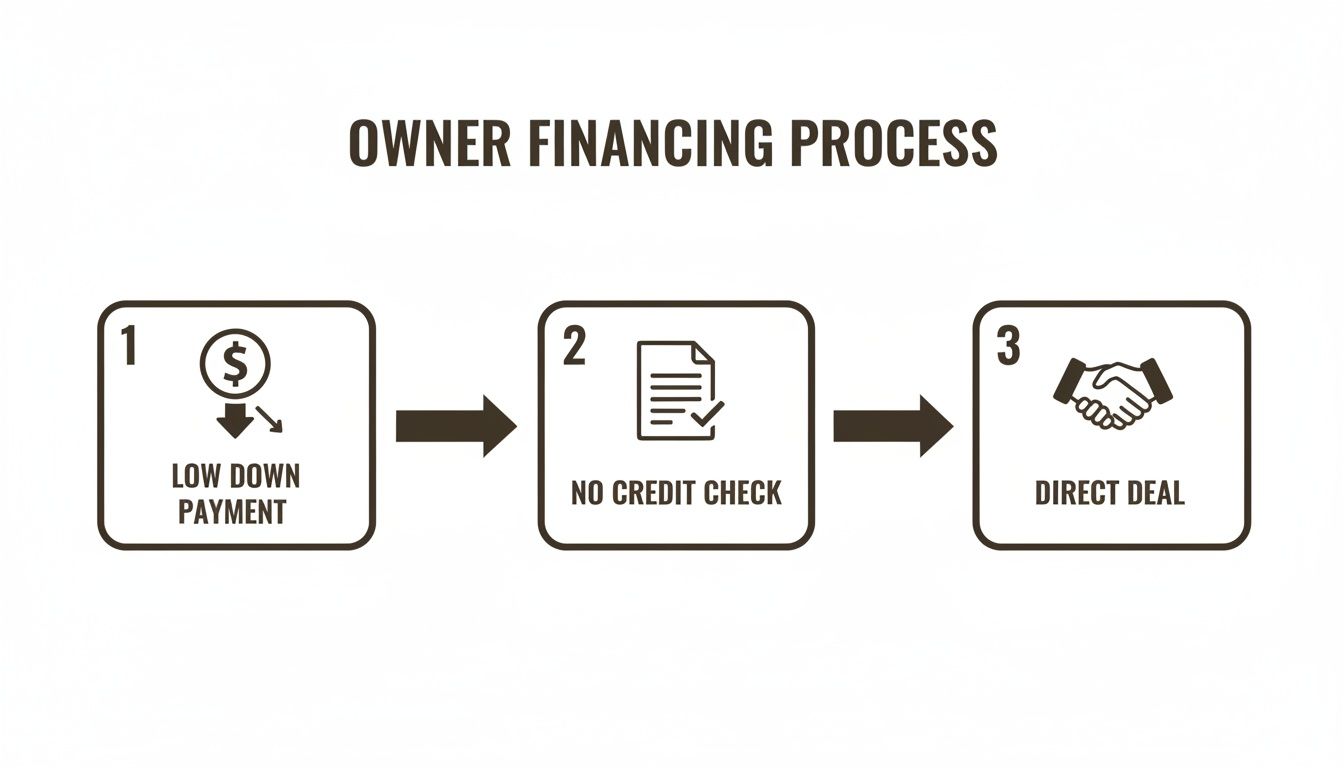
For a first-time land buyer, securing a traditional bank loan can be a major obstacle. Banks are often hesitant to finance raw land, typically demanding large down payments and excellent credit. This is where owner financing—also called seller financing—completely changes the game.
It’s a simple arrangement where the seller of the land also provides the financing. Instead of navigating the complex process of a bank loan, you make your payments directly to the seller until the property is paid off. This model removes middlemen like loan officers and underwriters, resulting in a much simpler, more direct path to owning land, especially for affordable rural properties.
How Owner Financing Works in Practice
The process is refreshingly straightforward. When you find a property with owner financing, the terms are usually laid out clearly in the listing. You’ll see the total price, the required down payment, the monthly payment amount, and the length of the loan term.
At Dollar Land Store, we have designed our process to be as accessible as possible:
- Low Down Payments: Many of our properties are available with a down payment as low as $1, plus a one-time document fee. This feature removes the single largest financial hurdle that prevents many people from buying land.
- No Credit Checks: We do not check your credit history. Our focus is on your ability to make the affordable monthly payments, not a score from a credit bureau.
- Simple Online Checkout: The entire purchase, from selecting your parcel to signing the contract, is handled online, making it as easy as any other online transaction.
Once you make the down payment and sign the land sale contract, the property is yours to use. You simply make your fixed monthly payments until the balance is paid in full. At that point, the seller records a deed in your name, and you officially have full ownership. To learn more, check out our in-depth guide on how owner financing for land works.
Key Terms You Need to Know
Understanding the language of a seller-financed deal will help you make a confident decision. While every agreement may have its own specifics, these are the core components you will always encounter:
- Principal: The total purchase price of the land after your down payment is subtracted. This is the actual amount you are financing.
- Interest Rate: The percentage charged on the remaining loan balance. With owner financing, these rates are almost always fixed, meaning your payment will never increase.
- Loan Term: This is the length of time you have to repay the loan, usually expressed in months or years. A longer term typically results in a lower monthly payment.
What This Means for Buyers
Owner financing is more than just a payment plan; it's a tool that opens the door to land ownership for people who are often excluded from the traditional banking system. It provides direct access to property deals without the usual financial scrutiny. Combining lower land prices in states like New Mexico or Nevada with an easy owner financing plan creates a powerful opportunity for anyone on a budget. It makes the dream of owning a piece of America not just possible, but practical and surprisingly affordable.
Your Essential Due Diligence Checklist for Raw Land
Finding a great parcel of affordable land is exciting, but the real work begins before you sign the contract. This is the due diligence phase, and it is non-negotiable. Rushing this step is the single biggest mistake first-time buyers make, but a simple checklist can save you from significant headaches down the road.
Think of it as your insurance policy for making a smart investment. The goal is to turn every assumption you have about the property into a verifiable fact. This process ensures that the cheap land you found is actually a quality asset you can use and enjoy.
Land Buyer's Due Diligence Checklist
| Checklist Item | What to Look For | Where to Find Information |
|---|---|---|
| Legal & Physical Access | Deeded access from a public road, recorded easements for private roads, and the physical condition of the road (paved, dirt, 4x4 only). | County Planning or Public Works Department; County Recorder's Office for easements. |
| Zoning & Land Use | The specific zoning code (e.g., Agricultural, Residential), rules on building, camping/RV use, and any CC&Rs (Covenants, Conditions & Restrictions). | County Planning and Zoning Department. |
| Utilities Availability | Proximity and cost to extend power lines, feasibility of drilling a well, and requirements for a septic system. | Local power company, state water resources department, county health department. |
| Title & Encumbrances | Any unpaid property taxes, liens from contractors or lenders, or other claims against the property. | County Treasurer’s Office (for taxes) and County Recorder's Office (for liens). |
Walking through this checklist methodically is the best way to protect your investment and ensure there are no expensive surprises waiting for you after the purchase.
Verifying Legal Access and Road Conditions
First on the list is legal and physical access. Just because you see a path on Google Maps doesn’t mean you have the legal right to use it. Many rural parcels are landlocked, surrounded by other private properties with no public road touching them.
Here's how to check:
- Confirm Legal Access: Call the county’s planning or public works department. Ask them to verify the property has deeded access from a publicly maintained road.
- Look for Easements: If the only access is via a private road crossing someone else's land, a legal easement must be recorded. This is a permanent right-of-way that ensures you can always get to your property.
- Evaluate Physical Access: If possible, visit the property. If not, use satellite views. Is it a smooth county road or a rough dirt track that requires a 4x4? A challenging road can add significant costs and complications.
Understanding Zoning and Land Use Restrictions
Zoning laws dictate exactly what you can and cannot do with your land. This is arguably the most critical part of your research, as it determines if your plans for the property are feasible.
Pro Tip: Never assume you can build a cabin or park your RV just because the land is in a rural area. Always verify the specific rules with the county's Planning and Zoning department.
Don’t hesitate to call them and ask direct questions:
- What is the exact zoning for this parcel? (e.g., Agricultural, Residential, Recreational)
- Are there any restrictions on camping or living in an RV? If so, for how long?
- What are the requirements for building a structure, like minimum lot size or setbacks?
- Are there any other county ordinances or neighborhood covenants (CC&Rs) I should know about?
Investigating Utilities and Water Sources
With raw, undeveloped land, utilities are almost never a given. Your job is to determine the cost and effort required to bring basic services to your property line.
- Electricity: Contact the local power utility. Ask if they service the area and what the cost would be to run lines to your property. This can range from a few thousand to tens of thousands of dollars.
- Water: In most rural locations, you will need to drill a well. Research local well-drilling costs and check with the state’s water resources department about permits.
- Sewer: A septic system is standard for most rural properties. The county health department can provide information on the requirements and costs for a percolation ("perc") test and septic system installation.
Remember to factor in other potential costs. For instance, if the land is heavily wooded, you'll need to consult a complete guide to land clearing to understand the process and budget accordingly.
Checking for Liens and Back Taxes
Finally, you need to ensure the property comes with a clean title. This means confirming there are no outstanding debts tied to the land that could become your problem.
A quick call to the County Treasurer’s Office will tell you if there are any unpaid property taxes. Next, check with the County Recorder’s Office to see if there are any liens or other claims on the property. A reputable seller like Dollar Land Store always guarantees a clear title, but developing this habit is a smart practice for any buyer.
Why Consider Dollar Land Store?
Trying to buy raw land can feel complicated, especially for first-time buyers. That's precisely why Dollar Land Store was founded. Our mission is to make owning a piece of America simple, affordable, and completely transparent.
We are not a traditional real estate agency. We streamline the process by purchasing large tracts of rural land and then selling smaller, more manageable parcels directly to buyers. This model eliminates real estate agent commissions, stressful bank approvals, and complex paperwork. The result is lower costs and a much faster, easier path to land ownership.
A Straightforward Path to Ownership
One of the biggest roadblocks to buying land is financing. Most banks are not interested in lending for raw land, and when they are, they often require a massive down payment and a perfect credit score. We removed that hurdle with our simple owner-financing program.
This isn't a typical loan. We designed it from the ground up to be accessible for everyone. Here’s what makes it different:
- No Credit Checks: Your credit history doesn't matter to us. We believe everyone deserves the opportunity to own land.
- Low Down Payments: You can secure your property with a down payment as low as $1, plus a one-time document preparation fee. This removes the single biggest financial barrier most buyers face.
- Affordable Monthly Payments: We structure our financing with monthly payments that fit a real-world budget, making it a smart investment in your future without straining your finances today.
- Broad Inventory: We are always adding new properties across desirable states like Arizona, Colorado, and Nevada. Our inventory offers something for everyone, whether you’re looking for a recreational escape, a long-term investment, or a future homestead.
- No Middlemen: You deal directly with us, the owner of the property, from start to finish.
Transparency and Trust
Buying land should be an exciting experience, not a stressful one. We built our entire process around this belief. Every property listing on our website provides the essential details upfront, including GPS coordinates, zoning information, and crystal-clear financing terms.
When you buy from Dollar Land Store, you're dealing directly with the owner. We personally guarantee a free and clear title for every parcel we sell, meaning no hidden liens or surprise back taxes to worry about. For anyone looking for a simple, honest, and affordable way to buy cheap land, working with a reputable direct seller is a logical choice.
Your Next Steps: From Contract to Deed
You’ve done the research, found the perfect piece of land, and are ready to make it yours. This final stage is often much simpler when buying directly from a seller compared to a traditional real estate closing.
The Land Sale Contract
The first official step is signing the land sale contract. This legal agreement outlines all the terms in black and white. With a direct seller like Dollar Land Store, this is handled electronically for simplicity. The contract will clearly state:
- Total Purchase Price: The final, agreed-upon cost.
- Financing Terms: Your down payment, fixed monthly payment, interest rate, and the total number of payments.
- Property Details: The legal description and the Assessor’s Parcel Number (APN).
- Buyer and Seller Info: Your legal name and the seller's information.
Because you aren’t dealing with a bank, the terms are straightforward, with no complex clauses or hidden fees.
The Deed Recording Process
After you make your final payment, the property officially becomes yours. The seller will prepare and sign a deed—the legal document that transfers ownership to you.
That deed is then sent to the county recorder's office to be officially recorded in the public records. This step makes your ownership legally recognized. Once it's recorded, the county will mail the original deed directly to you. Keep this important document in a safe place.
You're a Landowner! Now What?
Congratulations! Your primary responsibility now is managing your new asset. The main task is paying the annual property taxes directly to the county treasurer’s office, which are typically low for vacant rural land.
Beyond taxes, your next steps depend on your goals:
- For Recreation: You can start using the land for camping or hiking right away, always following local county rules.
- For a Home: Begin the process of obtaining building permits, consulting with architects, and planning for utilities like a well and septic system.
- For Investment: You can simply hold onto the land as it appreciates in value. For investors, understanding the rules and benefits of a 1031 exchange can be a great way to defer capital gains when you decide to sell or trade up.
Conclusion
Buying cheap land is an achievable goal for anyone willing to learn the process. The keys to success are looking in the right places, understanding the power of owner financing, and performing thorough due diligence. By focusing on states with affordable land, leveraging specialized marketplaces, and working with a trustworthy direct seller, you can bypass the traditional barriers and make your dream of land ownership a reality. Before you dismiss the idea of property ownership entirely, take the time to understand how to buy cheap land directly from specialized sellers.
Ready to take the next step?
- Browse available parcels to see what's currently on the market.
- Learn more about seller financing to understand how easy it can be.
- Contact Dollar Land Store with any questions you have about buying raw land.
Take a look at our current listings and see how simple it is to get started. Find your perfect piece of land today at Dollar Land Store.