


Finding the Cheapest States to Buy Land
Ross AmatoFor many people, the dream of owning a piece of land can feel out of reach. However, finding an affordable parcel is entirely possible if you know where to look. Some of the cheapest states to buy land are in the American West—states like Arizona, New Mexico, and Colorado—where wide-open, undeveloped land is still available for everyday buyers.
Your Search for Affordable Land Starts Here
The process of buying land can seem intimidating, especially for first-time buyers. High prices in competitive markets and complex steps often feel designed for experienced investors. This guide is intended to cut through the confusion and provide a simple, practical roadmap.
Our goal is to help you move from dreaming about land to confidently finding and purchasing it. We will explore the states where your budget stretches furthest, explain the factors that drive land prices, and outline straightforward ways to finance a purchase—often without needing a traditional bank loan.
Understanding the Opportunity in Affordable Land
Buying land in a less expensive state is about recognizing a different kind of opportunity. For what you might pay for a small suburban lot, you could own acreage for various purposes:
- A Recreational Getaway: A private spot for camping, hunting, or escaping the city.
- A Long-Term Investment: Land is a tangible asset that can be held for the future.
- Off-Grid Living: A blank canvas for a self-sufficient homestead or a simple cabin.
- A Lasting Legacy: A piece of property to pass down through generations.
This approach puts you in control, allowing you to enter the property market on your own terms. For a deeper look at the fundamentals, check out our guide to finding cheap rural land for sale. Throughout this article, we’ll provide the knowledge you need to identify a good value and make an informed purchase.
What Really Drives the Cost of Land
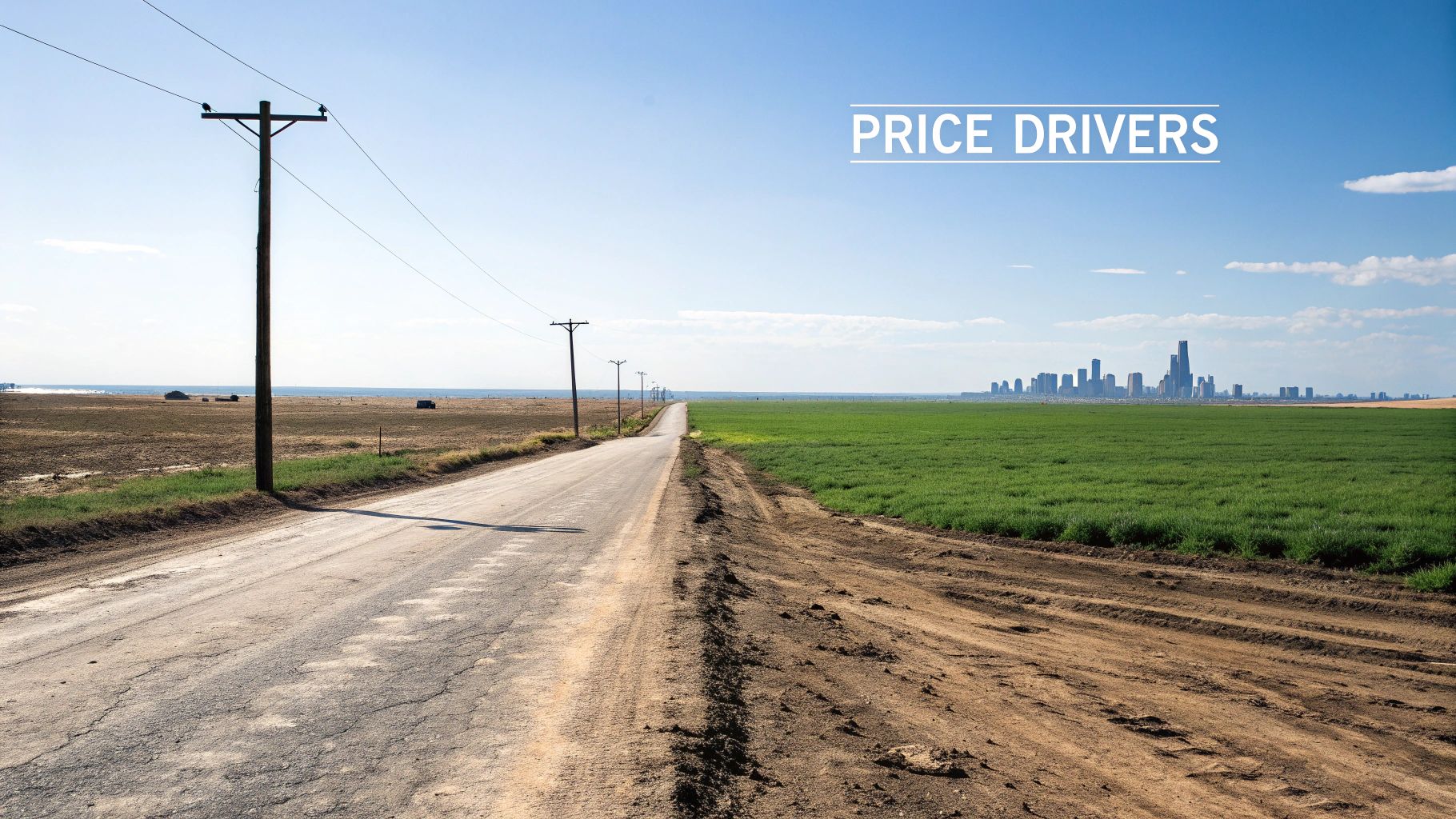
Have you ever wondered why two five-acre parcels can have vastly different prices? The answer is rarely about state lines. Instead, a handful of key factors determine land value, and understanding them is crucial for any buyer. Once you know what to look for, you can spot a genuinely good deal.
The price of land reflects its location, accessibility, and permitted uses. A property’s value is tied to its features and what you can do with it, much like any other asset.
Location and Proximity to Development
The single biggest factor in land cost is its proximity to population centers. A parcel just 30 minutes from a growing town will almost always be more expensive than a similar one three hours from the nearest city. This is a matter of supply and demand.
As towns expand, the demand for outlying land increases, driving up prices. Land closer to amenities like grocery stores, hospitals, and schools is more desirable. In contrast, remote rural land is affordable precisely because it is removed from this urban pressure.
Access and Infrastructure
How you get to your property—and what is available when you arrive—are critical components of its value. First-time buyers must investigate these two factors carefully.
- Road Access: Does the property front a paved, county-maintained road, or is it reached via a primitive dirt trail requiring a 4x4 vehicle? Legal access and physical access are not the same. Deeded, year-round access adds significant value, whereas remote parcels are typically more affordable.
- Utilities: The availability of public utilities like electricity, city water, and sewer systems is a major price driver. Land without these services is often called raw land or undeveloped land and is significantly cheaper. The owner is responsible for installing their own systems, such as a well, septic system, or solar power.
A property's value is often a trade-off between convenience and cost. The more infrastructure in place, the higher the price. The fewer services available, the more affordable the land—and the more self-reliant the owner must be.
Zoning Regulations and Permitted Uses
What you can legally do with your land is dictated by local zoning ordinances. These rules, set at the county level, determine if a property can be used for residential, agricultural, recreational, or commercial purposes.
Parcels with few restrictions are often highly sought after. On the other hand, land zoned for a specific, limited use (such as agriculture only) may be less expensive. It is crucial to contact the local county planning and zoning department to verify the rules for any parcel you are considering. This step ensures the property aligns with your goals, whether that's building a cabin, parking an RV, or holding it as a long-term asset.
You can learn more by reading our full guide on how much an acre of land costs and the factors that influence its price.
Where to Find the Cheapest Land in the U.S.
Now that we understand what drives land prices, let’s identify where to find value. The American West remains a region of wide-open spaces, and its sheer scale—combined with vast areas of public land—helps keep prices for private parcels lower than in the eastern states.
We will focus on three states that consistently offer excellent value for first-time buyers: Arizona, New Mexico, and Colorado. Each state provides a different environment, from sun-baked deserts to cool mountain settings.
Arizona: The Grand Canyon State
Arizona is a classic choice for affordable, remote land with dramatic scenery. The combination of abundant sunshine, low property taxes, and vast open landscapes makes it a popular destination for off-grid living, recreational use, and long-term land investment.
Its affordability is largely due to its massive size and the high percentage of government-owned land. This reduces competition for private land in rural counties, which helps keep prices stable. Counties like Mohave, Apache, and Navajo are well-known for having some of the lowest per-acre costs in the country. It is possible to find five-acre parcels here for a fraction of the cost of land in more developed areas.
For example, Arizona is a top choice for cheap land, particularly in the western part of the state where off-grid living is common. It is not unusual to see large desert lots listed for $500–$1,500 per acre. In very remote areas, parcels can be found for under $300 per acre. This is significantly less than the national average, a direct result of public lands (approximately 42% federal) influencing the market. You can find more insights and listings for markets like this at LandModo.com.
New Mexico: The Land of Enchantment
New Mexico offers a unique mix of culture, history, and raw natural beauty. For land buyers, it also has some of the most attractive prices in the nation, making it one of the cheapest states to buy land. The state has a low cost of living and some of the lowest property tax rates in the country.
The state’s affordability is rooted in its vast, sparsely populated high-desert terrain. In western and southern New Mexico—in counties like Valencia, Torrance, and Luna—you will find hotspots for inexpensive acreage. Land here is suitable for many uses, from a simple weekend camping spot to a self-sustaining homestead. The terrain is diverse, ranging from flat, buildable lots to rolling hills with sweeping mesa views.
Keep in mind that because New Mexico is less developed than its neighbors, rural infrastructure is limited. This is a primary reason prices are so low. You are trading convenience for affordability and tranquility. For those prepared for a more self-reliant lifestyle, the value here is undeniable.
Buyer Insight: In states like Arizona and New Mexico, "access" is a critical term. You must verify if a property has legal, deeded access or simply physical access via a dirt path that may cross other private properties. This information can be confirmed at the county recorder’s office and is a vital part of your due diligence.
Colorado: The Centennial State
When most people think of Colorado, they picture expensive ski towns and the growing cities along the Front Range. However, the rural southern part of the state is a different world. There, you can find surprisingly affordable land with classic mountain views, making it a serious contender if you want alpine scenery without a premium price tag.
Counties in the San Luis Valley, especially Costilla and Saguache, are known for having some of the most budget-friendly land in Colorado. This large high-altitude valley is surrounded by majestic mountain ranges and feels exceptionally peaceful and remote. Prices are low for a simple reason: it is a rural, agricultural area located far from the economic hubs of Denver and Colorado Springs.
Land in this region is often zoned for residential or agricultural use, providing flexibility for owners. Whether you are dreaming of a small cabin for weekend getaways or a larger homestead, Southern Colorado offers a rare opportunity to own a piece of the Rocky Mountains at an affordable price.
State-by-State Breakdown of Affordable Land Markets
To help you compare your options, here is a quick overview of these three states. This table highlights key information for first-time land buyers. Remember, these are approximate figures for rural, undeveloped land—prices can vary significantly based on the specific county and property features.
| State | Average Rural Acre Cost | Typical Property Tax Rate | Best For (Use Case) | Common Land Types |
|---|---|---|---|---|
| Arizona | $300 – $2,000 | Very Low (Avg. 0.60%) | Off-grid living, solar projects, RV/camping, long-term investment. | Desert parcels, scrubland with juniper trees, flat to rolling terrain. |
| New Mexico | $250 – $1,500 | Very Low (Avg. 0.76%) | Homesteading, recreational use, cultural exploration, quiet retreats. | High desert plains, sagebrush flats, lots with mesa views. |
| Colorado | $1,000 – $4,000 | Low (Avg. 0.49%) | Mountain getaways, cabin sites, seasonal recreation, ranching. | Alpine meadows, forested lots with pine and aspen, valley land. |
Disclaimer: The figures in this table are estimates for illustrative purposes. Actual costs and tax rates depend on the specific location and assessed value of the property. Buyers must verify all information with local county authorities.
Ultimately, the right state for you depends on your goals. Each of these locations offers a clear path to affordable land ownership, but the experience—the landscape, the lifestyle, and the culture—will be different. By understanding these regional characteristics, you can focus your search on the area that best fits your vision.
How to Afford Land Without a Bank Loan
Attempting to secure a traditional bank loan for raw land can be difficult. Banks often view undeveloped land as a speculative investment, leading to strict requirements, large down payments, and a slow approval process. This barrier prevents many people from owning property.
However, there is a simpler, more direct path to land ownership: seller financing.
What Is Seller Financing
Seller financing, also known as owner financing, is a straightforward arrangement. Instead of borrowing from a bank, you make payments directly to the land seller. The seller acts as the lender, which eliminates middlemen and the associated complexities.
This approach is common in the affordable land market because it benefits both parties. The seller can reach a broader pool of buyers, and the buyer gets a clear, manageable way to purchase property without needing a perfect credit score or a large amount of cash. You can learn more about owner-financed land and see how simple the process can be.
How Seller Financing Works in Practice
The process is designed to be simple and transparent. Once you and the seller agree on the price, you will establish payment terms, and everything is documented in a straightforward contract.
Here’s what makes seller financing appealing for many buyers:
- No Credit Checks: Your credit history is typically not a factor.
- Low Down Payments: You can often secure a property with a small initial payment.
- Fixed Monthly Payments: Your payments remain the same, making it easy to budget without surprises.
- Simple Contracts: The paperwork is far less complex than a traditional mortgage.
This chart provides a quick look at how affordable land can be in states where seller financing is a popular purchasing method.
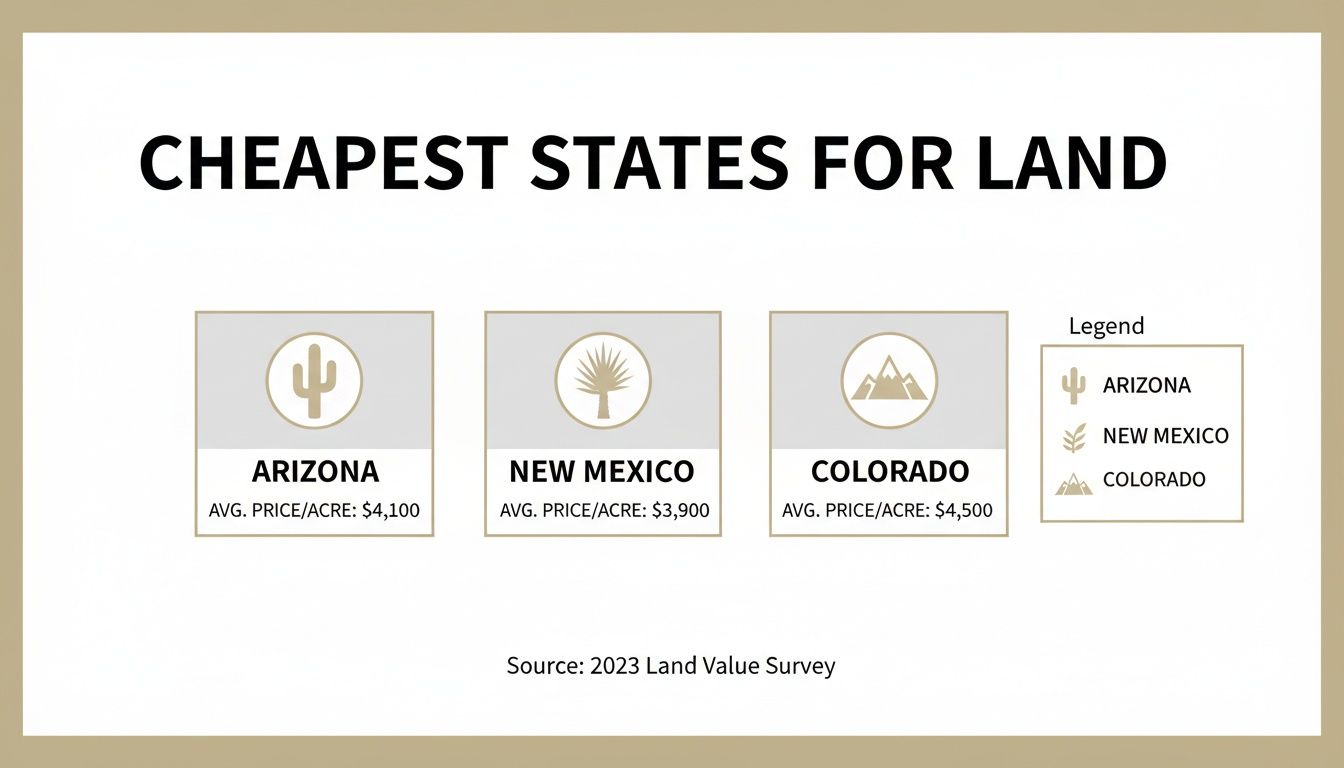
As you can see, states like Arizona, New Mexico, and Colorado have land prices that make ownership a real possibility, especially when you can bypass traditional lenders.
Here is a hypothetical example to illustrate how it works.
Illustrative Example:
Imagine you find a five-acre parcel listed for $5,000. With a seller financing agreement, your terms could be structured as follows:
- Down Payment: $250
- Monthly Payment: $150
- Loan Term: Approximately 32 months
In this scenario, you could become a landowner for a manageable initial outlay. You would make fixed monthly payments directly to the seller. Once the balance is paid, the deed is transferred to you, and you own the land free and clear. This approach opens the door to property ownership for individuals who may have thought it was out of reach.
What This Means for Buyers
Entering the world of affordable land requires a shift in mindset. When looking at the cheapest states to buy land, you are typically trading urban conveniences for space, freedom, and self-reliance. It is a rewarding path, but it places the responsibility for research squarely on your shoulders.
Unlike buying a home in a planned subdivision, purchasing raw rural land means you must perform due diligence. This is the most important concept for any new land buyer. It means it is your responsibility to contact the local county government and verify all critical details about a property before you complete the purchase.
Your Due Diligence Checklist
Before committing to a property, it is your job to contact county officials and confirm a few key items:
- Zoning Restrictions: What is the land officially approved for? Can you use it for camping, building a cabin, or parking an RV? Every county has its own set of rules.
- Legal Access: Does the property have a guaranteed, legal road or easement providing access? You need to ensure the path to your land is not an informal trail crossing someone else's private property.
- Utilities: What are the realistic options for water, power, and waste disposal? This involves researching the costs of drilling a well, conducting a percolation test for a septic system, or installing a solar power setup.
This is not meant to be intimidating—it is meant to be empowering. By taking these steps, you can avoid surprises and ensure the land you buy is a perfect fit for your plans. You can find more practical tips in our guide on the essentials of buying plots of land.
The low price of rural land often reflects the work you do yourself. The seller provides the property; you provide the vision and the verification. This hands-on approach is what makes ownership so accessible. This trade-off is a powerful opportunity. Affordable land offers a low-risk way to enter the property market. It can be a tangible asset for your future, a private escape, or the first step toward a more independent lifestyle.
Why Consider Dollar Land Store?
Purchasing land independently can feel overwhelming, especially for a first-time buyer. Dollar Land Store was founded to simplify the process and make owning a piece of the American West affordable and accessible.
Our entire approach is designed to remove common barriers. We specialize in undeveloped land in many of the most affordable states, such as Arizona and New Mexico. By selling directly to buyers, we eliminate the need for agents or brokers, keeping the process clean and straightforward.
A Simpler Path to Ownership
Our business is built on a few core principles to help new buyers succeed:
- Seller Financing for Everyone: We offer seller financing, often with no credit checks. This allows you to secure land with small, manageable monthly payments that fit your budget.
- Low Entry Cost: You can often get started with a small down payment and a one-time document fee, making land ownership more attainable.
- Transparent Terms: Every term is laid out in a simple, easy-to-read contract. You will know exactly what to expect from day one, with no confusing jargon or unexpected fees.
Our direct-to-buyer model focuses on clarity and simplicity. We aim to provide a self-service path to owning a real, tangible asset, putting you in control of the process from start to finish.
Take New Mexico, for example. It is consistently one of the cheapest states to buy land, making it an excellent starting point. You can find high-desert land in places like Luna County for as low as $200 per acre. What makes this even more interesting is that over 48% of New Mexico is federally owned, which means private parcels are a unique long-term asset.
For a deeper dive into which states offer the best value, The Land Geek offers some great insights on affordability across the country.
Buyer Guidance / Next Steps
Now that you have done the research, the idea of owning your own land may feel more tangible. The path from here to holding a deed is straightforward. It involves taking methodical, informed steps to turn your goal into a property you can call your own.
It all begins with one simple question: what is the purpose of this land? Is it a long-term investment to pass down? A weekend getaway for camping? Or the first step toward building a homestead? Knowing your "why" is the most important factor, as it will shape every decision you make.
Create a Practical Plan
Next, establish a budget. Determine what you can realistically afford, not just for the down payment but for the ongoing monthly payments. Having clarity on your finances keeps the process stress-free. Once you have your numbers, you can begin focusing on specific counties in the states we’ve discussed.
Take Colorado, for instance. The southern part of the state is one of the best places to find affordable land. You can find rural acreage in counties like Costilla and Saguache for as low as $680–$1,000 per acre, with averages around $1,600 per acre. That is a world away from the national average, and as this market update from FCS America shows, agricultural land values there have remained stable.
Take Action and Do Your Research
Once you have a target area in mind, it’s time to focus on the details. These final two steps are the most critical.
- Do Your Homework: Before becoming too attached to a property, call the county’s planning and zoning department. Ask them directly about road access, permitted land uses, and any existing restrictions. Verifying this information yourself is non-negotiable.
- Read the Fine Print: Review the property listing carefully. If you are considering seller financing, make sure you understand every part of the agreement—the down payment, the monthly payment, and the total price.
Following these simple, practical steps is how you move from thinking about owning land to making it a reality. It puts you in control and turns a distant possibility into your own property.
Conclusion
Finding affordable land is an achievable goal for those willing to look beyond crowded markets and embrace the opportunities in America's vast rural landscapes. States like Arizona, New Mexico, and Colorado offer some of the cheapest land in the country, providing a practical entry point into property ownership.
The key to a successful purchase is understanding that affordability often comes with a need for self-reliance and thorough due diligence. By researching zoning, access, and utilities yourself, you can make an informed decision with confidence. Methods like seller financing have made land more accessible than ever, removing traditional barriers like credit checks and large down payments. With the right knowledge and a clear plan, you can take the next step and secure your own piece of land.
Browse available land at DollarLandStore.com.