


Your Guide to Off Grid Power for Rural Land Ownership
Ross AmatoImagine owning a piece of land where you are your own power company. That’s the heart of off-grid power—a self-sufficient system completely disconnected from the utility grid. For anyone buying raw, undeveloped land, understanding off-grid power is often the key that unlocks a property's true potential, especially in rural areas where connecting to the public grid is either impossible or financially impractical.
This guide provides clear, fact-based information to help first-time and intermediate land buyers understand how off-grid power works, what to budget for, and how to evaluate a property for its energy potential.
What Off-Grid Power Means for Your Raw Land
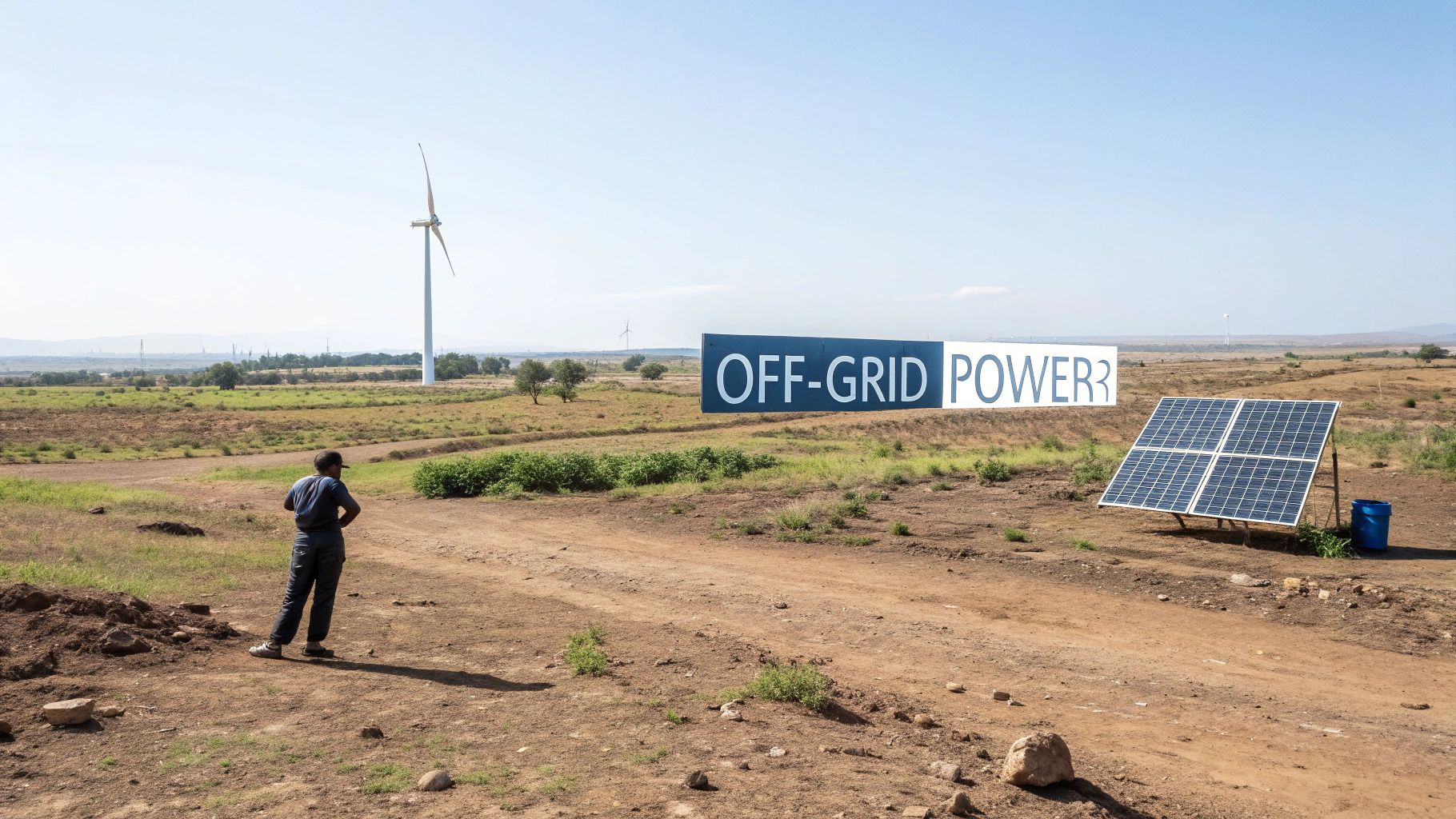
When you buy a parcel of raw land, especially in a rural location, it rarely comes with utilities already hooked up. An off-grid power system is your personal solution, allowing you to generate, store, and use your own electricity without ever receiving a bill from a power company.
Think of it as your own miniature power plant, built specifically for your property and tailored to your needs.
This isn’t just a trendy concept; for many new landowners, it's a practical necessity. The global market for off-grid energy systems is expanding rapidly, fueled by people in remote areas who need reliable power where the traditional grid simply can't reach—a situation many rural land buyers know well.
The Core Idea of Energy Independence
At its core, going off-grid is about achieving energy independence. Instead of depending on a distant utility company, you are in complete control of your power. That freedom is a significant part of the appeal for anyone seeking a more self-reliant lifestyle, a topic we cover in our beginner's guide to off-grid living.
This movement is part of a larger trend toward achieving energy independence through renewable microgrids and a decentralized energy future, which means power is generated and managed locally, right where it’s needed.
The setup itself is straightforward and consists of a few key parts working together:
- Generation: This is how you create electricity. Solar panels are the most common, but wind turbines or small water-powered (micro-hydro) systems are also viable options.
- Storage: The sun doesn't shine at night, and the wind doesn't always blow. You need batteries to store the power you generate so you can use it anytime.
- Conversion & Use: The power stored in your batteries (Direct Current or DC) needs to be converted into the type of electricity your everyday appliances use (Alternating Current or AC). This is the job of an inverter.
To help you get familiar with the basic terminology, here’s a quick look at the essential parts of any off-grid system.
Key Off-Grid System Components at a Glance
| Component | Primary Function | Simple Analogy |
|---|---|---|
| Solar Panels / Turbine | Generates DC electricity from sunlight or wind. | The Engine. It creates the raw power for your system. |
| Charge Controller | Regulates power going from panels to the battery. | The Fuel Gauge. It prevents overcharging and damaging your battery storage. |
| Battery Bank | Stores the generated electricity for later use. | The Fuel Tank. It holds the energy you've collected for use at night or on cloudy days. |
| Inverter | Converts DC power from batteries to AC power. | The Refinery. It turns the stored energy into the usable electricity your home runs on. |
Understanding these components is the first step toward picturing how your own system would work on a piece of raw land.
Choosing Your Source for Off Grid Power Generation
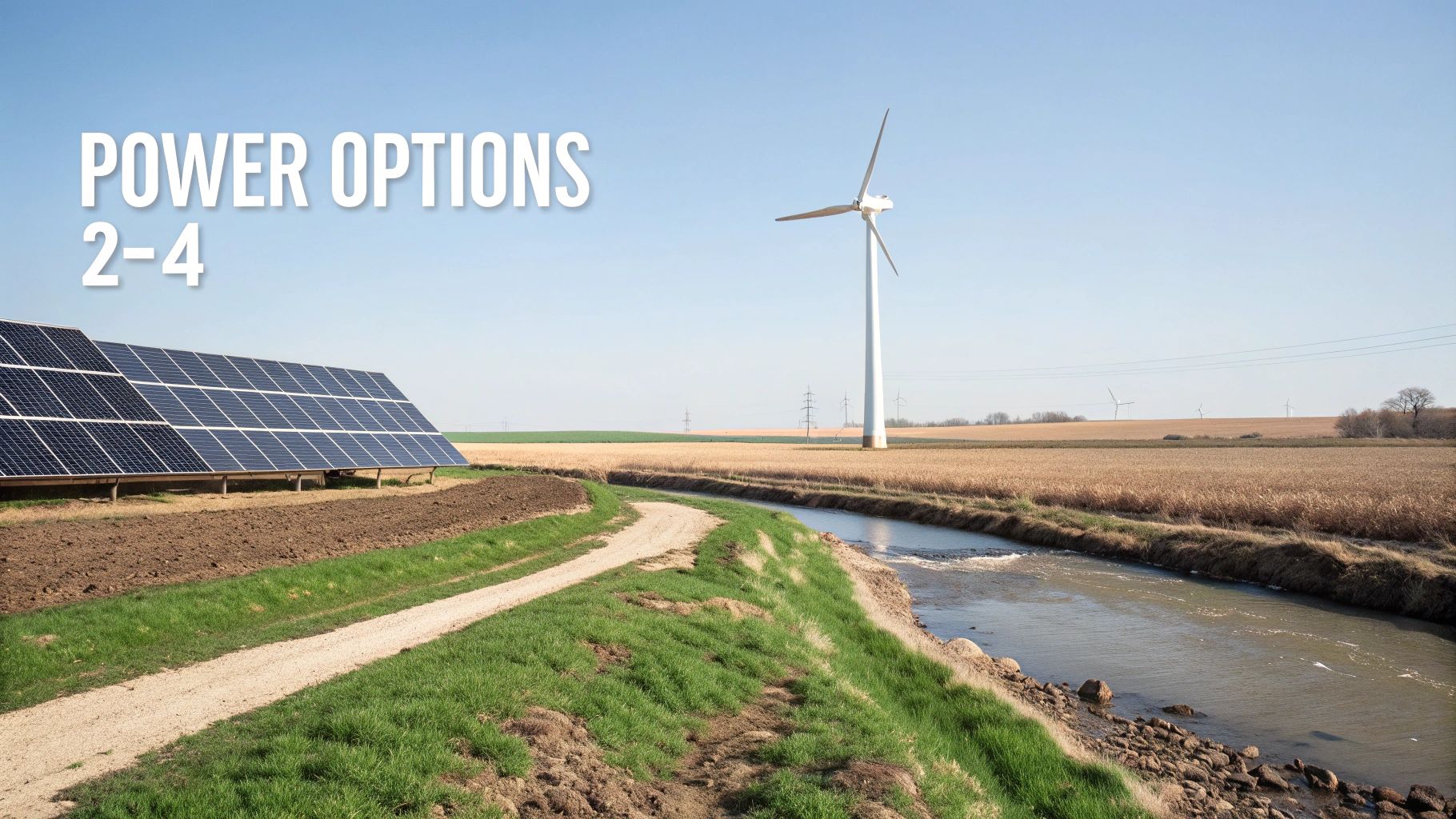
Once you understand the basic components, the big question becomes: where will your electricity come from? The best way to generate off-grid power depends entirely on the land itself. Your property’s location, climate, and unique features will point you toward the most reliable and effective method.
This isn’t about picking what’s most popular; it’s about matching the technology to your environment. A sun-drenched lot in Arizona has different potential than a windy plain in Colorado or a property with a year-round creek.
Solar Power: The Most Common Choice
For most people going off-grid, solar power is the answer. Using photovoltaic (PV) panels, it's a proven and reliable technology with no moving parts to break down. Modern panels are incredibly durable and often last over 25 years with minimal maintenance.
The concept is straightforward: solar panels absorb sunlight, converting it into direct current (DC) electricity that gets stored in your battery bank for later use.
Ideal Conditions: Solar is most effective in locations with abundant direct sunlight. A property with a clear, south-facing view, free from the shade of trees or hills, is a perfect candidate. Think Arizona, New Mexico, and Southern California.
One of the best things about solar is its scalability. You can start small with just enough panels for a weekend cabin and add more as your home or energy needs expand. This makes it a flexible choice for first-time land buyers building their dream property in phases.
Wind Power: Capturing Natural Movement
Wind turbines generate electricity by using wind to spin blades, which turn a rotor connected to a generator. While less common for smaller residential systems, wind can be an excellent primary or supplemental power source if your land has the right conditions.
A major advantage of wind is its ability to generate power 24 hours a day, including at night and on cloudy days—as long as the wind is blowing.
Pros and Cons of Wind Power
- Pro: Can produce power day and night, offering a more consistent energy source in windy locations.
- Pro: A single, well-placed turbine can have a high power output, potentially reducing the number of solar panels needed.
- Con: Requires consistent wind, typically averaging 9-10 mph or higher, which most locations do not have.
- Con: Turbines have moving parts that require more maintenance than solar panels and can be noisy.
Before investing in wind, a proper site assessment is crucial. This usually involves setting up an anemometer to measure wind speeds on your property over several months to determine its viability.
Micro-Hydro Power: The Constant Flow
If your land is fortunate enough to have a year-round stream or creek with a decent drop in elevation (known as "head"), a micro-hydro system could be the ultimate off-grid power solution. These systems divert a portion of the water flow through a pipe, which spins a small turbine and generates electricity around the clock.
Micro-hydro is the most consistent renewable option, producing power 24/7, regardless of weather. A well-designed system can easily power a full-time home with very little environmental impact.
However, the requirements are very specific. You need a reliable water source that won’t freeze solid in winter, and you must have the legal rights to use that water for power generation, which can be complex depending on state and county water laws.
The Role of a Backup Generator
No matter which renewable path you choose—solar, wind, or hydro—a backup generator is a critical piece of equipment for any serious off-grid system. It acts as your insurance policy, ensuring you have electricity during long stretches of cloudy weather, when you need to perform maintenance, or if your energy use suddenly spikes.
Most off-grid homeowners opt for a propane or diesel generator wired to automatically start when the battery bank drops below a certain charge level. It provides the ultimate safety net, ensuring you are never left completely in the dark.
The Essential Hardware That Powers Your System
Generating your own electricity is the first step, but it’s only half the battle. To have reliable power day and night, you need a team of specialized components working together. This hardware manages, stores, and converts raw energy into the safe, stable power your home requires.
Understanding these core pieces demystifies an off-grid setup and gives you the confidence to evaluate an installer's quote. Think of this equipment as the brain and heart of your system—without it, all you have is unrealized potential.
Batteries: The Energy Bank
If solar panels are the power plant, your battery bank is the vault where you store that energy. This is arguably the most important part of a true off-grid system, as it’s what keeps your lights on after the sun sets or the wind dies down.
A good battery bank can hold enough energy to power your home through several cloudy days, providing a critical buffer and true energy independence. When you choose your batteries, you're investing in reliability and peace of mind.
The technology is advancing quickly. The global market for off-grid battery storage is projected to grow significantly, fueled by people seeking dependable power solutions. Discover more about the off-grid battery market's expansion to see how large this movement has become.
Charge Controllers: The System Guardian
The charge controller is the unsung hero of your power system. This device sits between your solar panels and your batteries, acting as a smart gatekeeper that manages the flow of electricity. Its primary job is to prevent your expensive batteries from overcharging.
Imagine filling a bucket with a high-pressure hose; without monitoring, it will overflow and waste water. A charge controller prevents this from happening to your batteries by sensing when they're full and slowing the electrical current to a trickle, preventing damage.
This device is non-negotiable. It dramatically extends the life of your batteries, protects your investment, and keeps your entire system running safely. A properly designed system must include one.
Inverters: The Power Converter
The power your panels generate and your batteries store is direct current (DC). However, almost everything in your home—from the coffee maker to the TV—runs on alternating current (AC). The inverter is the device that bridges this gap.
It "inverts" the DC power from your batteries into the standard 120-volt AC power that comes out of your wall outlets. The quality of your inverter directly impacts how well—and how long—your appliances will run.
There are two main types:
- Modified Sine Wave: These are less expensive and can work for simple applications like basic lighting. However, they can cause problems or even damage sensitive electronics like computers, modern refrigerators, and microwaves.
- Pure Sine Wave: This is the high-quality option. A pure sine wave inverter produces clean, stable electricity that is often better than what you get from the grid. For any serious off-grid home, a pure sine wave inverter is the only recommended choice.
Investing in quality hardware, especially batteries and a pure sine wave inverter, is the foundation of a successful off-grid life. Cutting corners here can lead to frustration, system failures, and damaged appliances.
Sizing Your System and Budgeting For The Costs
One of the first and most important steps in going off-grid is determining how much power you’ll actually need. Get this part wrong, and you could end up with an undersized system that can’t keep the lights on or an oversized system that costs thousands more than necessary.
The good news is that sizing your system is a straightforward process that starts with a simple "power audit."
How To Do a Quick Power Audit
A power audit is a detailed list of every device you plan to run on electricity. By adding up the energy consumption of everything from your well pump and refrigerator to your phone charger and lights, you get a clear picture of your daily power needs.
The goal is to calculate your total daily usage in watt-hours (Wh). This number is the foundation for your entire system design.
- List Everything: Mentally walk through your future home and list every device that will draw power.
- Find the Watts: Check the label on each appliance for its wattage. If you can’t find it, an online search for the model number usually provides the information.
- Estimate Daily Use: For each device, estimate how many hours a day it will run. Your refrigerator might cycle on and off for a total of 8 hours, while a TV might only be on for 3 hours.
- Do the Math: Multiply the device's watts by its hours of use. For example, a 100-watt TV running for 3 hours uses 300 Wh for the day.
- Add It All Up: Total the watt-hours for all your devices. This final number tells you how much power your system needs to generate and store every single day.
This simple flow—from generation to storage to use—is the core concept of off-grid power.
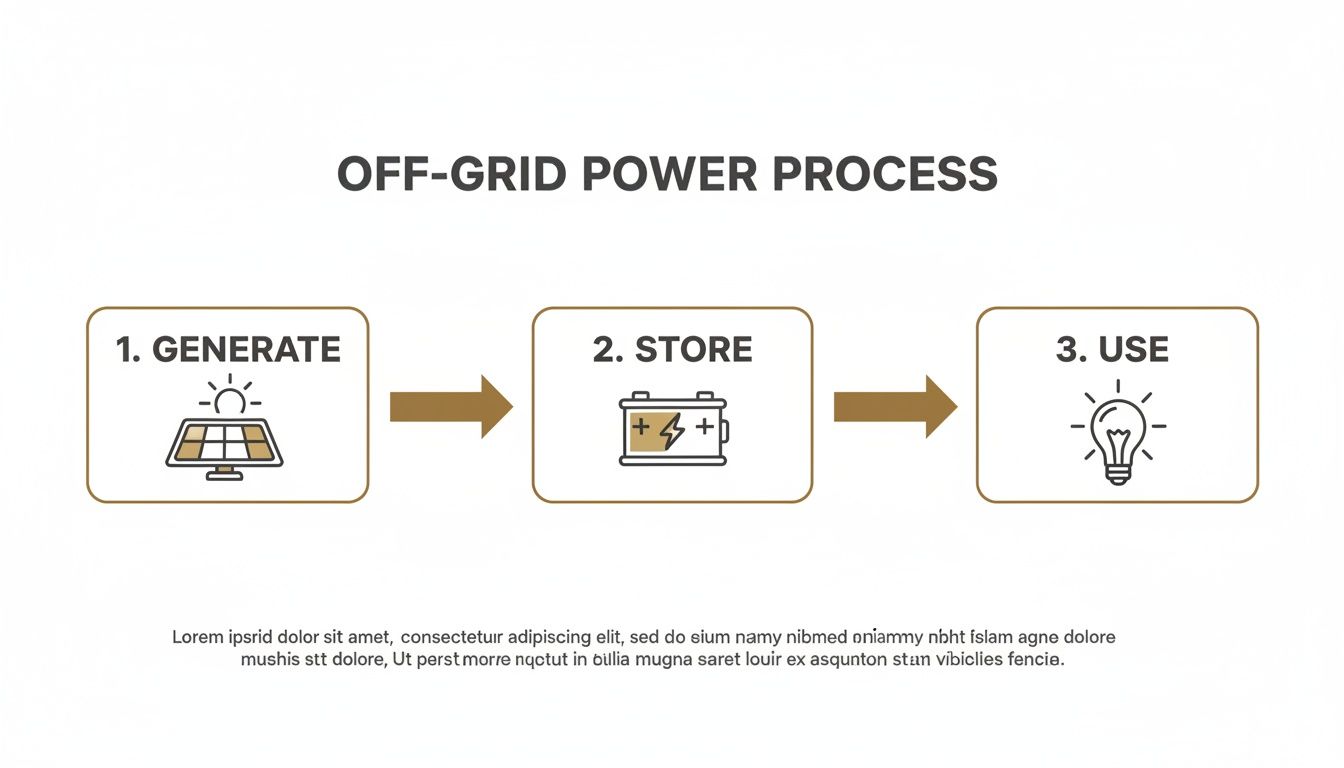
This process makes it clear: every watt you use must first be captured by your panels and saved in your batteries.
From Power Needs To A Real-World Budget
Once you know your daily watt-hour needs, you can begin to estimate the cost of a system. Prices can vary significantly based on component quality, your location, and whether you hire a professional for the installation.
The good news for today's land buyers is that solar technology costs have dropped dramatically. This often makes off-grid solar far cheaper over the long term than relying on a diesel generator. Familiarizing yourself with current solar inverter prices and other component costs will help you build a more accurate budget.
Disclaimer: These are ballpark figures for planning purposes. You should always get multiple quotes from certified local installers to determine a precise price for your specific property and energy needs.
Sample Off-Grid Solar System Cost Estimates
This table provides a rough idea of what to expect for different levels of off-grid living.
| System Size | Typical Use Case | Estimated Component Cost | Estimated Total Cost with Installation |
|---|---|---|---|
| Small | A weekend cabin or RV with basics like lights, phone charging, and a small fridge. | $5,000 - $10,000 | $8,000 - $15,000 |
| Medium | A small, energy-efficient home with standard appliances like a fridge, well pump, and TV. | $15,000 - $25,000 | $20,000 - $35,000 |
| Large | A full-sized family home with everything, including a washer/dryer, A/C, and power tools. | $30,000+ | $40,000 - $60,000+ |
While these numbers can seem large, remember this is a one-time investment for decades of energy independence. Starting with an affordable property can free up more of your budget to build the right power system from day one.
What This Means for Buyers
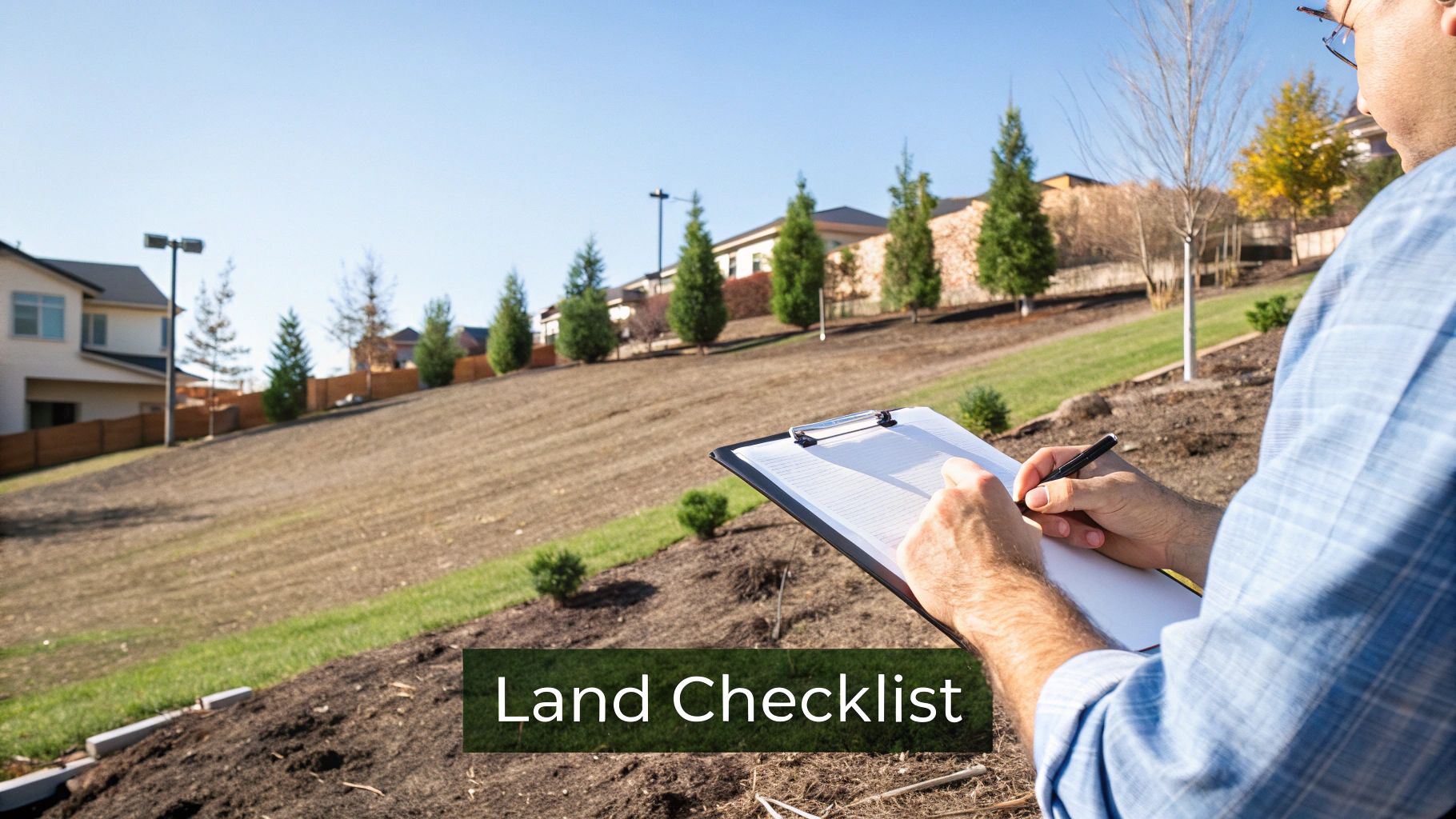
For a first-time land buyer, understanding off-grid power fundamentally changes how you evaluate a property. Every feature of a rural parcel takes on new meaning when viewed as part of a future power system.
That south-facing slope isn't just a pretty view—it’s the ideal spot for solar panels. Those mature trees near your build site? They could cast long shadows, reducing your solar production and forcing you to either clear them or adjust your layout. The land’s features become either assets or liabilities for your energy goals.
Evaluating a Property for Off-Grid Potential
When you visit a parcel of land, shift your mindset. You are not just a prospective homeowner; you are scouting a location for your personal power plant. This means looking past the views and focusing on the practical details.
Your on-site checklist should include:
- Sunlight Exposure: Walk the property at different times of the day to identify areas that receive the most direct, year-round sun. Remember that the winter sun is lower in the sky, so an area that seems sunny in July might be shaded in December.
- Topography and Slope: Look for gentle, south-facing slopes. They are ideal for ground-mounted solar arrays, as they naturally angle the panels for maximum efficiency.
- Potential Obstructions: Note anything that could cast a shadow—large trees, rock formations, or a neighbor's hill.
- Space for Equipment: Mentally place your gear. You will need a secure, accessible spot for your battery bank and inverter (preferably out of direct sun), plus clear ground for the panels or a wind turbine.
Critical Pre-Purchase Due Diligence
Beyond what you can see, you must investigate the rules that govern the land. This is a non-negotiable step that can save you from significant headaches and unexpected costs. Every county is different, and you need to get answers directly from the source.
Before you buy, you must:
- Check County Permitting: Call the local planning and zoning department. Ask directly about their requirements for installing off-grid solar, including permits and inspections for panels and battery systems.
- Review POA/HOA Restrictions: If the land is in a Property Owners Association (POA) or HOA, obtain a copy of the covenants and read them carefully. Some have strict rules that can limit the size, placement, or even the existence of solar panels or wind turbines.
- Confirm Access: Ensure you have clear, legal, year-round access to your property. Installers and heavy equipment require a usable road.
Thinking through these factors is a key part of what to look for when buying land, especially when you plan to be self-sufficient. This proactive approach turns a complex project into a straightforward checklist, helping you find a property that truly supports your dream of energy independence.
Why Consider Dollar Land Store?
Finding the right piece of land is where the off-grid dream begins. At Dollar Land Store, we specialize in making raw land ownership transparent, accessible, and affordable—a perfect fit for anyone who wants to build a self-sufficient life without breaking the bank.
Our business model is built around keeping entry costs low. This means more of your budget can go directly into designing and building your off-grid power system instead of being consumed by a large down payment and the complexities of a traditional land loan.
A Simpler Path to Owning Your Land
We sell land directly to you, which means no middlemen or real estate agents. Our owner financing with no credit checks opens the door to land ownership for many people who might be overlooked by traditional banks.
The process is designed to be clear and simple:
- Affordable Land with Low Payments: Secure your land with a low down payment and predictable monthly payments that fit your budget.
- Simple Owner Financing: Our financing is straightforward with no credit checks required, making land ownership accessible.
- Transparent Terms: All terms are laid out clearly from the start. You will know your exact payments and timeline with no hidden fees.
- Fast Contract Setup: Our online process allows you to find, choose, and secure your land with a clear, fast, and simple contract setup.
- Broad Inventory: We offer a wide selection of rural, undeveloped parcels in off-grid-friendly states like Arizona, Colorado, and Nevada.
Our goal is to be a logical, trustworthy option for buyers looking to invest in a property that aligns with their vision for self-sufficiency.
Next Steps: Your Path to Energy Independence
With a solid understanding of how off-grid power works, you can move forward with confidence. The path to energy independence is a series of clear, manageable steps. This action plan will guide you from the drawing board to flipping the switch.
Buyer Guidance Checklist
- Perform a Personal Power Audit: Before anything else, list every appliance and device you plan to use and calculate your daily watt-hour needs. This is the single most important step for creating an accurate budget and system design.
- Research Local Installers: Look for certified, experienced off-grid installers in your target area. Get at least three detailed quotes and check their references. A good professional is your best partner for assessing a property and ensuring a safe, efficient installation.
- Verify All County Regulations: This step is non-negotiable. Before committing to a property, call the local planning and zoning department. Confirm all permit requirements for solar, wind, or any other structures you plan to build. Our guide to living off-grid in Costilla County shows the kind of specific local rules you need to be aware of.
- Find the Right Land: An off-grid lifestyle is within reach, especially when you start with land that doesn’t drain your budget. Take the first concrete step in your journey.
- Browse available land at DollarLandStore.com.
- Explore our simple seller-financed land options.
- Contact us with your questions about buying raw land.
Conclusion
Building an off-grid power system is a significant but achievable step toward self-sufficiency and independence. By understanding the core components—generation, storage, and conversion—you can accurately assess your needs, create a realistic budget, and evaluate a piece of raw land for its energy potential. The key to success lies in thorough planning, from conducting a detailed power audit to verifying local county regulations before you buy. With this knowledge, you are well-equipped to make informed decisions and turn your vision of an off-grid homestead into a reality.