


50 Acre Land Sale: A Buyer's Guide
Ross AmatoYou're looking at a listing that says 50 acres, but the practical question is different: how much of that land can you legally reach, build on, use for recreation, supply with water, or hold for later? A 50 acre land sale can be a strong fit for hunting, homesteading, a future homesite, or simple land ownership, but acreage alone doesn't answer those questions.
Browse available properties and compare each listing's maps, access information, taxes, restrictions, and payment details before you make assumptions about use.
What a 50 Acre Land Sale Really Means for a First-Time Buyer
A parcel can contain 50 acres on the legal description while offering less practical space after setbacks, easements, floodplain, steep terrain, wetlands, drainage areas, or access strips are considered. That doesn't mean the acreage is inaccurate. It means the number on the listing and the area you can realistically use aren't always the same.
For a first-time buyer, four questions matter most:
- Can you legally reach the land?
- What does the county allow you to do there?
- How much of the parcel is physically usable?
- Can you afford the purchase and the ownership responsibilities?
County rules, recorded documents, and physical conditions answer those questions. A listing can describe acreage and nearby features, but it can't replace county verification, a title review, or an on-site inspection. Requirements vary by county, and rules differ by jurisdiction.
Practical rule: Treat advertised acreage as the starting point for research, not the final answer about usable land.
A 50-acre tract may suit a hunter who mainly needs habitat and access. A buyer planning a home, septic system, well, driveway, outbuildings, or RV use needs a different analysis. Someone buying land to hold for later may care more about taxes, title clarity, carrying costs, and resale access than immediate development.
Land purchases also move differently from home purchases. Rural parcels may have fewer nearby services, less complete listing information, and more county-specific restrictions. Buyers often need to contact planning departments, road agencies, utility providers, surveyors, title professionals, and water or septic authorities before they can make a confident decision.
If your goal includes a tiny home, this practical guide from Tiny Home State can help you think through the relationship between land selection, local rules, and the home you want to place there. The rest of the process comes down to finding suitable parcels, testing their usable acreage, choosing a payment method, and closing carefully.
Where to Find 50 Acre Parcels for Sale
No single search channel shows every available 50-acre parcel. Each source exposes a different part of the market, and the best approach is to compare them rather than rely on one website.
County tax records can help identify owners, parcel numbers, assessed information, and recorded documents. Courthouse auctions may offer parcels connected to delinquent taxes or other proceedings, but auction buyers often need to complete extensive research before bidding and may face stricter payment requirements. A rural-focused real estate agent can search MLS inventory and explain local customs, although representation and service arrangements vary.
Online land marketplaces make it easier to compare maps, acreage, payment choices, and listing descriptions. Some owner-direct sellers offer seller financing, which can be useful for buyers who aren't using a bank. Dollar Land Store is one direct seller option to compare with broader sources such as Auction.com, LandWatch, Facebook land-sale groups, and local word-of-mouth networks.
| Channel | Typical Inventory | Best For | Watch Out For |
|---|---|---|---|
| County tax records | Parcel ownership and public records | Finding owners and researching parcels | Records may not describe current access or condition |
| Courthouse auctions | Tax-related or distressed parcels | Experienced buyers who can research before bidding | Payment rules, title issues, and property condition |
| MLS listings | Agent-listed rural property | Buyers who want local representation | Service terms and listing details vary |
| Online land marketplaces | Owner-direct and rural listings | Comparing acreage, maps, and seller financing | Listings may change or become outdated |
| Local groups and referrals | Private or lightly advertised land | Buyers with regional contacts | Verify every claim independently |
A useful starting point is this overview of the best land-for-sale websites, but treat every platform as a source of leads, not proof that a parcel is suitable.
Before contacting a seller, search the parcel by county, parcel number, legal description, or map location in another source. Cross-checking can reveal an outdated listing, a different acreage description, an access issue, or a change in availability. Keep notes on the listing date, seller statements, documents received, and questions that still need answers.
Evaluating the Land Before You Commit
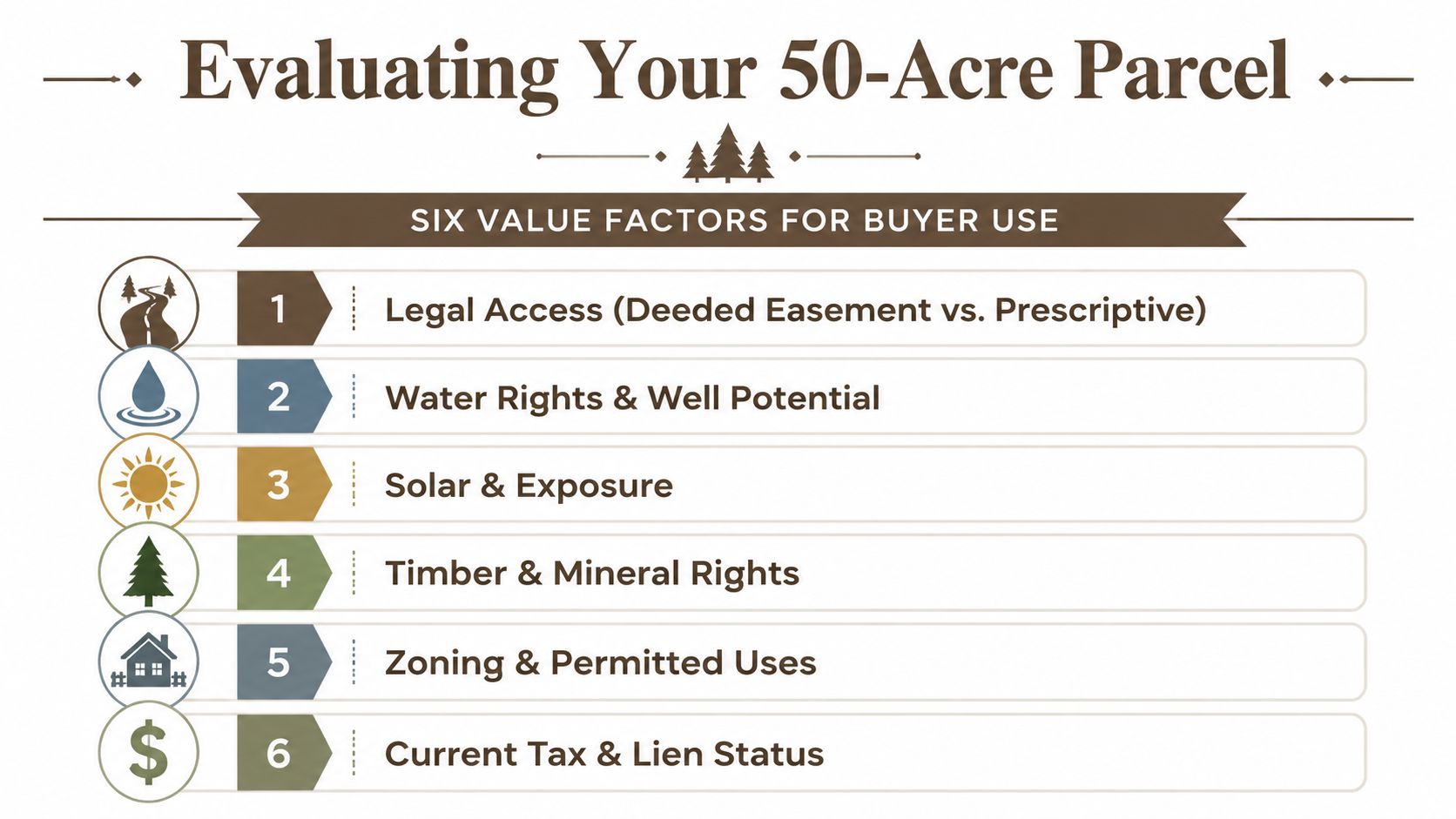
A 50-acre parcel's value depends on what you can do with it. Two tracts with identical acreage can have very different practical value because of access, zoning, water, terrain, utilities, title, and taxes.
Access comes before almost everything else
Start with legal access, not just a visible road. A parcel may appear to touch a road on a map but still require a recorded easement, a shared driveway agreement, or another legal route. Read the deed and recorded easements, then ask who maintains the route and whether ordinary vehicles can reach the property under the conditions you expect.
A paved road, a gravel road, and an easement-only route can produce different costs and different practical uses. The land-pricing method described by this comparable-sales guide uses access, utilities, zoning, acreage, and distance to amenities as adjustment factors rather than treating every acre as equal.
Zoning decides what “usable” means
Ask the county planning or zoning office for the current zoning classification and any overlays. Agricultural, residential, conservation, and special-use districts may have different rules for homes, manufactured housing, livestock, structures, camping, short-term rentals, and RV stays.
Don't rely on a listing's use language alone. A seller may describe recreational or development potential without promising that your intended use is approved. Buyers should independently verify current requirements with the relevant county department.
Water is a feasibility question
A nearby creek or pond doesn't automatically provide usable household water. Research well records, drilling conditions, water rights, surface-water rules, and any local restrictions on wells or water collection. Requirements vary by county and state, and a parcel without an existing well may require separate investigation before you can estimate the practical cost of a water system.
Utilities affect the usable footprint
“Power nearby” can mean something different from power at the property line. Ask the utility provider about the nearest connection point, extension requirements, and whether service is available for your intended use. If grid service isn't practical, compare propane, solar, batteries, generators, and other off-grid systems without assuming that any option will be approved or affordable.
Internet access also deserves its own check. Mobile coverage, fixed wireless, satellite service, and fiber availability can vary even within the same rural area.
Terrain and hazards reduce practical space
Use topographic maps, flood maps, soil information, and an on-site inspection to identify steep slopes, drainage channels, wetlands, erosion, wildfire exposure, or flood risk. A large open portion of a parcel may still be unsuitable for a driveway, septic area, foundation, or RV pad.
The usable-acreage question is cumulative. Setbacks may limit one area, an easement may cross another, and difficult terrain may make a third area expensive to reach. You may still own all 50 acres, but the locations suitable for your intended improvements can be much more limited.
Title, minerals, and tax status can change the deal
A title search should identify owners, liens, easements, restrictions, and other recorded interests. Mineral rights, timber rights, water rights, and surface-use rights may not automatically follow the assumptions a buyer brings to the transaction.
Check current taxes and whether the parcel has delinquent taxes or other charges. A property that looks inexpensive can become more complicated if liens or back taxes must be resolved. For broader buyer questions, Dollar Land Store's educational article on what to look for when buying land offers a useful framework, but property-specific verification remains essential.
Financing Options for a 50 Acre Land Sale
Buyers generally compare cash, a traditional bank land loan, and seller financing. Each path changes the paperwork, timing, qualification process, and point at which ownership documents transfer.
Cash is the simplest structure when the buyer has enough available funds. It avoids interest and monthly payments, but the buyer still needs title work, due diligence, closing documents, and a plan for taxes and ongoing maintenance. Paying cash doesn't make a parcel buildable or guarantee that a planned use is allowed.
A bank land loan may involve underwriting, income documentation, credit review, an appraisal, a down payment, and a defined payoff schedule. Raw-land lending can be less flexible than financing for an existing home, and each bank sets its own requirements. Don't assume a bank will finance a particular parcel until the lender has reviewed both your application and the land.
Seller financing works differently. The seller and buyer agree to terms such as a down payment, interest rate, monthly payment, payment due date, late-payment provisions, payoff conditions, and any balloon payment. Rates, terms, fees, and payment amounts vary by property, so the contract and disclosures matter more than a general example.
| Path | Typical Down Payment | Credit Check | When You Get the Deed | Best For |
|---|---|---|---|---|
| Cash purchase | Full purchase price at closing | Usually no lender review | According to the closing documents | Buyers with available funds |
| Traditional bank land loan | Set by the lender and property | Lender underwriting applies | According to the lender and closing structure | Buyers who meet bank requirements |
| Seller financing | Set by the seller and property terms | May be available without a traditional credit check | Generally after payoff and transfer completion | Buyers seeking flexible direct-sale terms |
Some sellers advertise $1 down options. That phrase usually describes a nominal initial payment, not the total cost of buying the land. Document fees, regular payments, interest, a larger final balloon payment, or other contract terms may still apply. Read the complete agreement before relying on a low initial amount.
No-credit-check seller financing may focus on the land's equity and the seller's contract requirements instead of a traditional FICO-based approval process. That can make the process accessible to some buyers, but it doesn't remove the need to confirm affordability, title, permitted use, and payment consequences.
Owner-financed buyers generally receive the deed after payoff and completion of the transfer process. Until then, the buyer's rights are controlled by the signed agreement and applicable law, so keep copies of the contract, payment records, notices, and payoff statement. Review how to finance a land purchase before comparing available seller-financed options.
Making an Offer and Closing the Deal
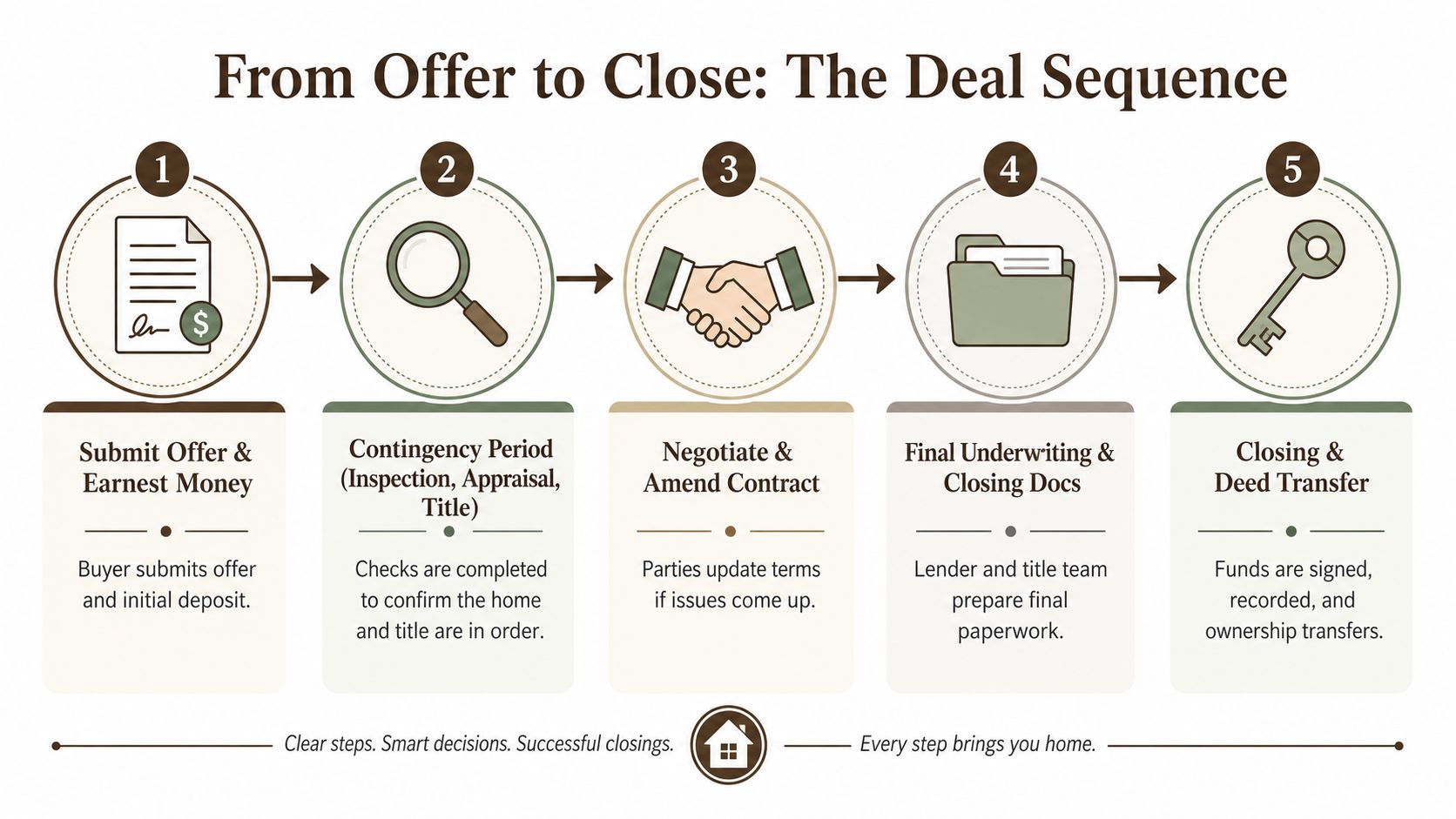
A clean offer should match the buyer's actual plan. It typically identifies the parcel, proposed price, deposit or earnest money, closing expectations, due-diligence period, and contingencies. If financing is involved, the agreement should explain what happens if the proposed financing doesn't proceed.
For a cash or bank-financed purchase, a title company or closing agent may coordinate the title search, payoff statements, documents, funds, and recording. For seller financing, the bank may be absent, but the transaction still needs a formal installment contract or another legally appropriate structure.
What happens before closing
During the due-diligence period, confirm access, zoning, maps, utilities, taxes, title, and any intended use. If a survey, inspection, appraisal, or professional review is part of the agreement, make sure the contract states who orders it and who pays for it.
The parties may amend the agreement after reviewing documents. A change in price, closing date, financing terms, or included rights should be written into the contract rather than handled through an informal message.
Recording is separate from receiving the deed
County recording makes a deed or other instrument part of the public land records. Recording fees and transfer taxes vary by jurisdiction. For example, Cecil County, Maryland lists a $40 recordation surcharge and a recordation tax of $4.10 per $500 of actual consideration for title transfers, according to its county recording-fee information.
Another Maryland county page lists different instrument fees, a separate recordation tax, and a county transfer tax, illustrating why buyers need the current schedule for the county where the land sits. South Carolina also describes a state deed recording fee structure in its Department of Revenue fee document. These examples aren't universal rates.
In an owner-financed purchase, the buyer usually doesn't receive the deed at the first closing. The deed generally comes after the final payment, including any balloon payoff, and after the seller completes the agreed transfer process. Receiving the deed and recording it with the county are separate steps. After recording, retain the recorded deed, payoff confirmation, tax records, title documents, and any easement or restriction documents.
Quick Due Diligence Checklist Before You Pay
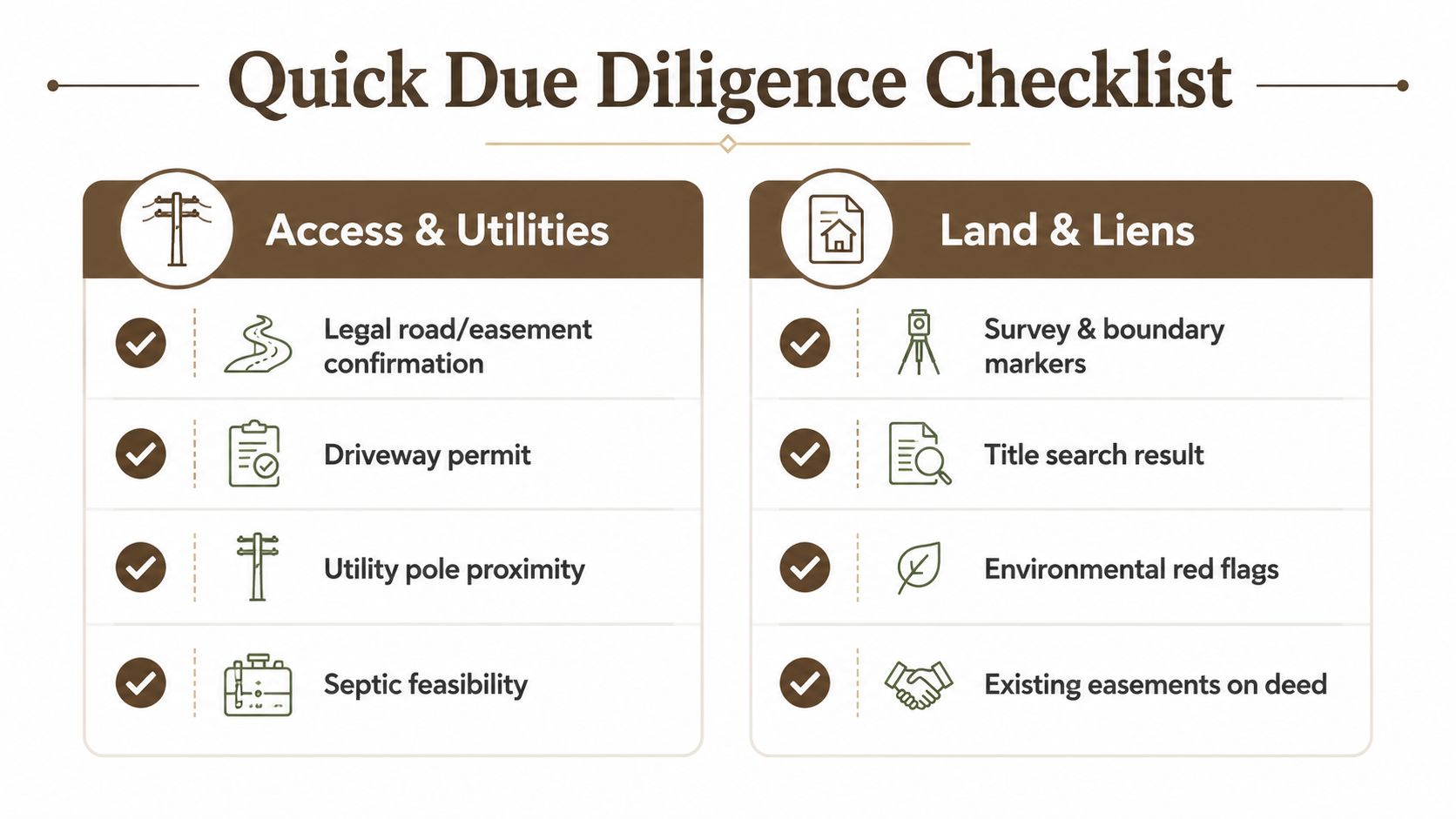
Use a written checklist and mark each item as confirmed, unresolved, or not applicable. The purpose isn't to make the purchase complicated. It's to prevent a problem that was visible in public records or county files from becoming your responsibility after closing.
Access and utilities
- Legal route: Confirm a public road connection or recorded easement.
- Driveway approval: Ask whether a driveway or culvert permit is required.
- Road conditions: Consider whether the route is usable for your vehicle throughout the seasons you care about.
- Power location: Ask the provider where service can connect and what extension work may be needed.
- Water and septic: Verify well information, water rules, soil limitations, and septic feasibility with the proper authorities.
- Communication service: Check realistic options for phone and internet coverage at the parcel.
Land and legal records
- Survey evidence: Review the survey, parcel map, boundary markers, and any discrepancies.
- Zoning: Confirm the current zoning, overlays, building eligibility, mobile-home rules, camping rules, RV use, and short-term-rental restrictions.
- Hazards: Check flood, wildfire, slope, drainage, wetlands, soil, and environmental concerns.
- Recorded rights: Review easements, covenants, access agreements, mineral interests, and other restrictions.
- Title result: Obtain a title search and identify liens, judgments, ownership issues, or delinquent taxes.
- Contract terms: Understand the payment schedule, payoff process, default provisions, deed timing, fees, and recording responsibilities.
Skipping these checks can be the most expensive mistake in a 50 acre land sale because raw-land defects are often left for the buyer to address after closing. Dollar Land Store's land due-diligence resource can help organize questions, while county offices and qualified professionals should confirm current requirements.
After the Sale and What Comes Next
Closing ends the purchase process, but it starts the ownership work. Find out when property taxes begin accruing in your name, when bills are issued, and how payments must be made. Tax treatment can vary by county, parcel classification, agricultural status, exemptions, and changes in use, so confirm the details with the assessor or treasurer.
Access deserves attention before you need it. If the property depends on a private road or shared route, review the recorded agreement and understand maintenance responsibilities. A damaged road, blocked gate, washed-out culvert, or unclear access arrangement can make a rural parcel difficult to reach even when the legal right of access exists.
Keep the zoning and recorded restrictions available whenever you plan a project. A future home, shed, RV stay, fence, livestock area, driveway, or short-term rental may require separate approval. Requirements vary by county, and some parcels may have limitations that weren't obvious during the initial search.
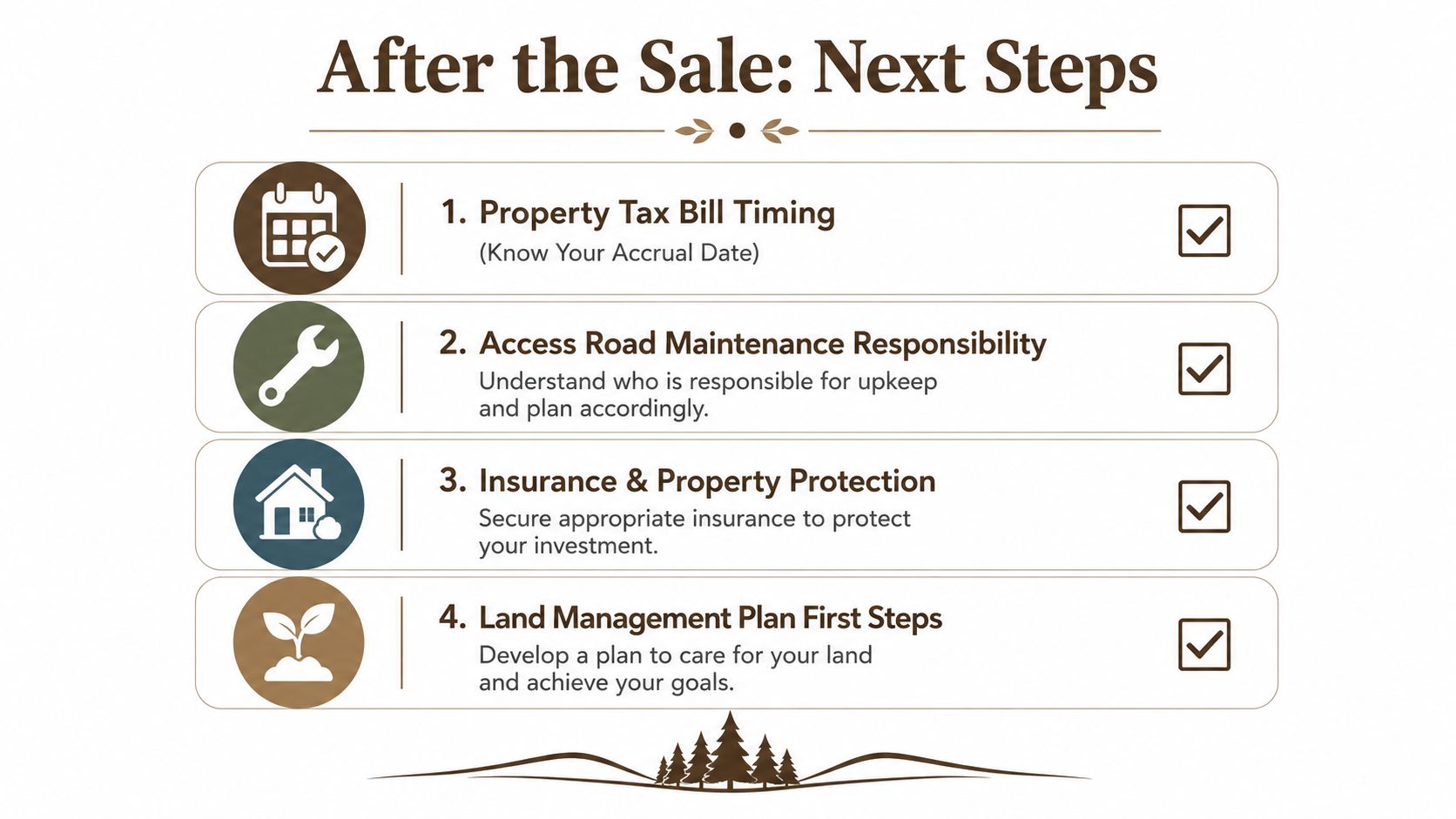
Walk the land after closing and compare it with your original plan. Visit during different seasons when possible, observe drainage and road conditions, document boundary locations, and decide which improvements deserve attention first. A 50-acre tract is usually a long project, not a closing-day finish line.
Start with documentation and access before spending money on improvements.
Dollar Land Store offers direct vacant-land sales, seller-financed options, and buyer education for people comparing rural parcels and payment structures. Visit Dollar Land Store to browse available land, review property details, and learn about the buying process before choosing a parcel.