


Your Guide to Finding Farm Land for Sale Near Me
Ross AmatoTyping "farm land for sale near me" into a search bar is often the first step in a much larger journey. The real work begins when a listing catches your eye, and understanding what to do next is crucial for a successful purchase.
Moving beyond online photos to understand a property’s true potential is the most critical step for any first-time buyer. This guide will walk you through the essential evaluation steps, explain land pricing, and outline the buying process in clear, practical terms.
How to Evaluate Rural Land Before You Buy
Before making any commitment, you must perform your own research, a process known as due diligence. This is your opportunity to verify the seller’s claims, investigate the details, and confirm the land is suitable for your goals—whether that’s a small cabin, a weekend homestead, or a private recreational spot.
For a first-time buyer, this process is non-negotiable. It protects your investment and helps you avoid costly surprises after the sale is complete.
Zoning and Permitted Land Use
A common mistake is assuming rural land comes with no rules. In reality, every parcel in the U.S. is governed by local zoning regulations set by the county or municipality. These rules dictate exactly what you can and cannot do on the property.
Zoning codes classify land for specific purposes. For rural properties, common classifications include:
- Agricultural (AG): Land primarily intended for farming, ranching, or forestry. It may have restrictions on building a non-farm-related residence.
- Residential (R): Land designated for housing. Be sure to check for minimum lot sizes or other building requirements.
- Recreational (REC): Often designated for activities like camping, hunting, and fishing. Permanent structures or residency may be prohibited.
- Rural (RU): A general classification that is often more flexible but requires careful verification of permitted uses with the local authorities.
Important: Always verify a property's permitted uses directly with the county’s Planning and Zoning department. This is a critical step that should never be skipped.
Confirming Legal and Physical Access
Access is one of the most misunderstood aspects of buying raw land. A visible road on a map does not guarantee you have the legal right to use it.
You must confirm two types of access:
- Legal Access: This is your documented right to reach the property. It is typically provided by a public, county-maintained road or a legally recorded easement that grants permission to cross a neighboring property. Without legal access, a parcel is considered landlocked and may have limited value and utility.
- Physical Access: This refers to the actual condition of the road on the ground. Is it a paved road, a maintained gravel road, or a rough dirt track that requires a 4x4 vehicle? Can you reach it year-round?
The property's deed and a title report can help confirm legal access and any recorded easements. For physical access, there is no substitute for visiting the property and driving the route yourself.
Understanding Land Value and Market Trends
Evaluating a property also means understanding its market value. Land prices are influenced by location, access, features, and broader economic conditions.
Recent data shows that rural land remains a stable asset. According to market reports, in 2025, U.S. cropland values averaged $5,830 per acre, while pastureland—often sought by recreational and first-time buyers—averaged $1,920 per acre.
In the Mountain states, including Colorado and Nevada, pastureland averaged an accessible $946 per acre. These trends suggest a stabilizing market after several years of rapid growth, which can create opportunities for buyers. To learn more, you can explore the 2025 land market summary from Ranchland.com.
Knowing these averages helps you determine if a listing price is reasonable. For a more detailed breakdown, read our guide on how to determine land value.
Understanding Land Prices in the Western US
When you search for "farm land for sale near me," prices can vary significantly. Understanding the factors that drive land values is key to making a smart investment, especially in Western states like Arizona, Nevada, and Colorado, where affordable recreational and undeveloped land is still available.
Unlike residential real estate, raw land prices are closely tied to potential use, accessibility, and the agricultural economy. For a first-time buyer, grasping these factors helps in identifying a fair deal.
Pastureland Versus Cropland
One of the largest drivers of price is the land's classification. Most rural land falls into two general categories:
- Cropland: Prime agricultural land suitable for growing crops. It typically features better soil and more reliable water access, making it significantly more expensive.
- Pastureland: Land used for grazing livestock. It is often more rugged and less developed, making it a more accessible entry point for buyers focused on recreation, homesteading, or long-term investment rather than commercial farming.
This chart illustrates the significant difference in national average values.
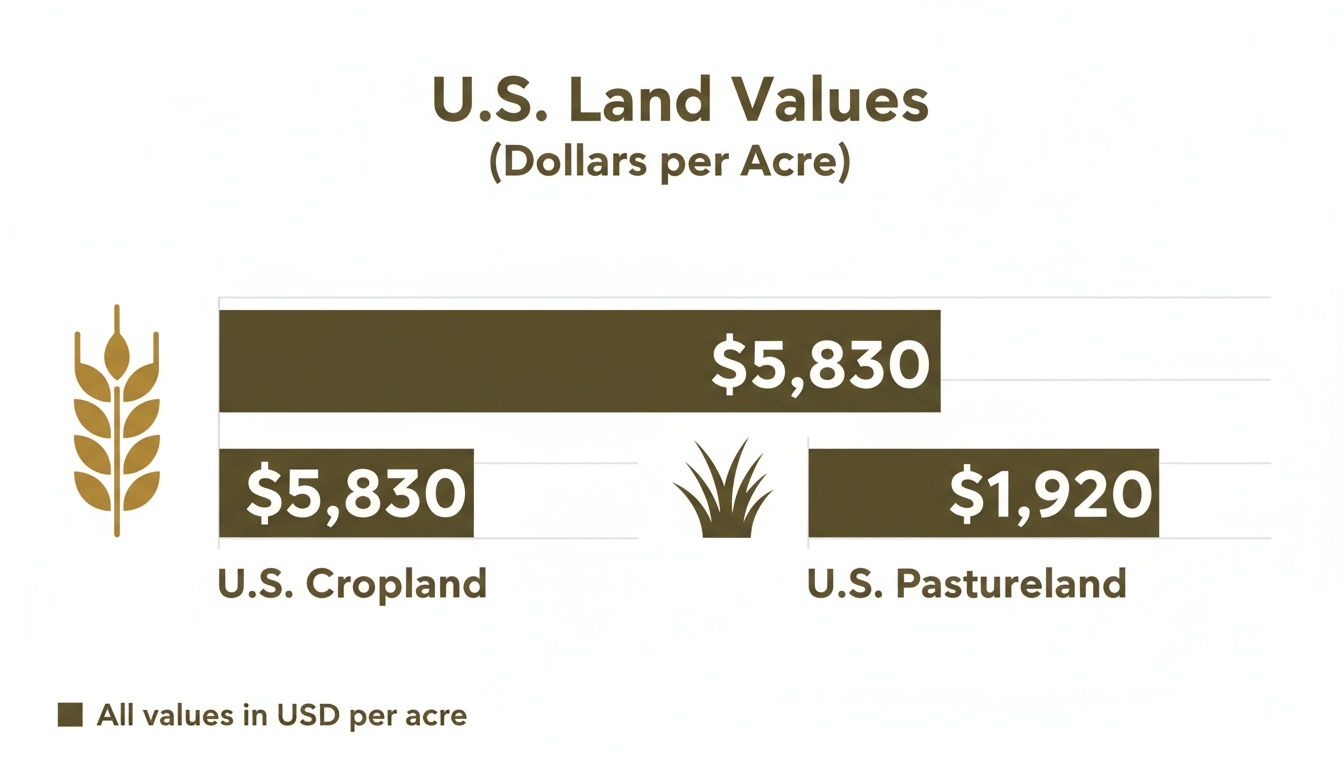
This price gap is why pastureland is often an excellent fit for first-time buyers. It provides an affordable path to land ownership without the premium price of agriculturally productive land. To learn more about what influences these prices, our guide on how much an acre of land costs offers further detail.
Market Trends and Regional Differences
Land values are not uniform; they can change dramatically between states and even between counties. The Western U.S. is unique due to its vast, undeveloped areas, which can create excellent opportunities for buyers.
This table compares pastureland and cropland values in key Western states.
Western States Pastureland vs Cropland Value Comparison (Per Acre)
This table illustrates the significant price difference between pastureland and cropland in key Western regions, highlighting affordable opportunities for non-agricultural buyers.
| Region | Average Pastureland Value | Average Cropland Value | Key Takeaway for Buyers |
|---|---|---|---|
| Mountain States (AZ, CO, NV) | $1,480 | $2,860 | Pastureland is nearly half the price, ideal for recreational use. |
| Pacific States (CA, OR, WA) | $2,450 | $9,830 | The enormous gap makes pastureland the only practical entry point here. |
| National Average | $1,920 | $5,830 | Western pastureland is well below the national average. |
As shown, pastureland is a more affordable option across the board. While the national average for farm real estate was $4,350 per acre in 2025, that figure includes high-value cropland. Recent reports from sources like Farmer Mac have indicated a slight cooling in the land market. This can create leverage for buyers, with less competition from large agricultural operations and more opportunities to find an affordable parcel for personal use.
Other Key Factors Influencing Price
Beyond land type and market trends, several other factors impact the final price tag. When reviewing a listing, consider the following:
- Location and Proximity: How close is the property to a town, essential services, or a paved road? More remote parcels are typically more affordable.
- Access to Utilities: Land with existing connections to power, water, or septic systems will command a higher price. Raw, undeveloped land is cheaper upfront but will require investment to add utilities later.
- Topography and Features: A flat, easily buildable lot is generally more valuable than a steep, rocky one. Natural features like a creek, pond, or mature trees can also add value.
- Local Demand: Is the area popular for recreation or retirement? Higher demand from investors and outdoor enthusiasts will increase land prices.
How to Finance Your Land Purchase
Once you find a suitable property, the next step is figuring out how to pay for it. Obtaining a loan for raw land from a traditional bank can be challenging. Banks often view undeveloped property as a high-risk investment because there is no structure (like a house) to serve as collateral.
This caution often leads to strict lending requirements, such as down payments of 20% to 50% and a high credit score. For many first-time buyers, these requirements are a significant barrier. Fortunately, a conventional mortgage is not the only option.
Seller Financing: A Practical Path to Land Ownership
Seller financing (also known as owner financing) is a straightforward alternative. Instead of securing a loan from a bank, the buyer makes monthly payments directly to the person or company selling the land.
This approach removes the institutional lender from the transaction, eliminating much of the associated complexity and rigid requirements. At Dollar Land Store, our business is built around this model to make land ownership accessible to more people, regardless of their credit history or down payment amount.
The primary benefit of seller financing is its simplicity and accessibility. It removes common roadblocks and creates a direct path to owning land.
What Makes Seller Financing an Attractive Option?
Understanding this financing method can open up a world of opportunities that may have seemed out of reach. Here are the key benefits for buyers:
- No Credit Checks: Your credit history is not a factor in the approval process.
- Low Down Payments: You can often secure a property with a small initial down payment, making it easier to get started.
- A Simple Process: The transaction is between you and the seller, which means less paperwork and faster approval times compared to a bank loan.
- Fixed Interest Rates: The loan terms are clear and consistent, with a fixed interest rate that will not change over the life of the loan.
This model is effective because land is a stable, long-term asset. U.S. farmland values saw a 5.8% nominal compound annual growth rate from 2019-2024, demonstrating its resilience as an investment.
Familiarizing yourself with different types of real estate investor financing can provide a broader perspective. For an in-depth explanation of how this process works, read our guide on how to finance a land purchase.
A Simple Walkthrough of the Land Buying Process
The process of buying land can seem intimidating, with unfamiliar terms and procedures. This section provides a clear roadmap of the journey, from making an offer to finalizing the purchase, so you can move forward with confidence.
Key Stages of a Land Transaction
While every transaction is unique, most follow a predictable sequence of events. Understanding these stages helps demystify the process.
- Offer and Agreement: You and the seller agree on the price and terms, which are documented in a legally binding purchase agreement.
- Due Diligence Period: This is the buyer's opportunity to conduct research and verify all important details about the property, such as zoning, access, and soil conditions, before the sale is final.
- Closing the Sale: This is the final step where funds are exchanged and the property's legal title is transferred to the buyer.
Making an Offer and the Purchase Agreement
Once you have identified a property, the first formal step is to make an offer, which leads to a purchase agreement. This contract outlines all the essential details of the transaction, including the price, closing date, and any contingencies.
When you buy directly from a seller like Dollar Land Store, this step is simplified. The terms are clearly stated in the property listing, and the agreement can often be completed through a straightforward online checkout process. This eliminates the lengthy negotiations common in traditional real estate deals.
For more information on this approach, our guide on how to buy land without a realtor provides additional details.
From Agreement to Closing
After a purchase agreement is signed, the transaction moves toward closing. In a conventional sale, a neutral third party, such as a title company or an escrow agent, typically manages this phase. They hold all funds and documents securely until every condition in the contract is met.
A crucial part of this process is the title search, which examines public records to confirm the seller’s ownership and ensure there are no outstanding liens or claims against the property. Once the title is confirmed to be "clear," the ownership is officially transferred by recording a deed with the county.
Direct Seller vs. Traditional Agent Process
The path to land ownership varies depending on whether you work with a real estate agent or buy directly from the owner. A traditional, agent-assisted purchase involves more steps and intermediaries, while a direct-from-seller transaction is often much simpler.
Traditional Purchase vs. Direct Seller-Financed Purchase
| Process Step | Traditional Agent-Led Purchase | Direct Seller-Financed Purchase |
|---|---|---|
| Offer | Formal offers, counter-offers, and negotiation through agents. | Simple online checkout with clear, pre-set terms. |
| Financing | Requires bank pre-approval, extensive paperwork, and an underwriting process. | Straightforward seller financing, often with no credit check. |
| Closing | Managed by title/escrow companies; can take 30-60+ days. | Handled directly with the seller; often completed in a few business days. |
| Fees | Agent commissions, loan origination fees, appraisal costs, and title insurance. | Typically a one-time document fee; no agent commissions. |
The direct-from-seller process is designed for simplicity and speed. By removing middlemen like banks and agents, it reduces complexity and cost, making it a highly accessible option for first-time buyers.
What This Means for Buyers
For those new to rural real estate, the takeaway is simple: owning land is more attainable than you might think. When you search for "farm land for sale near me," you are tapping into a market with real opportunities for everyday people.
The dream of owning a piece of land—for weekend recreation, a future home, or a long-term investment—is within reach. The key is to look beyond traditional real estate hurdles and embrace practical, modern solutions.
Affordability Is Closer Than You Think
You do not need to be wealthy to buy land. By focusing on affordable parcel types like pastureland, you can find excellent acreage in desirable Western states without paying the premium for prime cropland.
Furthermore, flexible financing options change the entire equation. Seller financing, in particular, removes the most common barriers for first-time buyers:
- No Strict Bank Rules: You can often bypass the need for a large down payment or a high credit score.
- Simple Paperwork: The process is direct and far less complicated than a conventional mortgage.
- Low Upfront Costs: Low down payments allow you to get started without depleting your savings.
For those just starting, seeking additional guidance for first-time buyers can build confidence and clarify the process, turning a distant dream into a practical goal.
Your Best Tool Is Due Diligence
While financing is more accessible than ever, your responsibility as a buyer remains paramount. Researching zoning, access, and utilities is the foundation of a smart purchase.
Remember: Confidence as a buyer comes from thorough research. Verifying legal access, confirming zoning rules with the county, and understanding utility availability are non-negotiable steps. They protect your investment and ensure the land will meet your needs. This diligence transforms you from a casual searcher into an informed buyer, ready to secure your own property.
Why Consider Dollar Land Store?
When you search for "farm land for sale near me," you will encounter many sellers, including brokers and marketplaces. Dollar Land Store operates differently. We are not a brokerage; we own every parcel of land we sell. This direct-to-buyer model allows us to simplify the process and offer land at affordable prices by eliminating middlemen and their commissions.
A Simple and Transparent Process
Our mission is to make land ownership straightforward and accessible. The biggest hurdle for most aspiring landowners is financing, which is why we built our business around seller financing.
When you buy from us, you work directly with us. This approach offers several key advantages:
- No Credit Checks: We believe your desire to own land is more important than your credit score.
- Low Down Payments: Many of our properties can be secured with a small down payment.
- Clear, Fixed Terms: All financial terms are disclosed upfront, with fixed monthly payments that never change.
We have designed our process to be as transparent and easy as possible. You can find, review, and purchase a property entirely online. Because there are no real estate agents involved, you never pay commissions, which helps keep our prices competitive.
Our inventory includes a variety of properties across multiple states, from small recreational lots to larger acreage suitable for a future homestead. Every listing provides comprehensive details, including financing terms and property specifics, to help you make an informed decision.
Buyer Guidance / Next Steps
You have now learned the fundamentals of evaluating and purchasing rural land. The next step is to move from learning to doing.
Start by browsing actual listings and applying the criteria from this guide. Check the access, research the zoning, and visualize how you could use the land. This practical exercise will sharpen your eye and give you a clear understanding of what your budget can achieve in different areas.
From Looking to Owning
As you identify properties of interest, financing becomes the next consideration. With seller financing, low monthly payments can make land ownership a reality sooner than you might think.
Your goal is to bridge the gap between your dream and a specific parcel of land. Here are some practical actions you can take today:
- Browse available parcels: Explore current listings to see photos, read descriptions, and get a feel for the market.
- Ask questions: If you have questions about a property or the buying process, contact us for clarification.
- Understand the financing: Familiarize yourself with how seller financing works and how the payments might fit into your budget.
The most important step you can take now is to start looking. Reviewing real properties with transparent pricing and terms is what transforms a vague idea into a concrete plan.
Conclusion
Searching "farm land for sale near me" is the beginning of an exciting process. By conducting thorough due diligence, understanding market values, and exploring modern financing options like seller financing, you can confidently navigate the land buying journey. The opportunity to own your own piece of land is real and accessible. With careful research and a clear plan, you can turn that goal into a reality.
Ready to take the next step?