


Recreational Land for Sale California: A Buyer's Guide
Ross AmatoA cheap California listing can look like a fast yes. The photos show open sky, a dirt road, maybe a ridge line or a stand of trees, and the price seems to invite a weekend plan before you've even asked the county a single question.
That's where buyers get caught. In California, proximity to public recreation is not the same as legal access, and acreage alone doesn't tell you whether you can camp, build, drill, or even reach the parcel without crossing someone else's land. The smartest buyers treat every parcel as a layered access problem, not a scenic postcard.
Why California Recreational Land Looks Easy Until It Isn't
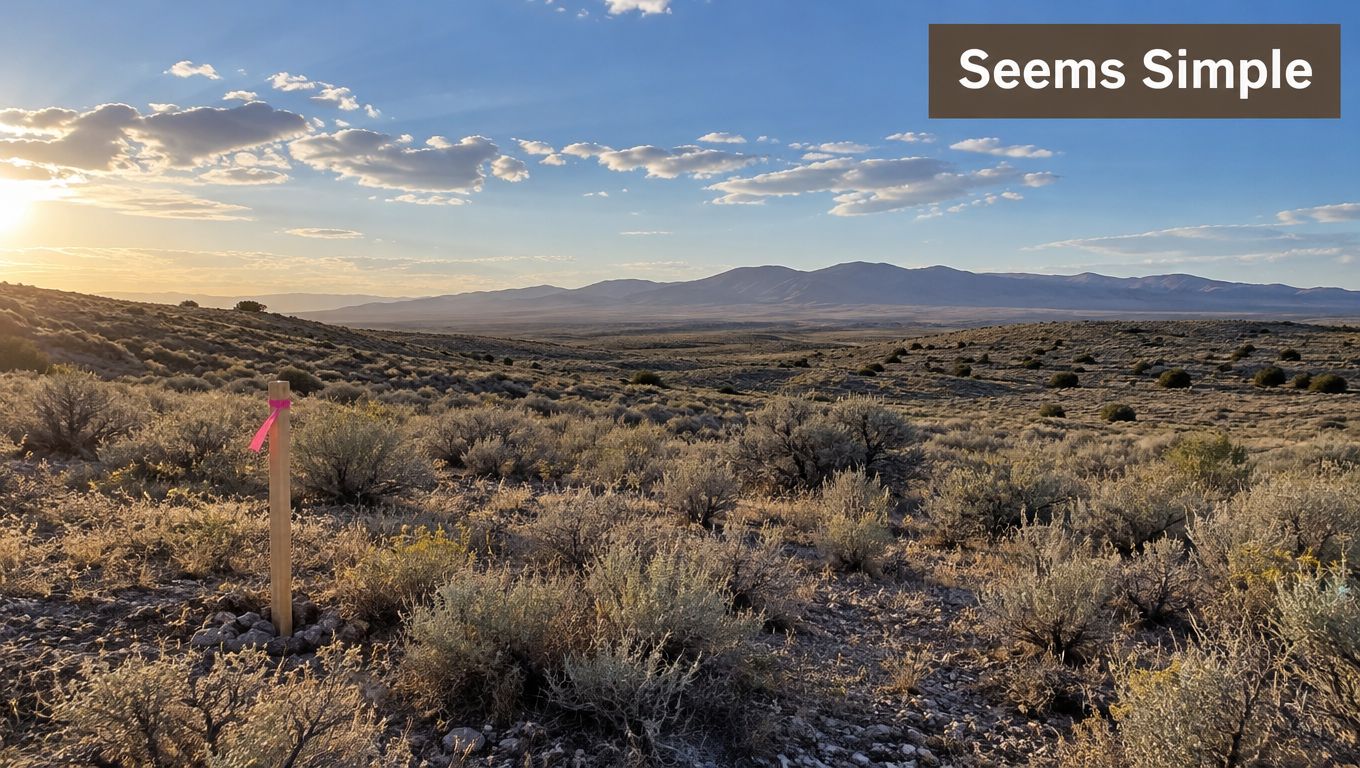
A parcel can look like an easy buy from the listing photo. The ground seems quiet, the price feels approachable, and nearby public access makes the lot look ready for weekends or future use.
The gap between scenery and use
Scenery does not tell you what a parcel is allowed to do. California's public-land backdrop is large, with the Bureau of Land Management overseeing about 15 million acres, or roughly 15% of the state's land area, and California State Parks managing nearly 1.4 million acres plus more than 280 miles of coastline and roughly 3,000 miles of trails (BLM California). Those figures make the state feel open, but they do not give a private buyer the right to cross neighboring land, camp wherever they want, or assume a road on a map is a legal route.
I see this mistake often when someone treats “close to public land” as the same thing as usable recreation access. It is not. A parcel can sit near a trailhead, a river corridor, or a well-known outdoor area and still be difficult to use if the easement, zoning, access, or water setup does not hold up.
Practical rule: if the listing photo is the selling point, the county records are the test that matters.
That is why the first question is not about the view. It is whether the land supports the kind of outdoor use the buyer wants, and whether the surrounding rules let that use happen without surprises.
What Counts as Recreational Land in California
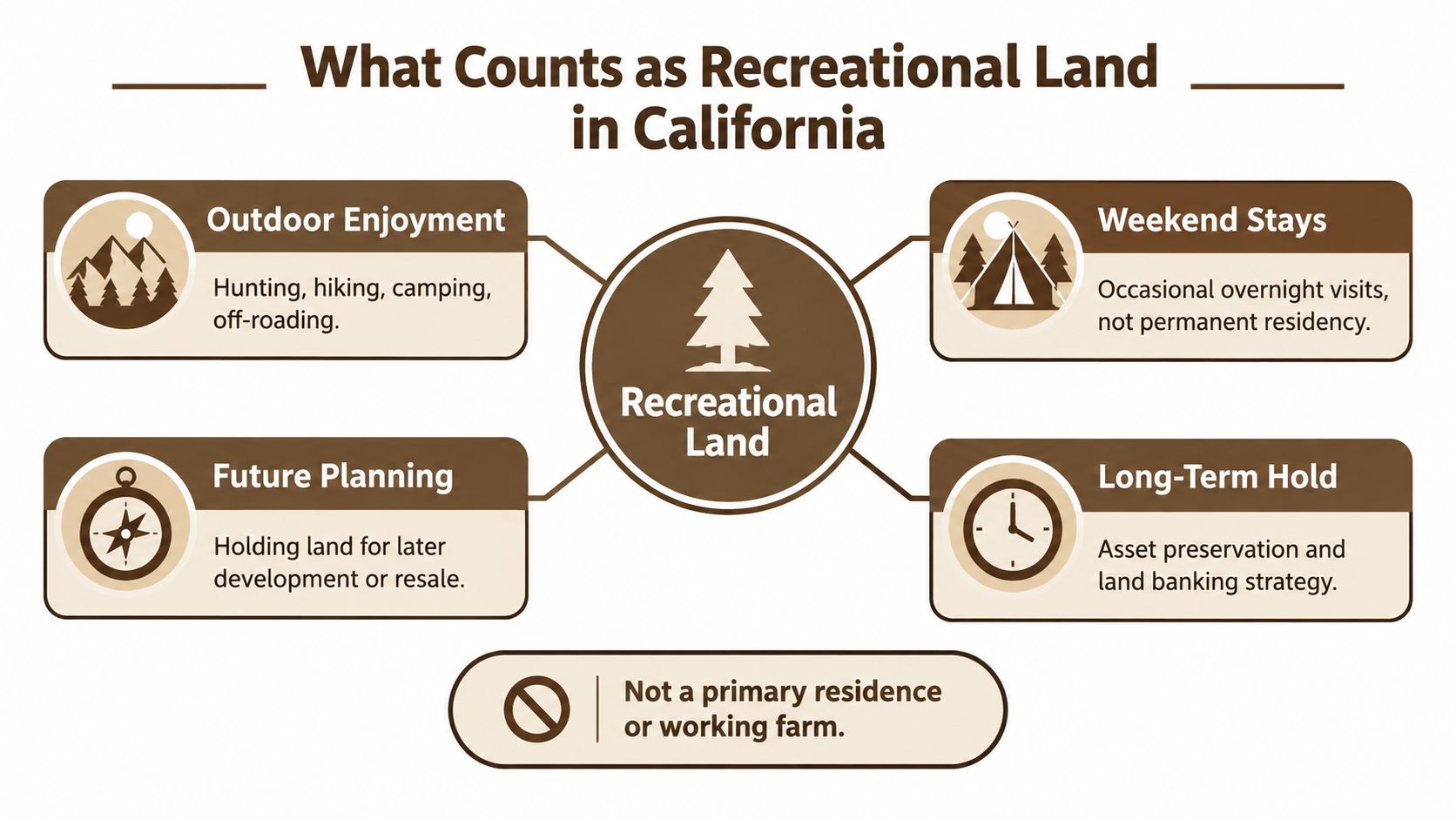
Recreational land is land you buy primarily for outdoor enjoyment, weekend use, long-term holding, or future planning, not as a primary residence or working farm. In practice, that usually means raw or lightly improved land, often with limited utilities and county rules that shape camping, building, and vehicle use.
The category matters before you shop
Buyers sometimes compare the wrong kinds of parcels. A recreational lot is not the same thing as a homestead site, an agricultural parcel, or a conventional investment property. Each one carries different expectations, and California counties often regulate them very differently.
A recreational parcel may be attractive because it supports occasional visits, future use, or a land-banking strategy. But that doesn't mean it has the current permissions for a cabin, a full-time RV setup, or even extended camping. If the land is raw, it may also lack the infrastructure people casually assume comes with ownership, such as utility hookups or engineered wastewater capacity.
What to ask before calling it recreational
- Outdoor use now: Can the parcel legally support the kind of visits you want to make today?
- Weekend stays later: Are there county or fire rules that limit overnight use, structures, or vehicle parking?
- Future planning: If you're buying for later development, what would the county still require?
- Long-term hold: Can you comfortably carry the property if the current use stays limited?
Recreational land is a use category, not a promise. If the county doesn't allow the activity, the view doesn't change the rule.
That distinction matters because a listing can be honest and still be easy to misunderstand. The rest of the decision comes down to whether the parcel's real-world conditions match your intended use.
California-Specific Rules That Decide What You Can Actually Do
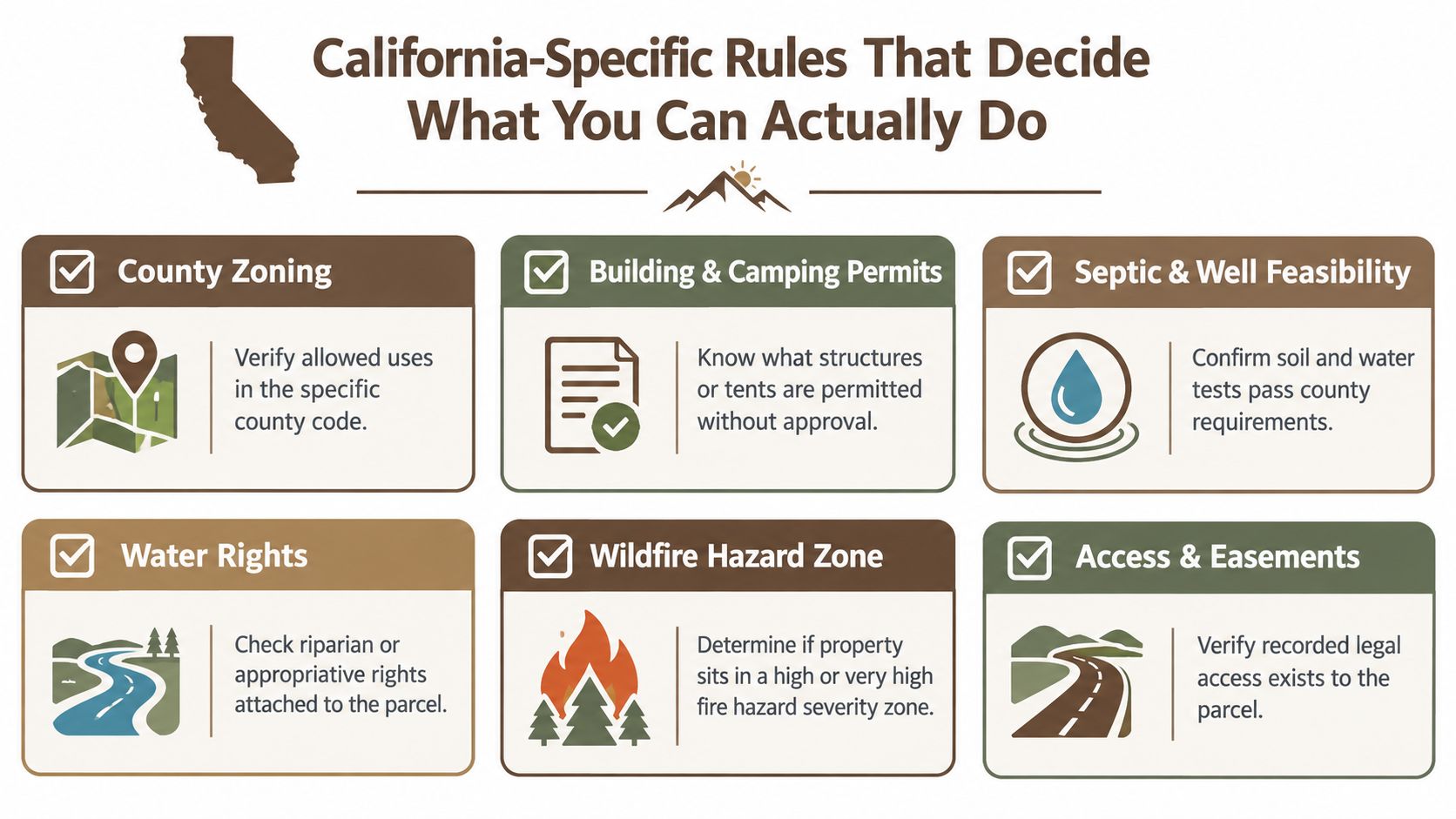
California puts hard limits around recreational land use. The main checks are county zoning, access, septic and well feasibility, and wildfire classification, and each one can change what the parcel is worth in practice.
Buildability starts with engineering, not acreage
San Luis Obispo County's onsite-wastewater program identifies 2.5 acres as the minimum parcel size for a lot using both an onsite wastewater treatment system and an onsite well, alongside local planning and zoning requirements (SLO County)). Buyers often miss that a parcel can look generous on a map and still fall short once soil, groundwater, and lot layout are reviewed.
A bigger parcel does not guarantee a workable septic setup. If the soil profile or groundwater conditions do not support the system, the intended use changes fast, even before you get to permits for structures or long-term occupancy.
Access and wildfire are separate tests
A road on a map is not the same as recorded legal access. Buyers need to verify a recorded easement, check the road condition, and confirm whether seasonal closures or gate rules affect actual entry. A parcel can look reachable in listing photos and still be functionally cut off.
Wildfire risk changes the math too. California's Fire Hazard Severity Zone model looks at fuels, terrain, and weather over a 30- to 50-year period, and it does not factor in mitigation work like home hardening or fuel reduction (Fire Hazard Severity Zones). If a parcel sits in a high-risk area, road width, defensible space, evacuation routes, insurance availability, and utility exposure all need attention before you picture any structure on the land.
The buyer questions that matter are plain. What does the zoning allow? Is access recorded? Can septic and water be approved? What fire overlay applies? If those answers are weak, the listing price does not mean much.
Matching the California Region to the Recreation You Want
California isn't one recreational land market, it's several. The right region depends on the kind of recreation you want, and the county rules behind it.
| Region | Recreation Fit | Key Constraint | Example Direction |
|---|---|---|---|
| Coastal and redwood country | Quiet getaways, hiking, scenic use | Access and coastal rules can be tighter | Look near the Lost Coast and Shelter Cove-style settings |
| Tehachapi Mountains and Southern California pine belts | Cabin-style weekend use | Water, access, and wildfire review matter early | Compare parcels before assuming a build later |
| Modoc Plateau and Surprise Valley | Hunting, fishing, big-sky recreation | Distance and services can be limited | Focus on parcels where legal access is clear |
| High desert near BLM land | Off-road and dispersed-style use | Public land nearby doesn't create private access | Verify easements and fire-season restrictions first |
Shelter Cove is a good example of why people get interested in coastal recreational land. The appeal is obvious, scenic coastline, outdoor access, and privacy, but the useful question is still whether a specific parcel supports the use you want. That is true on the coast, in the mountains, and in the desert.
For buyers exploring that kind of terrain, this coastal California land guide is a useful starting point because it shows how region and use fit together. Still, the county rules decide whether the parcel is ready for your plan.
What to verify by region
- Coastal parcels: road legality, slope, and local use limits.
- Mountain parcels: snow access, fire exposure, and utility feasibility.
- Northern high-country parcels: distance to services and seasonal road conditions.
- Desert parcels: easements, water, and whether nearby public land is reachable from your lot.
The region gives you the setting. The county decides the use.
How to Evaluate a Specific Parcel Before You Commit
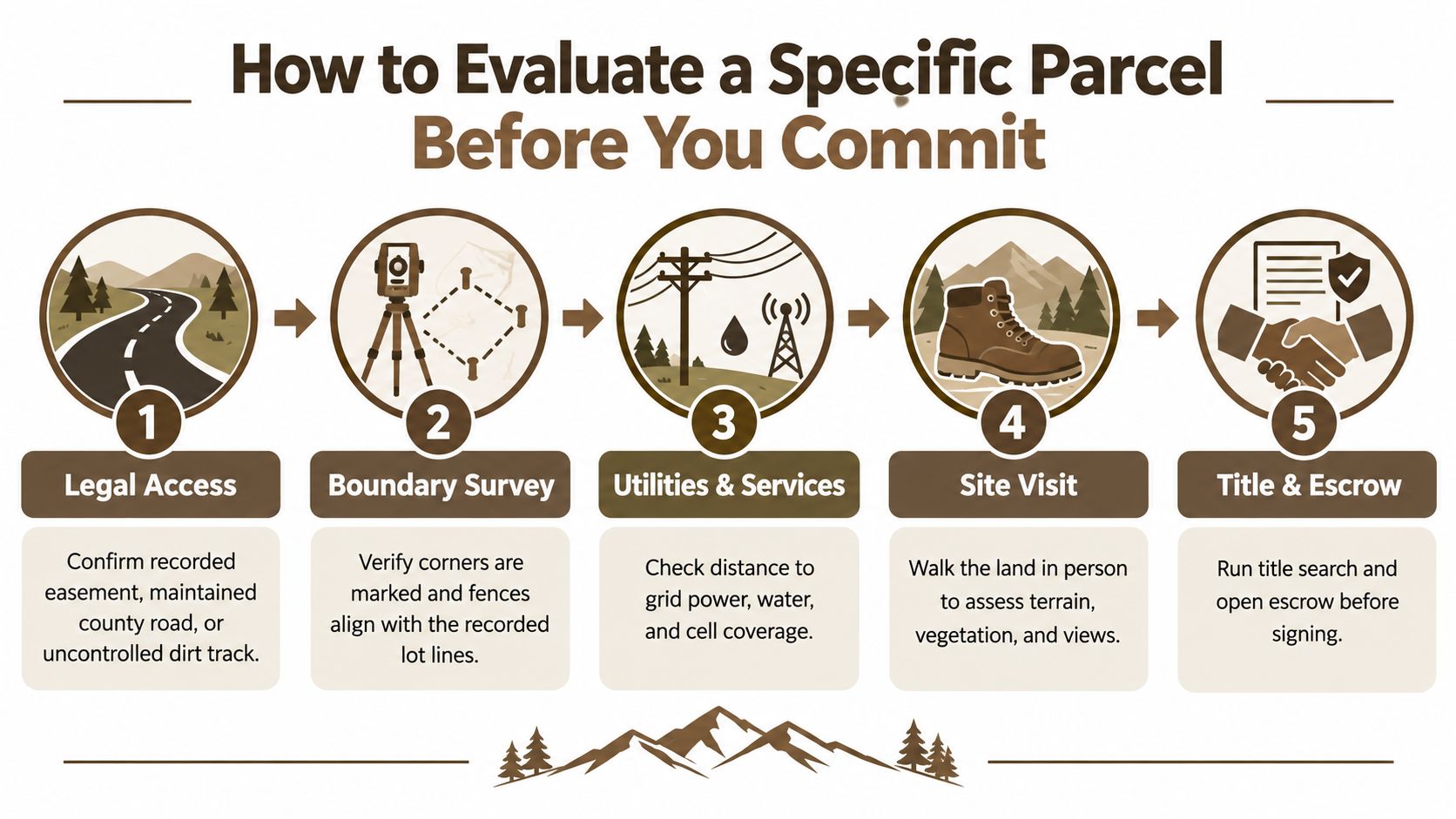
The right order matters here. Start with access, then boundaries, then the physical site, then utilities and soils, and only after that move to wildfire and closing paperwork.
Step one is legal access
A dirt path visible from a listing map can disappear fast once you ask who has the right to use it. Confirm whether there's a recorded easement, a maintained county road, or only an informal track across someone else's land. That one detail can decide whether the parcel is usable at all.
Step two is the boundary
After access, check whether the corners are marked and whether the fence line, if there is one, matches the recorded parcel lines. A buyer who skips the survey step can end up planning around the wrong footprint, which creates headaches with setbacks, driveways, and neighbor disputes.
Step three is services and site conditions
Nearby power on a map is not a connection. The same goes for water. You need to know how far the nearest utility is, whether cell coverage reaches the lot, and what the terrain looks like when you walk it in person.
A site visit answers the questions the listing can't. Slope, vegetation, drainage, and road shape are easier to judge with boots on the ground than from a screen.
Step four is title and closing
Before you sign, review the title path and the purchase documents carefully. What to look for when buying land is a good reminder that access, zoning, and physical condition belong in the same conversation, not separate ones.
Wildfire overlays belong in this same evaluation because they affect more than safety. They can affect road width, defensible-space rules, and whether a future structure is even practical to insure. If the parcel fails one of these steps, price isn't the issue, the use case is.
Cash, Owner Financing, and Reading a Monthly Payment
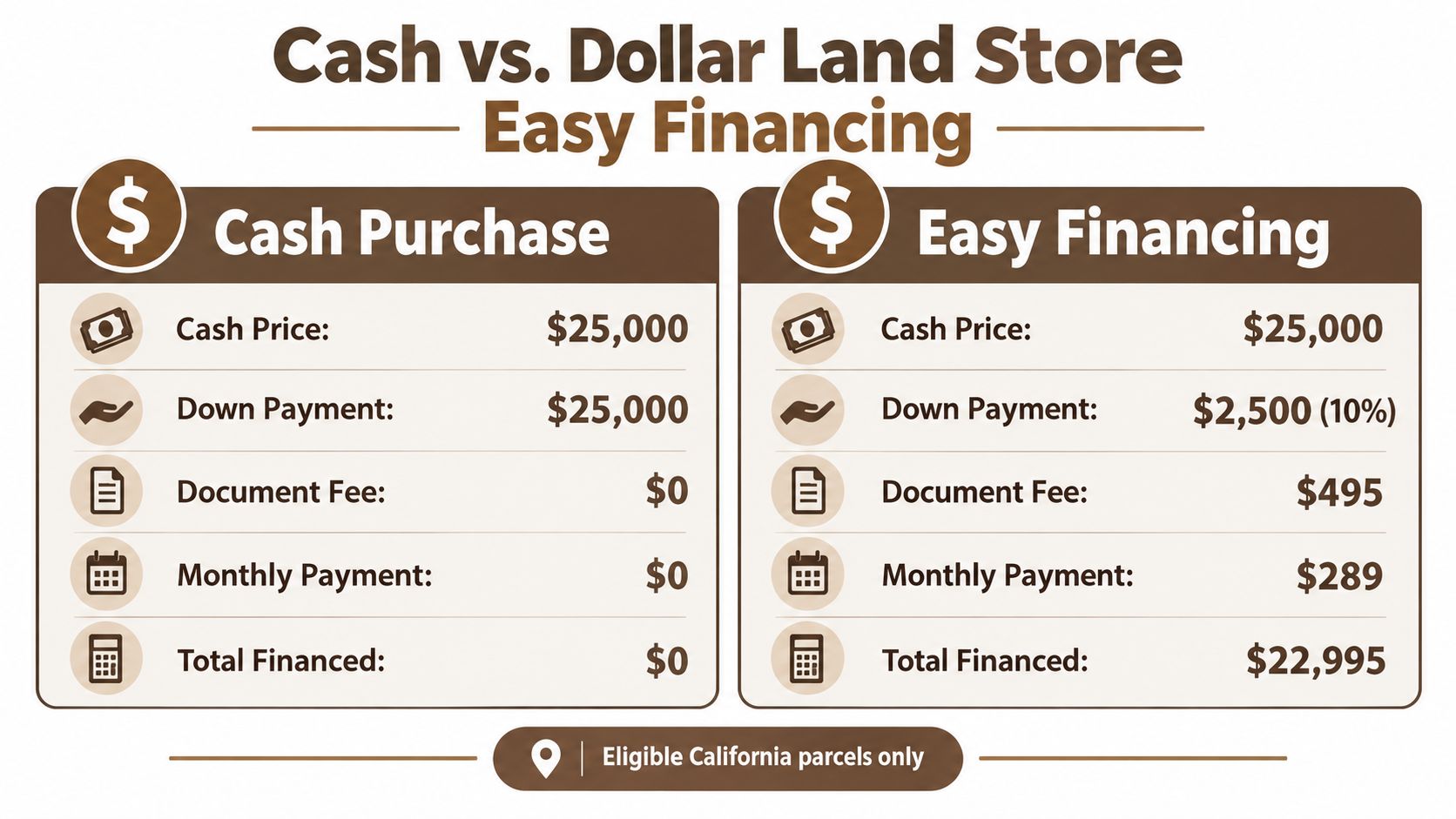
Cash and owner financing solve different problems. Cash gives you simplicity and a clean closing path, while financing can make an eligible California parcel easier to start with if you're comfortable with monthly payments and the agreement terms.
Read the payment pieces separately
If a listing offers Easy Financing, keep the cash price, down payment, document fee, monthly payment, and total financed cost separate in your head. A down payment isn't the whole purchase price, and a low entry payment doesn't mean the property is free or that use rights have changed.
For eligible properties, Dollar Land Store says financing can begin with $1 down plus the document fee shown at checkout. That's a financing down payment, not the full cost of ownership, and the exact monthly payment depends on the parcel and agreement. Financed buyers also complete the required documents and set up payments through ZimpleMoney.
Two California examples help show how that feels in practice. A Bear Valley Springs parcel may carry a different monthly cadence because the setting is more community-oriented, while a Modoc, California Pines parcel may be structured around a quieter, more remote outdoor use. I'm keeping that comparison qualitative here because the right choice is less about the headline price and more about how the parcel fits the buyer's routine.
Financing can be useful, but it doesn't solve use problems
Owner financing can lower the barrier to entry, but it doesn't change zoning, access, septic feasibility, or wildfire exposure. It also doesn't make an RV stay, a cabin, or a well automatically permissible. The land still has to work on its own merits.
If you're comparing land against other outdoor purchases, it can help to think the same way you'd think about a vehicle or trailer expense. For buyers who also need equipment for the property, a separate resource like get a UTV loan through Solana EV may help frame that budget discussion, but it's a different decision from the land purchase itself.
owner financing land in California is most useful when the buyer understands the monthly obligation and still likes the parcel for its actual access and recreation potential. That's the combination that tends to work.
Due Diligence and Closing Without Skipping the Checks That Matter
A good parcel can still turn into a bad purchase if the access chain breaks somewhere. Start with the listing details, confirm the parcel with the county, check zoning and permitted uses, verify road access, review septic and water feasibility, look at wildfire overlays, and read the purchase documents before you sign.
Who answers which question
County staff can confirm parcel records and allowed use. A septic designer or contractor can speak to septic feasibility, and a well contractor can address water questions. Title and escrow handle ownership transfer, document flow, and closing steps.
If you want a lender-side view of the same process, due diligence for California investors covers the checks professional buyers run before closing. For a practical land-focused checklist, land due diligence keeps the focus on parcel identity, access, zoning, water, septic, and wildfire overlays.
Checkout starts the purchase process, but it does not complete the transfer by itself. If you are financing, the required documents get set up through ZimpleMoney, and legal title stays with the seller until payoff and deed-transfer requirements are met. If you are paying cash, deed preparation starts after payment clears, the signed documents are in place, and the required steps are completed.
The trade-off is simple. County rules tell you what is allowed, contractors tell you what is feasible, and the contract tells you how the purchase closes. A buyer who separates those questions avoids the kind of surprise that only shows up after money changes hands.
That is the cleanest way to keep a recreational parcel from becoming a stalled project.
Your Next Step to Browse California Recreational Parcels
Start with current California listings, then sort them by road access, county rules, wildfire exposure, and the kind of recreation you want. Acreage matters, but only after the parcel can support the use you have in mind.
Open two listings side by side, one mountain parcel and one high desert parcel, and run the same five access questions on each. Compare them against the buying process, the financing page, and the terms and conditions so you know how each purchase is handled.
The right California recreational parcel fits your access, your use, and your budget. Don't let the photo make the call.