

What to Ask When Buying Land: Your Essential Checklist
Ross AmatoBuying raw land is an exciting step toward building your dream, whether it's a weekend getaway, an off-grid homestead, or a long-term investment. But before you finalize a purchase, knowing what to ask when buying land can mean the difference between securing a valuable asset and inheriting a costly, unusable property. Many first-time buyers focus solely on the price and location, overlooking critical details that can derail their plans. Hidden issues related to legal access, zoning restrictions, and unforeseen costs often lurk beneath the surface.
This guide provides a comprehensive checklist of essential questions designed to empower you with the knowledge needed for thorough due diligence. By methodically working through these inquiries, you will gain the clarity and confidence required to evaluate a parcel accurately and avoid common, expensive mistakes. Think of this as your personal investigation plan, ensuring the land you choose is a perfect fit for your specific goals.
1. What is the Legal Property Description and Title Status?
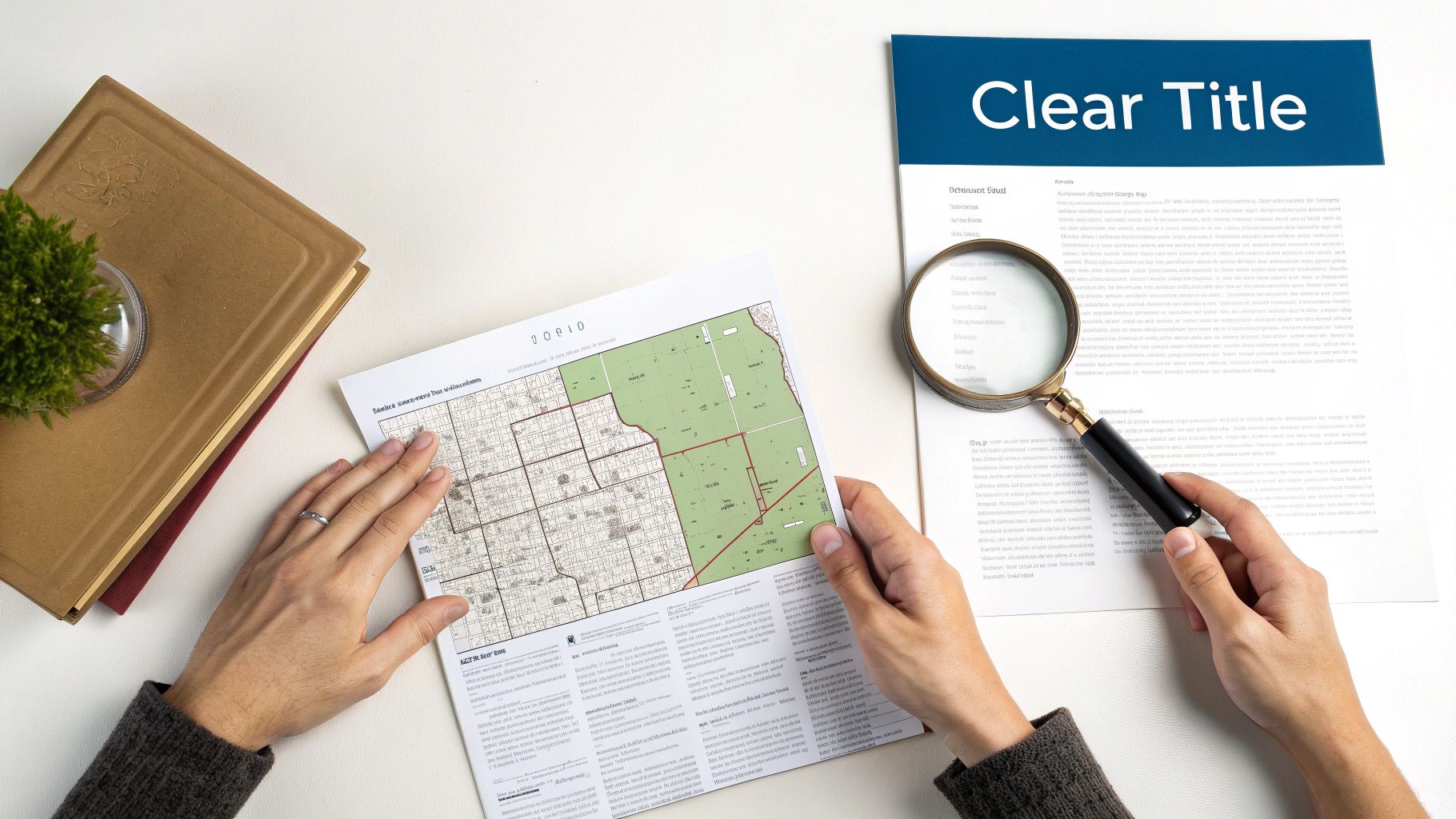
Before you dream of building a cabin, the very first question to ask is about the land's legal identity and ownership history. The legal property description is the official identifier for your parcel, recorded in county records. This isn't just a street address; it’s a precise description that defines the exact boundaries of what you are buying. Equally important is the title status, which confirms who legally owns the property and whether any third parties have claims against it.
Why This Matters for Buyers
Verifying the legal description and title protects you from devastating issues. An incorrect description could mean the parcel you saw online isn't the one you legally own. A "clouded" title could have hidden liens or unresolved ownership disputes that become your problem after the sale. A clear title is the foundation of a secure investment.
Actionable Steps for Verification
- Request a Preliminary Title Report: Ask the seller for a preliminary title report. This document reveals the current ownership status and lists any recorded issues.
- Hire a Title Company: A professional title company will conduct a thorough title search to ensure the seller has the legal right to sell it.
- Review the Title Commitment: Carefully read the Commitment for Title Insurance before closing. This outlines the terms under which the title company will issue an insurance policy, protecting you from future claims.
- Confirm Seller Authority: In owner-financed deals, it's crucial to confirm the seller owns the property outright. Reputable sellers like Dollar Land Store provide clear documentation of their ownership, ensuring a transparent and secure transaction.
2. Are There Any Zoning Restrictions or Land Use Limitations?
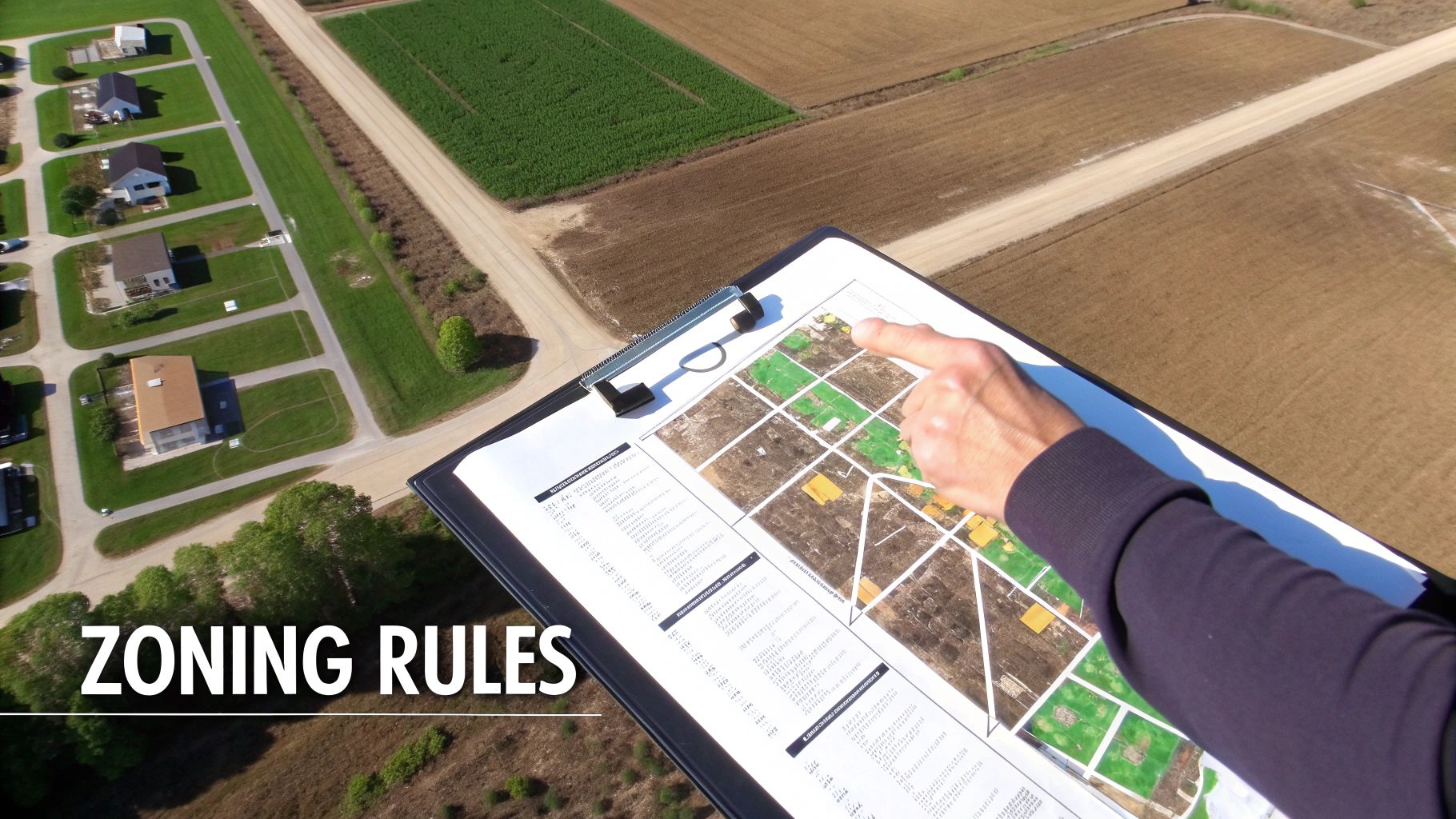
One of the most important questions to ask is how you are legally allowed to use the land. Zoning regulations are local government rules that dictate what can be built and what activities are permitted. These laws divide land into zones—such as residential, agricultural, or recreational—and violating them can lead to significant fines. For anyone planning off-grid living, homesteading, or placing an RV, understanding these limitations is essential.
Why This Matters for Buyers
Zoning rules directly impact your ability to realize your vision. A parcel might seem perfect, but if zoning prohibits your plans, it's unusable for your needs. For instance, a buyer might want to live in an RV full-time, only to discover the rural residential zoning prohibits it. Knowing the zoning designation upfront prevents costly and heartbreaking mistakes. For more detail, you can gain a complete guide to Zoning In Architecture to better understand these rules.
Actionable Steps for Verification
- Contact the County Planning and Zoning Department: This is your most reliable source. Call or visit the local county office and provide them with the property's Assessor's Parcel Number (APN).
- Request the Zoning Designation: Ask for the specific zoning code (e.g., A-G for Agricultural-General, R-R for Rural Residential) and a summary of permitted uses.
- Be Specific with Your Questions: Inquire directly about your plans. Ask about rules for RV placement, allowances for livestock, building size minimums, and requirements for off-grid systems.
- Check for Covenants, Conditions & Restrictions (CC&Rs): Ask if the property is part of a community with its own private rules (CC&Rs) that may be stricter than county zoning.
3. What are the Water Rights and Water Access Conditions?
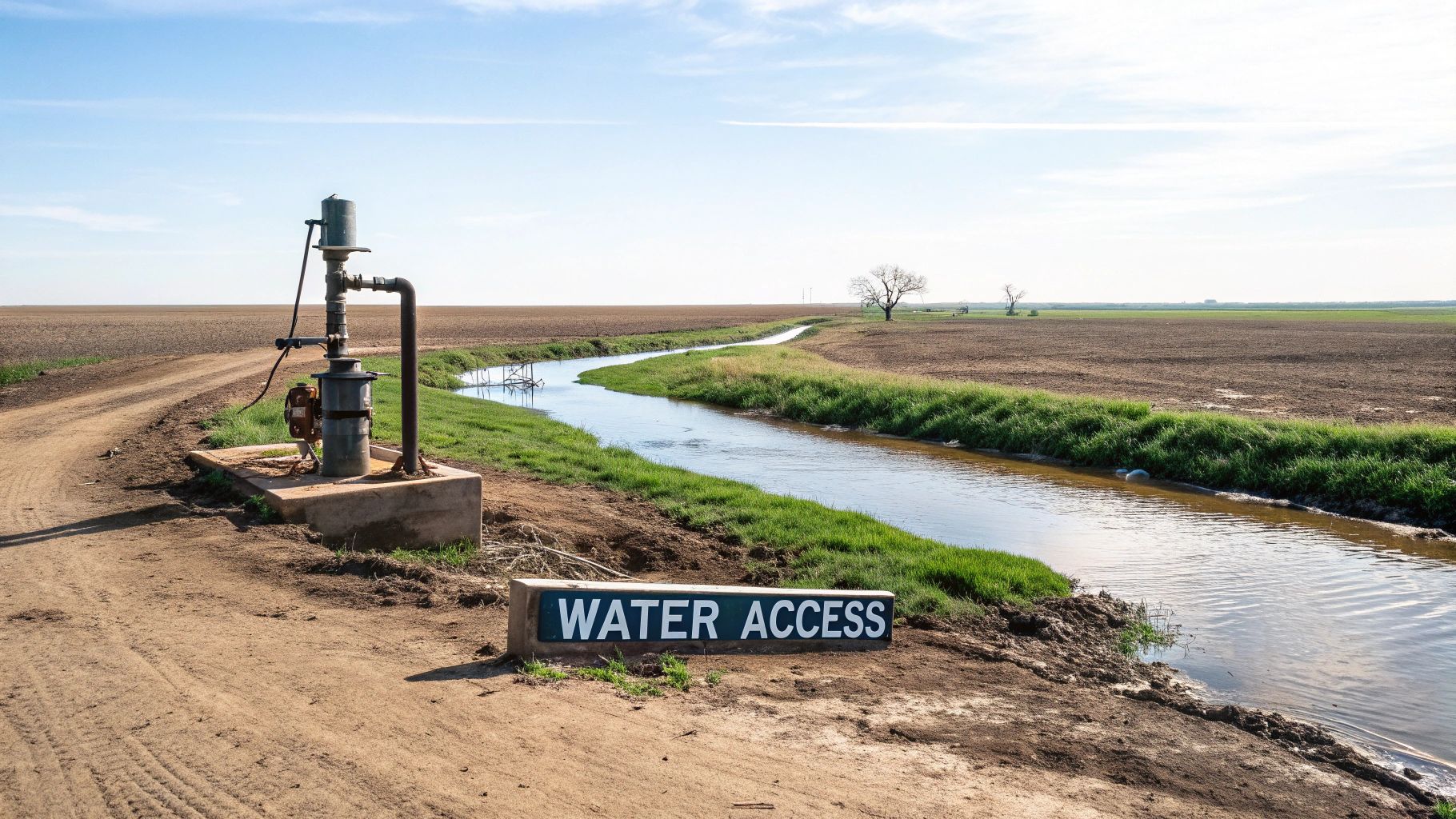
For rural land, especially in the Western U.S., water is a critical resource. You must understand the property's water situation. This involves confirming whether the land includes legal water rights (the right to use water from a specific source) and determining the physical water access (an existing well, a connection to a municipal supply, or surface water). For anyone planning to build or homestead, this is often the most important question.
Why This Matters for Buyers
Owning land without legal or physical access to water can render it nearly unusable for residential or agricultural purposes. A property might be located over an aquifer, but without the legal right to drill a well, you cannot use the water. A buyer might discover their new parcel has no deeded water rights, and drilling a new well could cost over $12,000 with no guarantee of success.
Actionable Steps for Verification
- Request Water Rights Documentation: Ask the seller for any documents or deeds that prove the property's water rights.
- Contact the State Water Authority: Each state has a division that manages water resources. Contact them to verify the status of the property's rights.
- Test Existing Wells: If a well is on the property, have it professionally tested for both its flow rate (gallons per minute) and water quality.
- Get Well Drilling Quotes: For land without a well, contact local drilling contractors for estimates on the likelihood of finding water and the associated costs.
4. What are the Access, Road, and Easement Conditions?
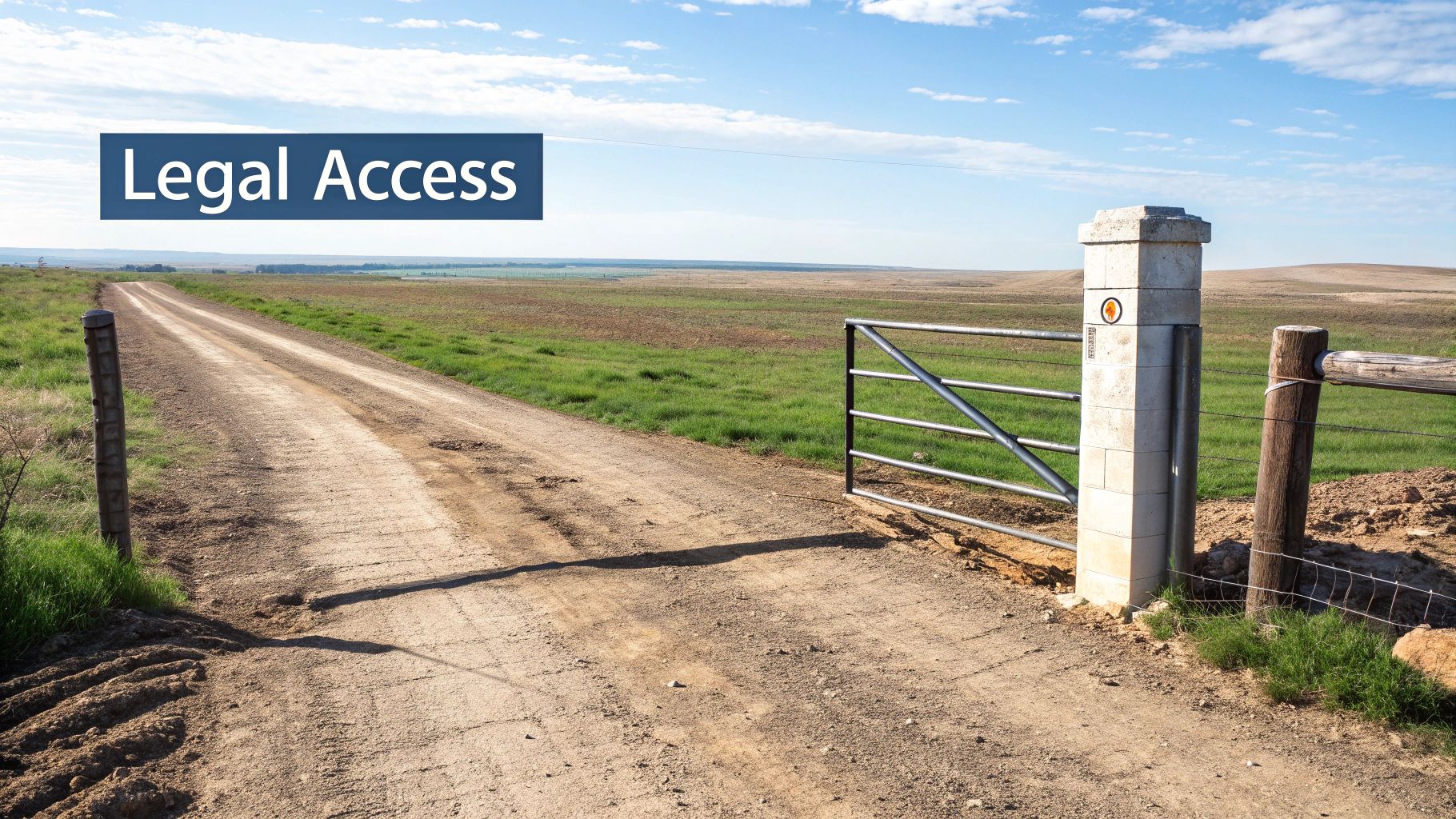
A beautiful piece of land is useless if you can't get to it. One of the most important questions is about physical and legal access. This means verifying your legal right to reach the property, understanding the condition of the roads, and identifying any easements (rights for others to cross your land). Without guaranteed, year-round access, your investment could be severely limited or even landlocked.
Why This Matters for Buyers
Ignoring access can lead to costly problems. A dirt road might become impassable mud in the winter, or a private road could be subject to disputes over maintenance costs. Understanding the legal and practical realities of access protects your ability to use and enjoy your property.
Actionable Steps for Verification
- Verify Legal Access: Confirm that the right to access the property is legally recorded in the deed or an easement agreement. This prevents a neighbor from blocking your path. You can learn more by exploring our guide on how to access landlocked property.
- Inspect the Roads Physically: Drive the entire access route yourself, preferably in different weather conditions.
- Inquire About Maintenance: Ask who is responsible for road maintenance—the county, a homeowners' association, or an informal agreement between neighbors?
- Check for Easements: Review the title report for any easements. A utility company may have the right to cross your land, which could impact where you can build.
5. What are the Soil Conditions, Geology, and Building Feasibility?
The physical ground itself holds critical answers. The soil composition, geology, and topography directly influence building feasibility and construction costs. Poor soil might not support a standard foundation, and steep slopes could render most of the acreage unusable. Asking this question early prevents you from buying a picturesque property where building your dream is physically or financially impossible.
Why This Matters for Buyers
Ignoring the ground beneath your feet can lead to massive expenses. A buyer might discover their land has expansive clay soil, requiring a specialized foundation that adds an unexpected $15,000 to their build cost. Similarly, a property in a flood zone requires elevated structures and expensive insurance. Understanding the land’s physical constraints is a core part of your due diligence.
Actionable Steps for Verification
- Request Soil and Percolation Tests: If you plan to install a septic system, a "perc" test is essential. Consider hiring a geotechnical engineer to perform an analysis for building stability.
- Check FEMA Flood Maps: Look up the property on the FEMA Flood Map Service Center online. This free tool shows if your land is in a high-risk flood zone.
- Walk the Property: Physically walk the land to assess its slope, look for signs of erosion, and identify potential building sites.
- Consult the County Building Department: Contact local county officials to ask about known geological hazards and specific foundation requirements. It's also wise to review a guide on what to know before building a house to understand the full process.
6. What Utilities are Available and What are the Connection Costs?
You need to know how you'll get power, water, and waste management. This involves checking the availability of electricity, water, sewer, and internet. For rural or off-grid properties, this question is even more critical, as you may need to supply these utilities yourself via a well, septic system, and solar power.
Why This Matters for Buyers
Underestimating utility costs can turn an affordable piece of land into a financial nightmare. Bringing power to a remote property can cost tens of thousands of dollars. An off-grid homesteader might need to budget an additional $50,000 for a well, septic, and solar setup. Knowing these potential expenses upfront allows you to create a realistic budget.
Actionable Steps for Verification
- Contact Local Utility Providers: Call the local electricity, water, and internet companies with the property’s parcel number to get an estimate for connection fees.
- Investigate Off-Grid Systems: If the property is off-grid, get quotes from local contractors for drilling a well, installing a septic system, and setting up a solar power system. Explore our guide on setting up off-grid power solutions for more information.
- Verify Septic System Requirements: Contact the county health department to understand the requirements for a septic system, including the type of system and minimum land area required.
- Check for Existing Infrastructure: Ask the seller if any utility infrastructure is already on or near the property line, as this can dramatically reduce connection costs.
7. Are There Environmental Hazards or Restrictions?
Another crucial question involves the land's environmental health. Environmental hazards refer to any contamination or natural risk that could make the land unsafe or expensive to develop. This can range from man-made issues like toxic soil from a former industrial site to natural concerns like high radon levels. Identifying these potential problems early protects both your health and your financial investment.
Why This Matters for Buyers
Ignoring environmental due diligence can lead to catastrophic consequences. A parcel of land might look pristine, but its past use could hide serious issues. A buyer might discover their dream property is near a former industrial site with contaminated soil, requiring a cleanup estimated at over $30,000. Knowing these details upfront allows you to make an informed decision.
Actionable Steps for Verification
- Check Online Databases: Start by searching the U.S. Environmental Protection Agency (EPA) website for Superfund sites and other known contamination areas.
- Ask About Previous Land Use: Inquire with the seller and county planning department about the property's history. Was it ever used for industrial or agricultural purposes?
- Consider a Phase I ESA: For larger investments, a Phase I Environmental Site Assessment (ESA) is a professional report that identifies potential contamination.
- Inquire About Old Structures: If any old buildings ever existed on the property, ask about potential asbestos, lead-based paint, or abandoned underground storage tanks. Reputable sellers like Dollar Land Store provide all known property history to ensure transparency.
8. What are the Property Taxes and Annual Ownership Costs?
The purchase price is just the beginning. A critical question is about the ongoing holding costs. Property taxes are the annual fees levied by local governments. These taxes, along with other recurring expenses like maintenance or potential Homeowners' Association (HOA) fees, make up your total annual ownership costs and can significantly influence the land's long-term affordability.
Why This Matters for Buyers
Underestimating annual costs is a common pitfall. A seemingly affordable $10,000 parcel might have unexpectedly high annual taxes of $800 due to local assessments. For properties within an HOA, monthly fees of $200 or more can exist on top of taxes, completely altering the ownership cost.
Actionable Steps for Verification
- Request Recent Tax Statements: Ask the seller for the property tax statements from the last two years.
- Contact the County Assessor's Office: Call the county assessor's office to verify the current assessed value and the official tax rate. Do not rely solely on the seller's information.
- Calculate Total Ownership Cost: Create a budget that includes annual property taxes, estimated insurance, maintenance, and any HOA or POA fees.
- Investigate HOA/POA Details: If the property is part of an association, request a copy of the covenants and a breakdown of all fees. To get a better understanding of how these taxes work, you can learn more about property taxes on vacant land.
9. What Permits and Approvals are Required for Your Intended Use?
Zoning laws tell you what you can do, but permits and approvals dictate how you can do it. Before you can build, park an RV, or install a solar array, you will almost certainly need a permit from local authorities. This ensures your project complies with building codes and safety regulations. Failing to secure the right permits can lead to stop-work orders and hefty fines.
Why This Matters for Buyers
Understanding permit requirements directly impacts your budget, timeline, and the feasibility of your project. A buyer planning a small cabin might discover their county requires a $1,500 building permit and has a 90-day approval timeline. This information allows them to budget accurately. A buyer who skips this step may find their dream is unachievable or far more expensive than anticipated.
Actionable Steps for Verification
- Contact the County Directly: Reach out to the local county Planning and Building departments. This is the most reliable source for permit information.
- Get Requirements in Writing: Request any permit applications, fee schedules, and process guidelines via email or from the county website.
- Inquire About RV Use: If you plan to live in an RV, specifically ask about long-term residential RV permits. Some counties allow it with specific conditions, while others prohibit it entirely.
- Budget for Costs and Time: Ask about typical approval timelines and associated fees. This will help you factor them into your total project cost.
10. What are the Property Boundaries and Neighboring Property Considerations?
Knowing exactly where your property begins and ends is fundamental. This involves confirming the physical property boundaries through a professional survey and understanding the neighboring land uses. A beautiful parcel can become a headache if a neighbor’s fence is on your land or the adjacent property is used for an incompatible activity, like a dirt bike track.
Why This Matters for Buyers
Ignoring boundaries can lead to serious disputes. A survey might reveal that your planned cabin site is actually on the neighbor's property. A buyer might purchase a seemingly peaceful retreat, only to discover the adjacent parcel is a seasonal cattle ranch, bringing unexpected noise and dust. Clearly defined boundaries prevent encroachment issues and ensure you can use every square foot of the land you paid for.
Actionable Steps for Verification
- Obtain a Professional Survey: The only way to know the exact boundaries is to hire a licensed surveyor. A survey will physically mark the corners of your property and create an official map.
- Visit at Different Times: Spend time on the property during weekdays, weekends, and at various times of the day to assess ambient noise and observe neighbor activities.
- Walk the Perimeter: If possible, walk the property lines. Look for existing survey markers, fences, or signs of encroachment.
- Research Neighboring Parcels: Use county GIS maps to identify the owners and uses of adjacent properties.
- Talk to the Neighbors: If you have the opportunity, introduce yourself. They can offer invaluable insights into the area and any history of property disputes.
What This Means for First-Time Land Buyers
For a first-time buyer, this checklist can seem overwhelming, but it's your roadmap to a smart purchase. Don't be intimidated. Focus on the fundamentals:
- Can I legally use the land for my purpose? (Zoning & CC&Rs)
- Can I legally and physically get to the land year-round? (Access)
- Are there any major hidden costs? (Utilities, Taxes, Soil Issues)
- Is the ownership clear and undisputed? (Title)
Answering these four core questions will filter out over 90% of problematic properties. The goal isn't to become an expert overnight but to know which questions to ask and who to ask for help (like the county planning department). Taking a methodical approach transforms a confusing process into a series of manageable steps, giving you the confidence to move forward.
Why Consider Dollar Land Store?
Navigating the land buying process can be complex, especially for beginners. Dollar Land Store was founded to make land ownership more accessible and transparent. Here’s how we help buyers overcome common hurdles:
- Affordable Land with Low Payments: We specialize in rural land at low entry costs, making ownership possible without a large upfront investment.
- Simple Owner-Financing: Our seller-financing is straightforward, with no credit checks and instant approval. You work directly with us, the property owner.
- Transparent Terms: All property details, including zoning, access, and known restrictions, are clearly stated in our listings. There are no hidden fees or surprises.
- Fast and Simple Process: Because we own the land we sell, there are no middlemen or real estate agents. We handle all the paperwork, making the purchase process quick and easy.
- Broad Inventory: We offer a wide selection of parcels across several states, helping you find the right fit for your goals, whether for recreation, investment, or building a future home.
We believe that buying land should be an exciting and empowering experience. By providing clear information and simple financing, we help first-time and experienced buyers alike purchase with confidence.
Your Next Steps to Buying Land
With this knowledge, you are ready to move forward. The next phase is about applying these questions to real-world properties.
- Define Your Goal: Be clear on what you want to do with the land (e.g., camping, building, investing). This will help you focus your search.
- Start Browsing: Look at available land listings. As you review a parcel, run it through this checklist. Can you find preliminary answers about access, zoning, and utilities online?
- Ask Questions: Don't hesitate to reach out to the seller or the relevant county departments with your questions. A reputable seller will be happy to provide the information you need.
This exercise will sharpen your eye for detail and help you quickly identify promising opportunities. Remember, every property has a story, and your job is to uncover it before you sign on the dotted line.
Conclusion
Embarking on the journey to buy land is the first step toward building a legacy, creating a private retreat, or securing a tangible asset. The comprehensive checklist we've explored is your most powerful tool. By mastering this due diligence framework, you transform from a hopeful buyer into a savvy, confident investor. The most successful land purchases are not matters of luck; they are the direct result of a methodical investigation. Knowing what to ask when buying land is the foundational skill that ensures your piece of the American dream rests on a solid foundation of facts and clarity.
Contact Dollar Land Store with questions about buying raw land, or start your journey today.
Browse available land at DollarLandStore.com