


Land in Oregon for Sale Cheap: A Buyer's Guide
Ross AmatoMost advice about land in Oregon for sale cheap starts with price, and that's the wrong first filter. In Oregon, a low sticker price can hide zoning limits, septic problems, water issues, wildfire constraints, or a parcel that cannot support the use you have in mind. The better question is whether the land can legally and practically do what you want it to do.
Cheap parcels do exist, especially outside the highest-demand parts of the state, but the decision is about usable land, not just acreage. Oregon's land base is heavily shaped by public ownership and land-use designations, so a bargain lot can still be a poor fit for a cabin, RV, well, or full-time home if the county rules don't line up with your plan. If you're comparing listings, start with the parcel's intended use, not the headline price.
Finding Affordable Vacant Land in Oregon
Affordable vacant land in Oregon usually means raw or lightly improved parcels in rural counties, often on dirt roads, with few utilities and a lot more homework than a city lot. That's the trade-off buyers accept when they want lower entry costs and more space. The smartest search starts with the use case, because “cheap” can mean a weekend getaway, a future homesite, or a long-term hold.
A practical search usually narrows to acreage, access, and zoning before anything else. Those three filters tell you more than the listing photos ever will. A parcel that looks simple on a map can still be unusable if the county won't allow the kind of structure or activity you want.
Oregon's land values also vary sharply by use. Statewide agricultural benchmarks from Oregon State University Extension put 2025 farm real-estate value at $3,780 per acre on average, with pastureland at $1,080 per acre and irrigated cropland much higher, while non-irrigated cropland sat in between. Those aren't residential lot prices, but they're a useful reality check when a listing is called “cheap” without context. See the statewide farm-value summary in Oregon State University Extension's USDA-based report for the broader pricing backdrop. Oregon State University Extension's farmland value summary
Practical rule: if a parcel's price looks unusually low, ask what the land is missing, not just what it costs.
For readers comparing raw parcels, this broader Oregon guide on cheap acreage in Oregon is a useful companion because it separates rural bargain hunting from unrealistic wish lists. A low price can be a real opportunity, but only after you've checked what the lot can legally support.
Understanding Oregon's Rural Zoning and Land Types
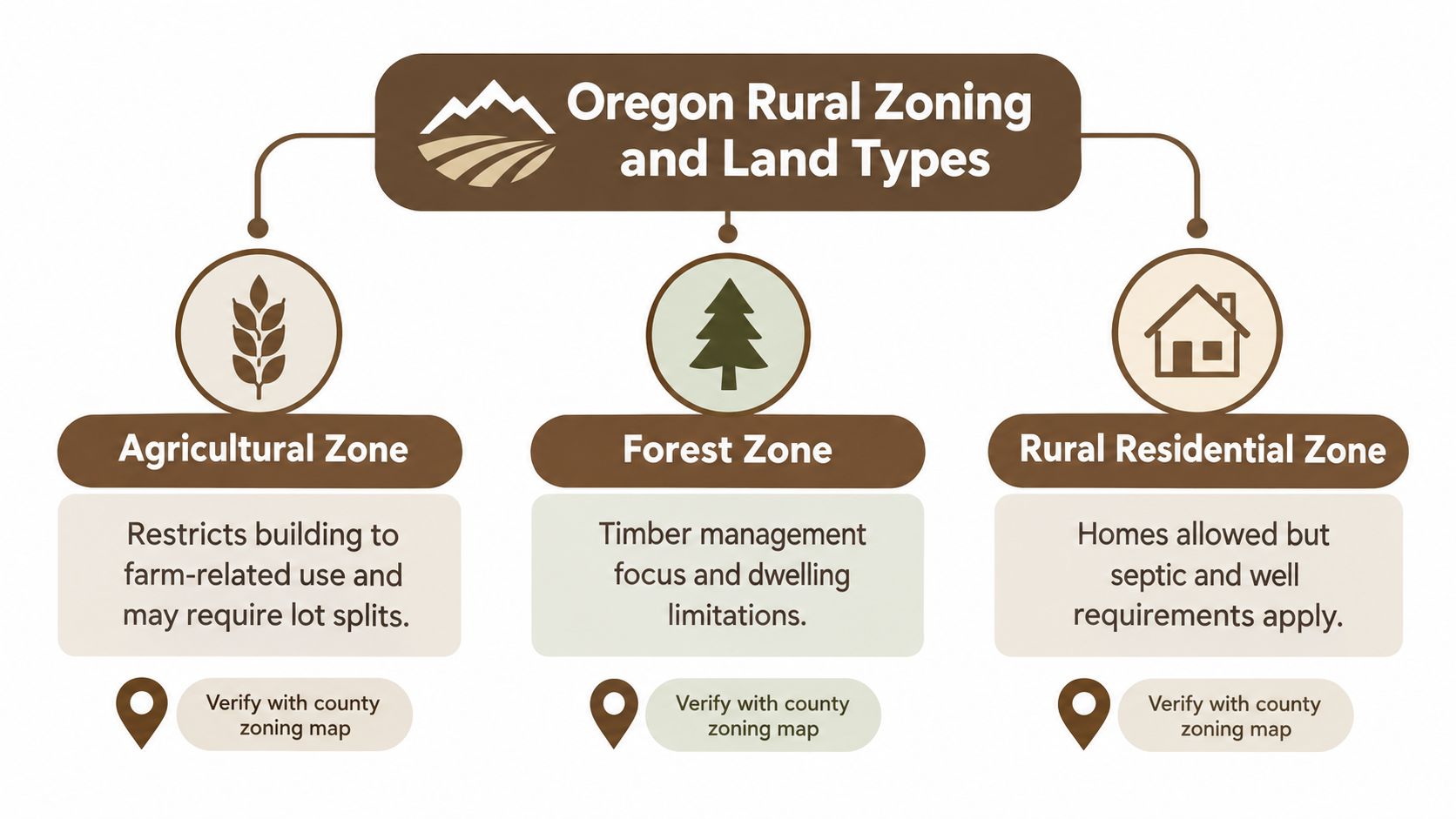
Oregon's zoning system is the reason one “cheap” parcel may work for a home while another looks similar on paper but won't. The state's land-use framework makes zoning verification a first-pass screen, especially for small parcels that appear affordable because they're outside urban areas. A parcel's size alone doesn't tell you whether it can be divided, developed, or used the way you want.
The zone matters more than the acreage
Agricultural land, forest land, and rural residential land all come with different expectations. Agricultural zones are generally tied to farm use, forest zones are geared toward timber and resource management, and rural residential zones are the most likely to support a dwelling, though they still come with local approval rules. Oregon's framework also means that a parcel advertised as “2 acres” may already be an existing subminimum lot, which is not the same thing as a newly creatable 2-acre homesite. See the state land-use planning overview for the parcel-size and zoning rules that shape what can be created or built. Oregon land-use planning rules
A good way to think about this is that zoning defines the lane, not the listing price. A low-cost parcel in a resource zone may still be perfectly legitimate land, but the allowable use may be narrow. That's why buyers should confirm the county's general-plan designation, the exact zoning label, legal parcel status, and whether the lot is recognized as an existing lot or only appears that way on an ad.
County planning departments care about the parcel's legal status, not the marketing language in the listing.
If you want a clearer overview of how rural housing rules differ from other land types, this residential zoning guide is a good way to understand why one lot can support a home while another can't. For a cheap Oregon parcel, that distinction is often the whole deal.
Evaluating Septic, Water, and Wildfire Feasibility
Cheap land gets expensive fast when septic, water, or fire requirements show up late. That's why I treat these as separate feasibility checks, not afterthoughts. A low purchase price means very little if the parcel can't support wastewater disposal, a usable water source, or the kind of fire precautions a future home may need.
Start with septic before you picture a house
Oregon requires a permit to install, alter, or repair a residential septic system, and a new system generally needs an approved site evaluation first. That evaluation looks at soil, slope, groundwater, setbacks, and whether there's enough drainfield area for both the initial system and a replacement area. The state also warns that small lots, shallow water tables, compacted fill, or restrictive soil layers can make a parcel unsuitable even when the land looks dry and usable on the surface. Oregon DEQ on onsite sewage rules
Water works the same way. Oregon treats groundwater as a public resource, and some domestic uses are exempt from a water-right permit, but the use still has limits and the well has to meet state standards. For an exempt-use well, the Water Resources Department also requires a one-time $300 groundwater-use recording fee and a map showing the exact well location on the tax lot. Oregon exempt-use well fee and recording rules
Wildfire planning is the third screen. Oregon's 2025 wildfire-policy changes removed the old statewide hazard map and shifted more responsibility to local adoption and county-level rules. That makes local verification more important, not less. Buyers should check emergency access, defensible-space expectations, and any local fire-protection standards before assuming a cheap parcel can later support a home or even a comfortable off-grid setup. Oregon wildfire policy update
For a parcel-level look at this issue, the wildfire risk assessment guide is worth reading before you call a lot “buildable.”
Best practice: verify zoning, then legal access, then septic feasibility, then water, then wildfire and insurance questions. Skipping the order is how buyers get trapped by avoidable costs.
Owner Financing vs. Cash Purchase Options
Cash is the cleanest path when the numbers work. You pay, complete the required documents, and move through the deed process once the transaction requirements are satisfied. It's the simpler choice for buyers who want to avoid monthly obligations and who already know the parcel fits their plan.
Owner financing gives some buyers a different route, especially on eligible properties where a traditional bank loan isn't the right fit. Dollar Land Store states that buyers can choose cash or financing on eligible listings, and the financing process is handled online through required documents and ZimpleMoney for payment management. Financing terms vary by listing, so the important step is to read the specific purchase documents rather than assuming one lot's terms apply to another.
What to check before you choose
- Cash buyers should confirm the parcel still fits their intended use, because speed doesn't fix zoning or septic problems.
- Financed buyers should review the payment structure, understand that checkout starts the purchase process rather than completing ownership by itself, and finish all required documents.
- Both paths still depend on the signed agreement and applicable law, which control the transaction details.
If you want a plain-language look at how financing fits into Oregon land buying, this owner-financed land in Oregon guide lays out the structure clearly. The main point is simple, though. Financing can make a property reachable, but it doesn't change the parcel's zoning, access, or physical limitations.
Off-Grid and Recreational Use Considerations
Cheap Oregon land appeals to buyers who want space, privacy, and a place to spend time outdoors without paying for city convenience they don't need. That's a fair goal, but it still has to line up with the parcel's rules. Nearby public land or recreation opportunities don't automatically give you the same rights on the private lot itself.
Use the region and the parcel as two different things
The surrounding area can support hunting, hiking, or dispersed recreation, while the parcel may still be limited by zoning, financing terms, or county rules. During financing, buyers shouldn't assume they can live on the property, store an RV, add structures, or make improvements without the written permissions required by the agreement. Even after payoff, deed transfer doesn't magically create building, camping, septic, or well rights.
That's why recreational buyers need to think in layers. First comes the county's land-use rules. Then comes physical access. Then comes whether the parcel can support the activities you have in mind. A remote lot might be great as a quiet base for future use, but that doesn't make it ready for a cabin or full-time occupancy today.
For buyers who want an off-road or hunting setup, a practical equipment guide like Campus EV's hunting UTV guide can help with vehicle planning, but it doesn't replace parcel diligence. You still need to know whether the road is legal, the site is usable, and the county will allow the kind of activity you're planning.
Next Steps for Buying Your Oregon Parcel
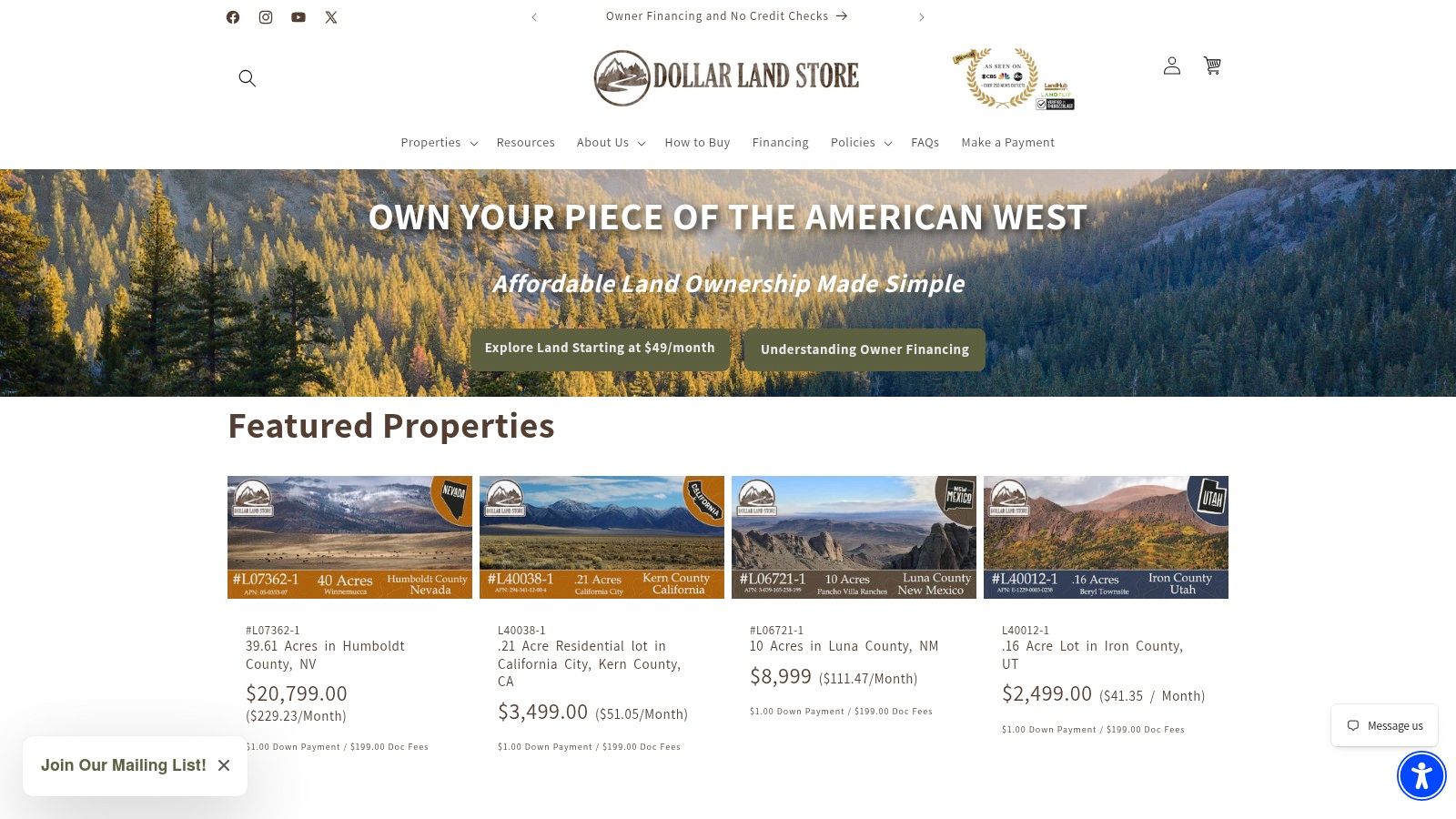
The right next move is to compare actual parcels, not just search phrases. Start with the listing details, then read the buying process so you understand how checkout, documents, and any financing steps work together. After that, review the sample land purchase agreement and make sure the parcel fits your budget, timeline, and intended use before you get attached to it.
A simple buyer checklist
- Confirm the zoning: Make sure the county designation matches your intended use.
- Verify access: A road on a map is not the same thing as usable legal access.
- Check septic and water feasibility: Don't assume a well or septic system will work without site review.
- Read the agreement: Purchase terms matter as much as the map and photos.
- Compare multiple parcels: Cheap doesn't mean equal, and the best fit is rarely the first one you see.
If you want a broader framework for thinking through viability, this guide to project viability is a useful mindset check. It's not about making land buying complicated, it's about avoiding the mistake of buying a parcel that can't support the plan you had in mind.
Dollar Land Store keeps the process focused on real parcels, maps, and disclosed details so buyers can make a grounded decision. Browse current Oregon listings, compare acreage and location, and choose the parcel that fits your budget and intended use at Dollar Land Store.