


Buying Lots of Land in the Western US
Ross AmatoYou're scrolling through listings of wide-open desert, mountain valleys, and inexpensive acreage, already imagining a cabin, an RV, or a quiet place to get away. Then a practical question interrupts the dream: what can you legally do with the parcel once you buy it? In the Western United States, lots of land can offer privacy and long-term flexibility, but raw acreage is rarely ready for immediate use. The purchase only makes sense when the location, access, zoning, utilities, financing, and holding costs fit your actual plan.
Finding the Right Lots of Land in the Western US
A listing can make a parcel look simple. You see a boundary map, a dirt road, a mountain range, and a price that seems far below the cost of a house. What you're usually looking at, however, is vacant, unimproved land, often without buildings, utility connections, established driveways, or guaranteed permission for the use you have in mind.
The Western market includes very different kinds of property. A small desert lot near an established community has a different practical value from a large, remote parcel in New Mexico, Nevada, or Colorado. A buyer seeking a future homesite may need road frontage, suitable soils, and utility planning. Someone looking for solitude may accept greater distance from town, but still needs legal access and a clear understanding of local restrictions.
The affordable price often reflects those trade-offs. Lower-cost land may mean fewer nearby services, more difficult terrain, longer utility extensions, and limited immediate development options. That doesn't make the parcel a bad purchase. It means the buyer has to value the land for what it is, rather than for an imagined finished property.
Practical rule: Treat every listing photo as an invitation to investigate, not as proof of access, buildability, utilities, or permitted use.
The difference between land ownership and land readiness
Land ownership can be a practical entry point in a market where large tracts are concentrated and formal documentation remains uneven. A 2025 FAO, ILC, and CIRAD report says only 35% of the world's land has formally documented ownership. It also reports that more than 64% is state-owned, while about 18% of all land, roughly 2.4 billion hectares, is privately owned by individuals or corporations. The top 10% of the largest landholders operate 89% of agricultural land worldwide, which shows why smaller, deeded parcels can appeal to first-time buyers.
That context doesn't remove local risks. It explains why a modest parcel can be meaningful even when it isn't ready for construction. A deed gives you an ownership interest. It doesn't automatically provide a legal driveway, a water source, septic approval, or permission to occupy the property.
The scale of the resource is also substantial. FAO reports that global agricultural land reached 4.6 billion hectares in 2024, more than one-third of the world's total land area, in its 2025 land statistics release. Land supports food production, conservation, recreation, and investment, but each use depends on parcel-level facts.
How to frame a realistic search
Start with your intended use and your tolerance for inconvenience. Don't begin with the largest acreage or the lowest advertised payment. Begin with questions such as:
- Location: How far can you be from groceries, healthcare, fuel, and equipment?
- Terrain: Are you comfortable with desert soil, steep grades, seasonal roads, or exposed conditions?
- Access: Do you need a maintained public road, or can a recorded easement and rough road meet your needs?
- Time horizon: Are you buying for a future plan, occasional recreation, or a project you want to start soon?
- Budget: Can you carry taxes, insurance, travel, maintenance, and financing without immediate income from the land?
A useful way to compare land for sale research is to keep a simple parcel worksheet. Record the county, legal description, acreage, road information, zoning contacts, utility notes, title questions, and your intended use. The worksheet keeps attractive scenery from outweighing facts that may control the purchase.
The best lots of land are not necessarily the cheapest or largest. They're the parcels whose limitations you understand and whose remaining possibilities match your budget, patience, and purpose.
Matching Your Parcel to Your Long Term Goals
Two buyers can inspect the same Western parcel and reach opposite conclusions. One may see a quiet recreational base. Another may see a difficult future homesite. A third may see an asset worth holding, provided the annual costs remain manageable.
That's why acreage alone is a weak filter. Your intended use determines which parcel facts matter most. Public land nearby may help a recreation buyer, but it doesn't establish camping rights on the private parcel. A broad view may appeal to an investor, but it doesn't answer whether the land has legal access or a workable approval path.
Four buyer profiles, four different filters
Recreation seekers usually care about the terrain, privacy, road conditions, and proximity to public land or regional attractions. They should still verify whether the parcel itself permits the activities they expect. A nearby BLM boundary can expand regional recreation options, but it doesn't convert private land into public land or guarantee an access route through neighboring property.
Future home builders need a stricter technical review. Minimum lot size, setbacks, flood exposure, soil conditions, water, wastewater, road standards, and the county's approval process can matter more than the view. A parcel that looks spacious may not support the planned home if a septic system fails its required evaluation or if the legal lot status is unclear.
Off-grid enthusiasts should separate self-sufficiency from exemption. Solar equipment, hauled water, composting systems, or a small structure may be possible in some jurisdictions, but each requires local verification. Off-grid does not mean outside zoning, health, environmental, or occupancy rules.
Buy-and-hold investors need to focus on carrying costs, title quality, access, marketability, and a realistic exit plan. Raw land often produces no immediate cash flow, yet the owner may still face property taxes, liability insurance, maintenance, and travel expenses. A parcel can be affordable to acquire and expensive to keep if the buyer doesn't budget beyond the purchase price.
Parcel priorities by buyer profile
| Buyer Profile | Primary Goal | Critical Parcel Traits | Common Dealbreakers |
|---|---|---|---|
| Recreation seeker | Access to outdoor activities and a private base | Legal access, usable terrain, regional recreation, understandable local rules | Assumed access, seasonal road problems, restrictions on intended activities |
| Off-grid enthusiast | A long-term low-infrastructure plan | Water strategy, wastewater path, zoning, solar feasibility, legal lot status | No legal access, unsuitable soils, prohibited occupancy, unclear permits |
| Future home builder | A lawful and practical homesite | Minimum lot size, setbacks, soil, utilities, road standards, county approval path | Failed septic prospects, flood constraints, unusable access, zoning conflict |
| Buy-and-hold investor | Preserve flexibility and manage future resale | Clean title, reasonable carrying costs, recognizable location, documented access | Liens, unclear boundaries, weak demand, costly ongoing obligations |
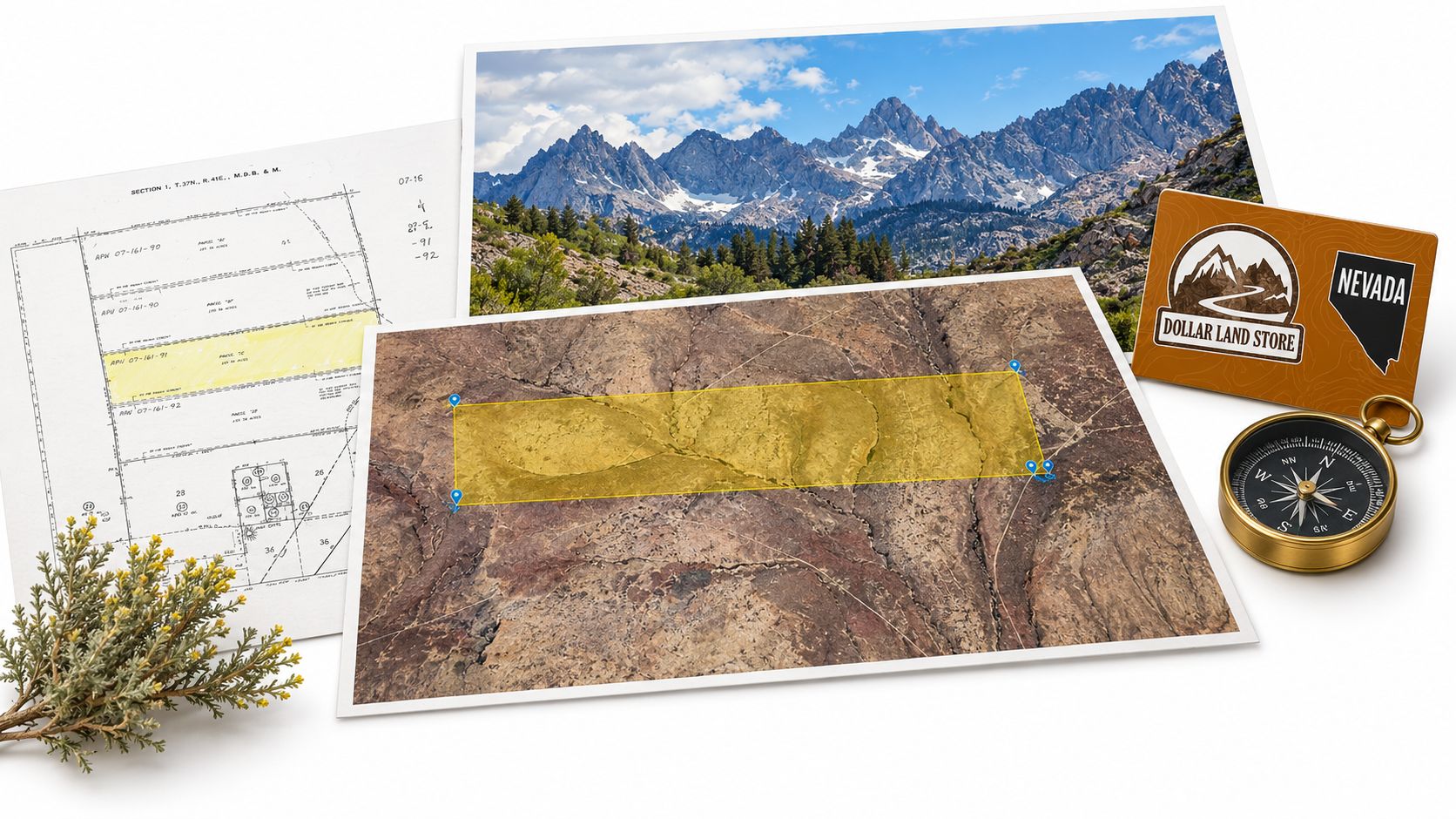
One example is #L00266-1 165.84 Wide Open Acres in Humboldt County, Nevada $69,000.00 ($722.25/Month). The listing describes a parcel in Humboldt County near Adam Peak, approximately 24 miles from Winnemucca, with an existing dirt road, a 30-foot easement, and perimeter easements. It also describes the property as bordered on three sides by BLM land and notes that buyers must verify land use, access, and zoning with Humboldt County. The listing states that the photos show the general area and may not depict the exact property, and that the land is sold as-is without guarantees of future development.
That example demonstrates the correct way to read a listing. The surrounding public land and regional hunting or recreation opportunities may be relevant to a buyer's interests. They don't answer whether a particular structure, vehicle, camping arrangement, or future residence is allowed on the private parcel.
Match the purchase to your timeline
If you want a place to occupy next month, raw land may be the wrong category. During financing, buyers must follow the signed agreement and shouldn't assume they can live on the property, store belongings, park an RV, build, or make improvements without the required written permission. Even after payoff and deed transfer, building, camping, RV use, wells, septic systems, farming, and subdivision still require applicable local approval and parcel suitability.
A long-term buyer has more flexibility, but patience doesn't eliminate due diligence. The right parcel is the one that remains sensible if your preferred future use takes longer, costs more, or proves unavailable.
Verifying Zoning Access and Utility Availability
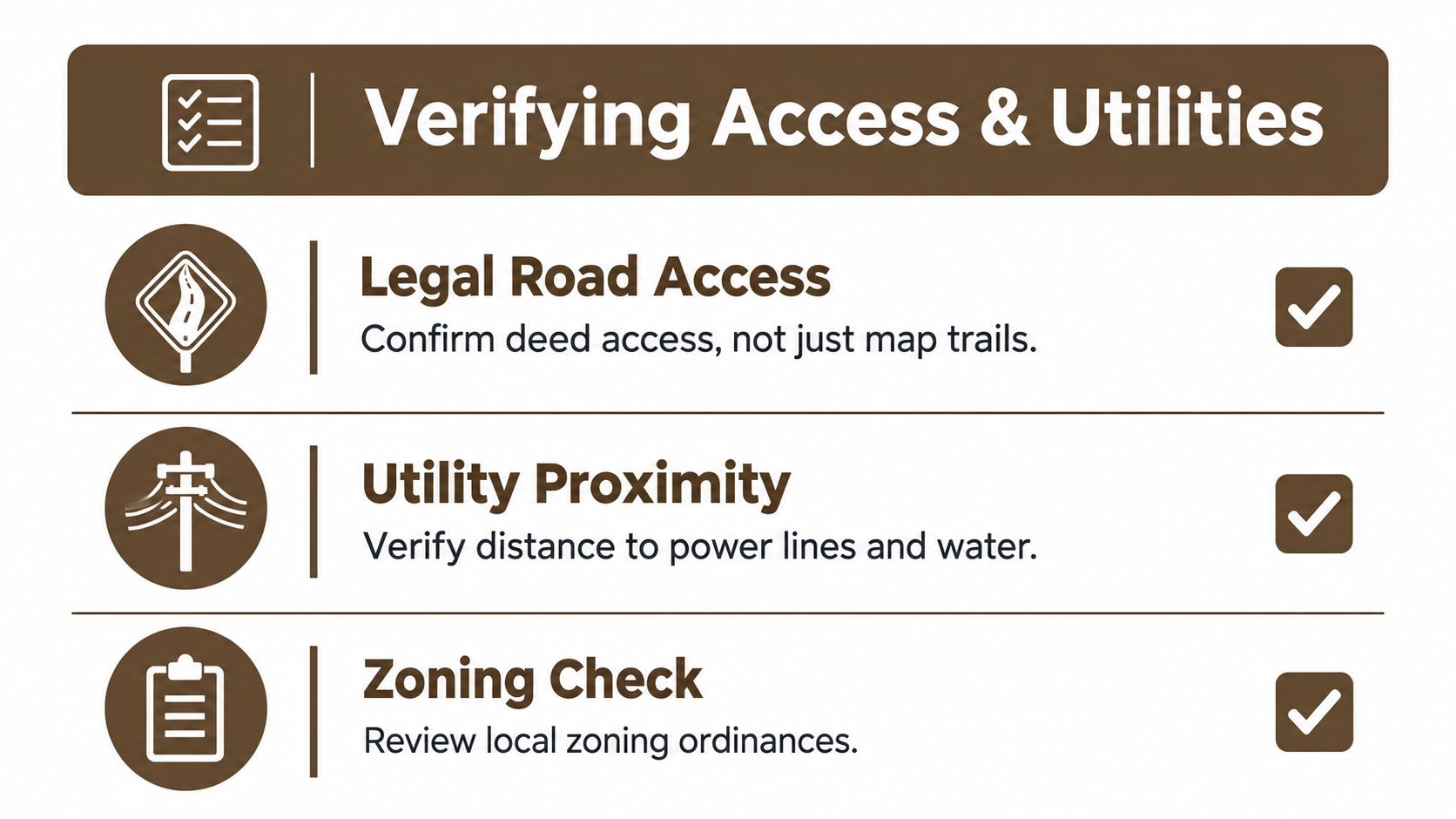
The most expensive mistake in rural land buying is often an assumption that sounded reasonable at the beginning. A road appears on a map, so the buyer assumes access. Power lines run nearby, so the buyer assumes a connection will be easy. The county has a rural zoning label, so the buyer assumes a home, RV, or cabin is permitted.
Those assumptions can fail independently. Physical access is not the same as legal access, and utility proximity is not utility availability.
Start with the county, not the listing photo
Pull the parcel number and legal description from the listing, then compare them with county assessor and GIS records. Use the map to orient yourself, not to establish a legal right of entry. A mapped road may be private, seasonal, poorly maintained, or located on an adjacent parcel.
Call the county planning or zoning office with a written list of questions:
- Is the parcel a legal lot?
- What uses are permitted outright?
- Which uses require a conditional-use approval?
- Are there overlays, minimum lot sizes, frontage requirements, setbacks, height limits, or special plans?
- Are camping, RV occupancy, structures, wells, septic systems, or agricultural activities regulated?
- What permits and inspections would apply to the intended project?
Ventura County's vacant-land buyer checklist uses the same practical questions, including whether the lot is legal, whether the zoning and general plan allow the project, whether permits are required, and whether legal access exists. These questions are useful even outside California because they force you to test the plan against the parcel's actual jurisdiction.
Verify access through recorded documents
Ask a title professional or county recorder to identify easements and restrictions. Look for a recorded ingress and egress easement that reaches a public road, then confirm its location, width, allowed users, maintenance responsibilities, and any limits on heavy vehicles or improvements.
A dirt track that reaches the property can still be unusable for your purpose. It may cross land without a recorded right, become impassable during weather, or provide no authority to install a driveway, utility line, gate, or culvert. For a more detailed field checklist, use what to look for when buying land alongside the county records.
Access is a legal question first and a driving question second. Test both before you treat a parcel as usable.
Treat utilities as separate projects
For electricity, contact the serving utility and ask about the nearest connection point, extension requirements, engineering review, easements, and buyer responsibility for construction. “Nearby power” is only a location clue until the utility confirms the connection process.
For water, determine whether the area relies on a public system, a private well, hauled water, a water right, or another approved source. Ask the appropriate state or county authority about well rules, spacing, depth expectations, and whether the parcel has any documented rights. Don't confuse a seasonal wash, stock pond, or nearby water feature with an approved domestic supply.
Wastewater requires the same discipline. Ask the county environmental health office about soil testing, percolation requirements, system types, reserve areas, and setbacks. A parcel that cannot support an approved wastewater system may be unsuitable for a residence regardless of its acreage.
The cost of housing often pushes buyers toward land, but ownership and construction remain different problems. For context on the broader economics behind expensive housing, this breakdown of expensive homes offers useful background. It shouldn't replace county-level research into a specific parcel.
Structuring Owner Financing and Monthly Payments
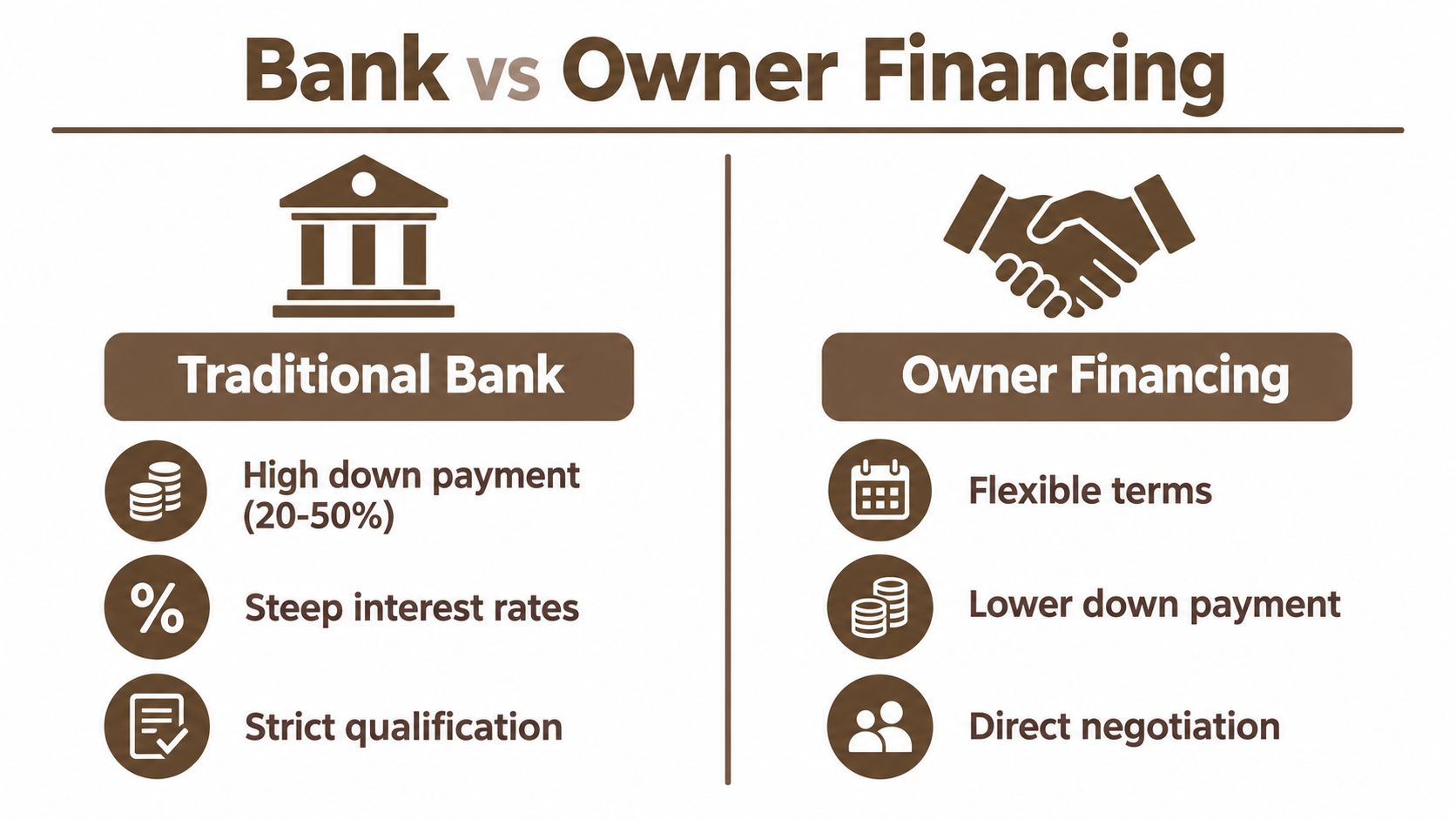
Raw land financing is more conservative than home lending because unimproved land is harder to appraise and may be more difficult to resell. Market guidance for raw land commonly places down payments around 35% to 50% and interest rates around 9.5% to 11%, with shorter terms than residential mortgages, according to this raw land financing reference. The same source says raw land loans default at roughly twice the rate of residential mortgages, which helps explain why lenders seek larger equity cushions.
Owner financing addresses a different problem. It can let a buyer purchase an eligible property without a traditional bank loan or credit check, but it doesn't make the land free, developed, or riskless. The buyer still needs to understand the full obligation before signing.
Separate the five financial terms
A clear comparison starts by keeping these amounts distinct:
- Cash price: The stated price when the property is purchased without financing.
- Down payment: The amount paid at the beginning of a financed purchase. On eligible properties, an offer may use a $1 down payment, but that is a financing down payment, not ownership for one dollar. Additional disclosed charges may apply, and monthly payments still follow.
- Document fee: A transaction charge shown in the applicable checkout disclosures or agreement. It isn't the same as the down payment.
- Monthly payment: The scheduled amount under the signed financing agreement.
- Total financed cost: The complete amount paid over time, including the amounts and charges stated in the agreement.
Owner-financing terms can differ from bank terms. One land-financing guide says raw land loans commonly require 20% to 50% down, carry rates 1% to 3% above conventional mortgages, and may use shorter repayment periods or balloon structures. Those market ranges aren't a substitute for the specific disclosures attached to a property.
A low initial payment can improve access, but it can also hide the importance of the total obligation. Budget for taxes, insurance, travel, maintenance, and the possibility that the land won't generate income while you're paying for it.
Understand title retention and permitted activity
For a Dollar Land Store financed purchase, the buyer completes the required documents and sets up payments through ZimpleMoney. The seller retains legal title until payoff and completion of the deed-transfer requirements. Buyers may make additional payments or pay off early under their agreement.
Checkout begins the purchase process. It doesn't by itself complete the transaction or transfer ownership. The signed agreement, transaction documents, checkout disclosures, and applicable law control the details, so review them before submitting funds. The land loan payment calculator can help organize the financial questions you need to ask, but it can't replace the agreement.
During financing, don't assume you can occupy the property, store personal belongings, park an RV, build, or make improvements. Limited recreational visits may be possible only when allowed by the agreement and applicable local rules. Payoff also doesn't automatically guarantee building approval, camping permission, a well, septic, subdivision, or a primary residence.
For cash purchases, deed preparation begins after payment clears, required documents are signed, and applicable requirements are completed. Dollar Land Store prepares the deed packet, and the buyer ordinarily records the deed with the county. Amounts paid are generally non-refundable, subject to the signed agreement and applicable law.
The Essential Due Diligence Checklist Before Closing
Due diligence isn't paperwork to complete after you've fallen in love with the property. It's the operating phase that determines whether the parcel fits your plan. A professional checklist can contain 150 items or more, and land-risk guidance consistently emphasizes title, zoning, environmental review, access, and physical inspection.
One industry source reports that about 1 in 4 land deals uncover a material issue during due diligence in its discussion of the vacant-land due diligence gap. That figure is a reminder to investigate before sending funds, not a prediction about any particular listing.
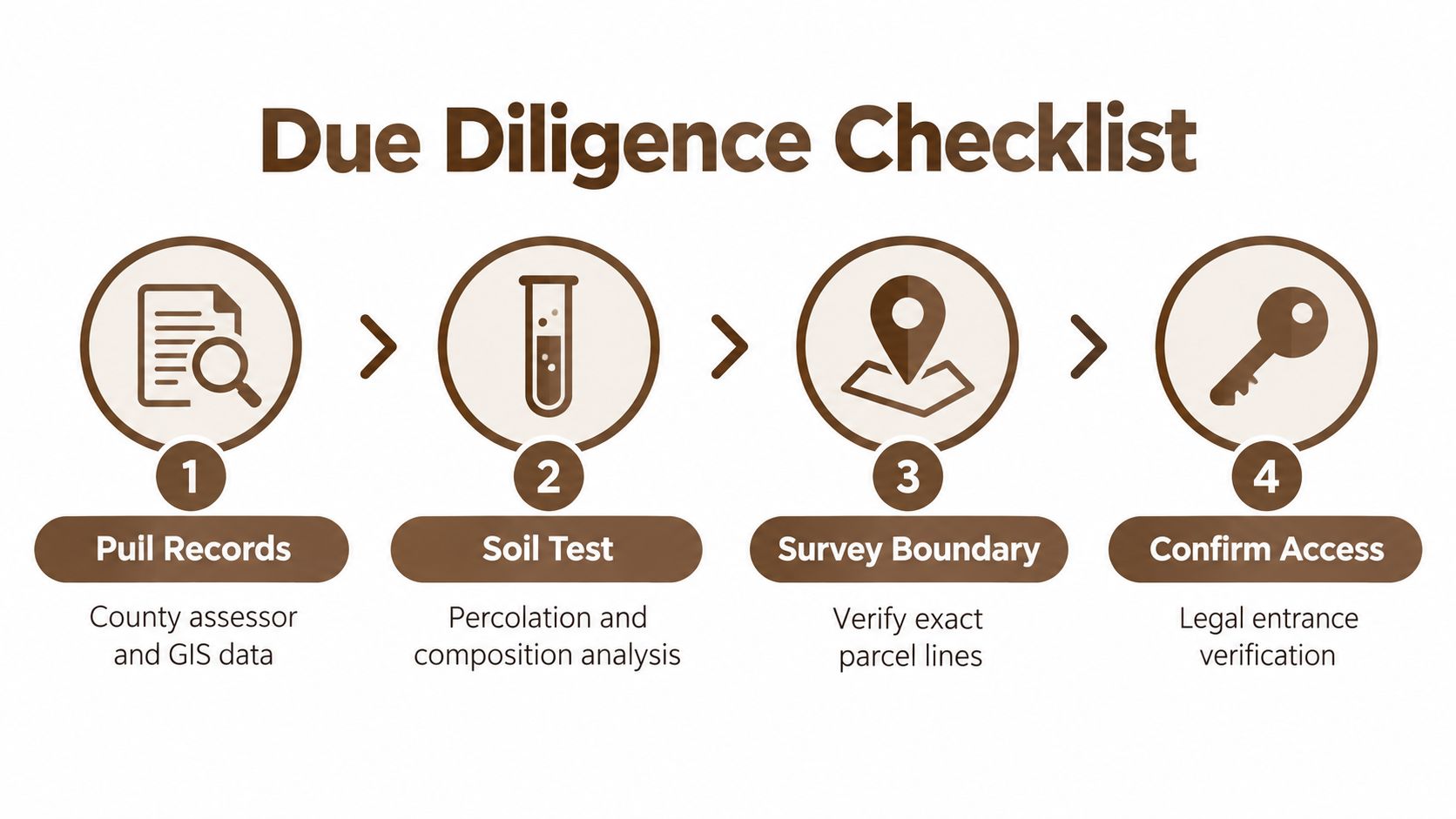
Four records to pull first
Begin with the county assessor and GIS system. Confirm the parcel number, acreage shown in the record, legal description, tax status, map location, and the name of the recorded owner. GIS is useful for research, but it may not be a survey and shouldn't be treated as a boundary guarantee.
Next, order a title commitment or professional title search. A proper review should identify the vested owner, deed history, legal description, liens, easements, restrictions, and competing claims. This guide to what to look for in land title work explains why title review is a fact-finding exercise rather than a formality.
Check the tax record for delinquent taxes, then ask whether other liens or assessments appear in the title work. A seller's name on a listing isn't enough. The seller must have the authority to convey the interest being sold.
Finally, compare the recorded documents with the marketing description. Look for differences in acreage, access language, easement locations, restrictions, and boundary references.
Test the land in person
A physical visit can reveal what maps hide. Walk the likely access route if you can do so lawfully, identify steep grades and drainage paths, inspect signs of dumping or erosion, and compare visible landmarks with the parcel map. Don't cross neighboring property without permission.
If boundaries matter to your plan, hire a licensed surveyor rather than relying on fence lines, pins, online maps, or assumptions based on neighboring parcels. A survey may be especially important where the listing uses approximate acreage or where the terrain makes visual estimation unreliable.
Soil and environmental checks should follow your intended use. A future homesite may require a percolation evaluation and soil analysis. A recreation buyer may focus more on seasonal access, flood exposure, terrain, and environmental hazards. A buyer planning wells, septic, farming, or structures needs the relevant county and state approvals identified before committing.
Put every unresolved issue in writing
Keep a due diligence file containing county responses, title documents, maps, photographs, utility notes, inspection results, and questions that remain open. Ask officials to identify the controlling code section or written process rather than relying on a casual assumption.
Use the land due diligence checklist as a practical starting point, then adapt it to the county and the parcel. Independent guidance also recommends confirming the parcel number and legal description, reviewing assessor, tax, zoning, flood, and road information, and calling the planning office about permitted uses, conditional-use rules, overlays, minimum lot size, frontage, height, and setbacks. See this vacant-land purchase procedure for another records-focused workflow.
Do not send a down payment because a deadline feels uncomfortable or because the setting looks perfect. For financed purchases, the listing terms may state that deposits, document fees, and payments are non-refundable. The buyer should complete due diligence before submitting a down payment and understand that the signed agreement controls.
The safest time to reject a parcel is before you pay for it. A disappointing inspection is cheaper than discovering that the land can't support your plan.
Next Steps for Different Types of Land Buyers
Your next move depends on what you've already verified. A buyer who is still comparing counties needs a different process from someone who has confirmed the parcel, access, zoning path, and financing terms.
If you're still researching
Build a short list, not a giant watch folder. Compare each parcel by county, acreage, legal access, terrain, intended use, utility strategy, carrying costs, and total purchase obligation. Then contact the applicable county offices before treating a listing as a future homesite or recreational base.
For recreation, verify the private parcel's rules separately from regional attractions. For off-grid plans, identify water and wastewater paths before thinking about structures. For investment, estimate the cost of holding the parcel and decide what facts would make resale difficult.
If you're planning a future outdoor space, a tool such as backyard design ai may help you visualize ideas after you understand the site. A visualization can support planning, but it can't establish setbacks, permits, access, soil suitability, or the right to build.
If you've found a candidate parcel
Use a written sequence:
- Confirm identity: Match the listing, parcel number, legal description, county records, and recorded owner.
- Confirm use: Ask planning and zoning officials about the exact activity you're considering.
- Confirm access: Review recorded easements and inspect the route where possible.
- Confirm services: Contact utilities and the relevant water and wastewater offices.
- Confirm condition: Visit the land or hire qualified local help to inspect terrain, drainage, boundaries, and signs of environmental problems.
- Confirm finances: Separate the cash price, down payment, document fee, monthly payment, and total financed cost.
- Read the agreement: Understand title retention, payment setup, permitted activity, recording responsibilities, and refund terms before checkout.
Checkout is the beginning of the purchase process, not the deed transfer. Buyers must complete required purchase documents, and financed buyers must set up payments through ZimpleMoney. For cash purchases, deed preparation starts after payment clears and the required documents and conditions are complete.
If you're ready to purchase
Use current listings in Dollar Land Store's approved sales states, Arizona, California, Colorado, Hawaii, Nevada, New Mexico, Oregon, and Utah, but don't assume inventory exists in every state or county. Verify the parcel's current availability and facts directly on its listing. The company sells vacant land online, most of it raw and unimproved, and offers Cash or Easy Financing where available.
A sensible purchase is one you can explain without relying on the photos. You should know why the county works for you, what the land can realistically support, how access is documented, how you'll handle utilities, what the full financial obligation is, and which future uses remain uncertain.
Dollar Land Store offers online listings for vacant Western land, with Cash and Easy Financing options where offered. Visit Dollar Land Store to compare current acreage, county locations, and purchase options, then begin with a parcel whose verified facts match your budget and long-term plan.