


Vacation Property Basics for First-Time Land Buyers
Ross AmatoAfter work, you may find yourself scrolling through Western land listings, saving parcels that could become a weekend base, a camping spot, or a future cabin site. The confusing part is that a listing can look simple while the questions involve access, zoning, taxes, utilities, county rules, and the timing of the deed.
A vacation property is land or a dwelling used mainly for recreation, weekends, or seasonal stays rather than as a daily residence. It can be a finished cabin, a raw rural parcel, an RV-friendly lot, or an off-grid tract. For a first-time buyer, the practical focus is often vacant land and the steps needed to own and use it responsibly, not a promise of rental income.
What a Vacation Property Really Is
A vacation property doesn't have to include a house. A wooded parcel where you camp occasionally, a rural lot where you hope to build later, or land where you keep an RV for seasonal use can all fit the category. The label describes how you plan to use the property, not necessarily what improvements are already on it.
That distinction matters because vacant land and improved property require different questions. A cabin may already have power, water, septic, and a permitted structure, while raw land may have none of those. A parcel that looks ideal for a weekend escape still needs separate verification of legal access, zoning, camping rules, utility options, and taxes.
In the United States, vacation homes have been a durable part of the housing stock for decades. Historical Census Bureau tables identify Florida as the leader in total vacation-home units over the last three censuses, while New York held that position before 1980. Maine, New Hampshire, and Vermont have ranked among the leading states by percentage since the first housing census in 1940, showing the long-standing concentration of vacation properties in coastal and scenic regions. The U.S. Census history summarized by the UK Parliament also notes that the English Housing Survey estimated 873,000 second homes owned by English households, including 495,000 located within the UK.
Practical rule: Treat “vacation property” as a use category, then evaluate the parcel itself. The land's legal and physical facts matter more than the label in an advertisement.
This guide treats vacation property as a land-ownership concept. That means the main questions are straightforward: Can you reach the parcel legally, use it for your intended recreation, pay for it comfortably, and understand what happens to the deed when the balance is paid?
Common Types of Vacation Property
A family with a small cabin may use it for weekends, holidays, and seasonal visits. Because the structure already exists, the ownership work centers on confirming the building's status, utilities, insurance, maintenance needs, and any restrictions on occupancy or short-term guests.
A different buyer may choose rural vacant land. They might visit with a tent, store permitted recreational equipment, or hold the parcel while deciding whether a future cabin makes sense. This approach provides flexibility, but it also means the buyer must confirm what the county allows before assuming camping or construction is permitted.
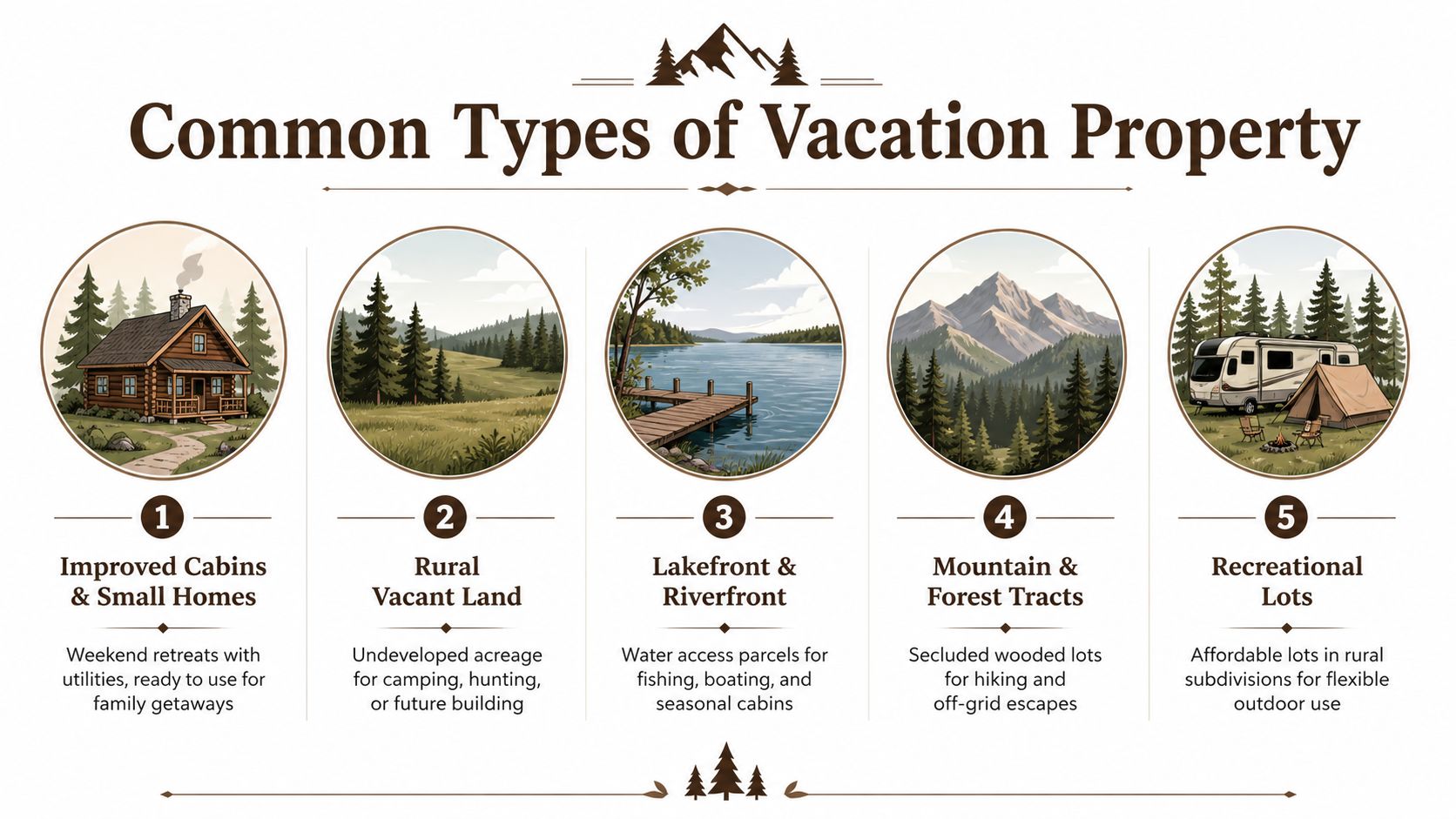
Four common ownership paths
- Improved cabins and small homes: These are ready-made weekend retreats, although “ready to use” still requires verification of permits, utilities, insurance, and maintenance responsibilities.
- Rural vacant land: An undeveloped parcel may support recreation now and a future building plan later, subject to county and parcel-specific rules.
- RV and camping lots: Some buyers want a place for a rig, tent, or seasonal visits. The owner must confirm RV duration, hookups, wastewater requirements, and camping limits.
- Off-grid homestead parcels: These can appeal to buyers planning solar power, water storage, a well, septic, or other self-sufficient systems. Each improvement brings its own approvals, costs, and feasibility questions.
Some land also carries a stronger recreation identity because of its setting. Lakefront or riverfront parcels may appeal to anglers and boaters, while mountain and forest tracts may suit hiking and quiet seasonal use. Water proximity, however, doesn't automatically establish legal water access, buildability, or safe utility placement.
A parcel's category can change as your plans develop. You might begin with occasional tent camping, later add an approved RV setup, and eventually investigate a cabin. The important step is to confirm each stage separately instead of assuming that permission for one use covers the next. Dollar Land Store's guide to recreational land use offers another useful way to think through those differences.
Pros and Cons to Weigh Honestly
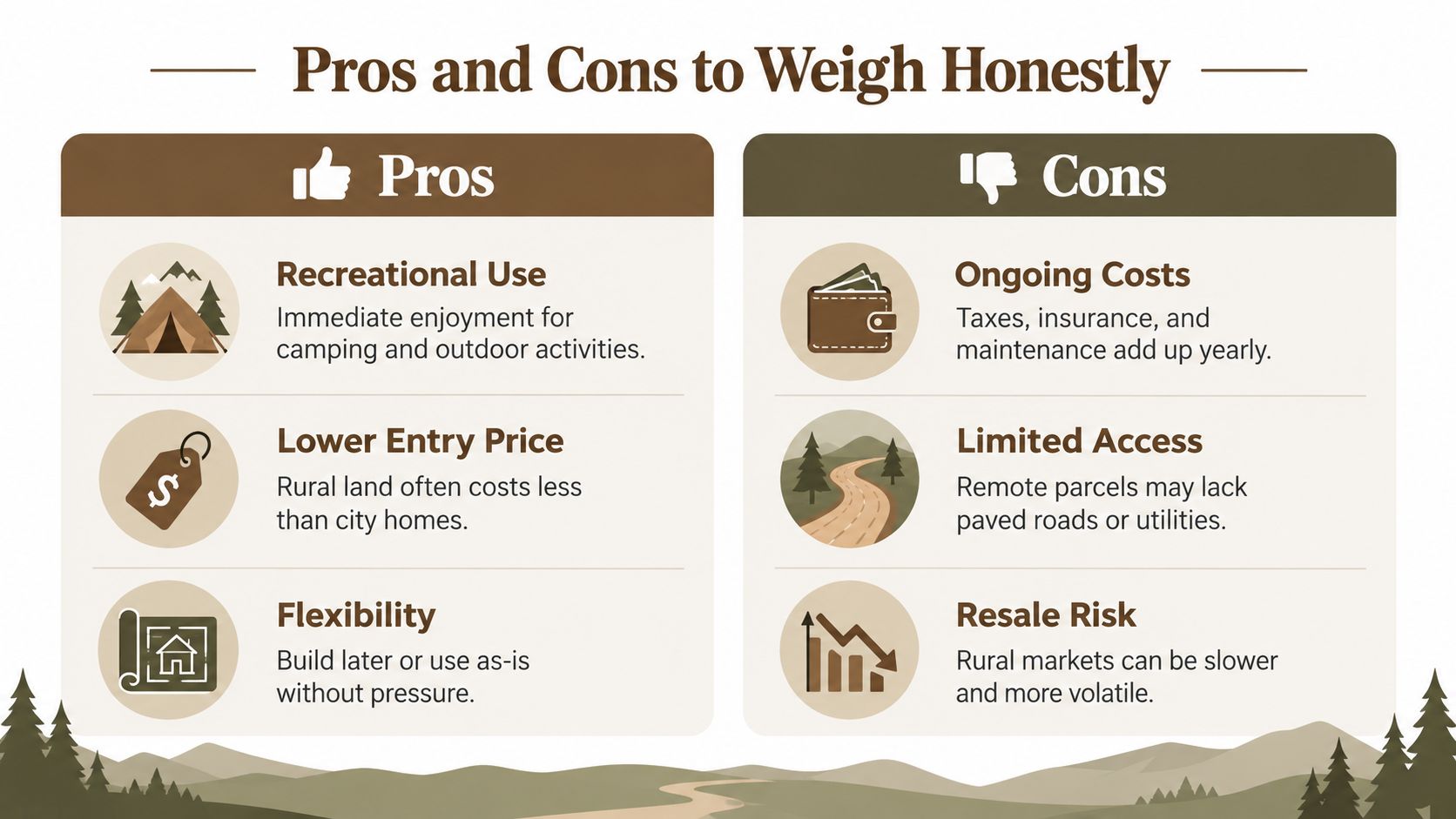
Vacation property can offer meaningful personal value, but it isn't automatically simple or inexpensive. A rural parcel may give you a place to spend time outdoors and more control over future plans, while also creating responsibilities that don't disappear when you're away.
Potential advantages
Recreational use is often the clearest benefit. You may want a quiet place for camping, hiking, family gatherings, or seasonal storage, subject to local rules and the property's physical limitations.
A lower entry point can make vacant rural land easier to consider than a finished home in a major city. That doesn't mean the total cost will stay low. Road improvements, surveys, utility work, permits, taxes, and site preparation can change the budget.
Flexibility is another reason buyers look at land. You can use the parcel as allowed today and investigate future improvements without committing immediately to a finished structure. Some buyers also value the possibility that a desirable Western county may become more attractive over time, but appreciation isn't guaranteed and rural resale can take patience.
Costs and limitations
Carrying costs continue even when the land is vacant. Property taxes still apply to undeveloped land, and HOA or POA arrangements may add dues, transfer fees, working-capital contributions, or delinquent-assessment payoffs at closing, as described in guidance on hidden land-buying costs.
Distance affects ownership. A remote parcel may be peaceful, but trips take planning. Seasonal roads, weather, locked gates, and private-road maintenance can make a quick visit less convenient than the listing suggests.
Rental income is not a safe assumption. Short-term demand varies sharply by market, and a remote parcel without a permitted dwelling may not support a rental plan at all. Even in established vacation-rental markets, national averages can hide large differences in seasonality, supply, local rules, cleaning, management, taxes, and insurance. Current vacation-rental occupancy benchmarks show average occupancy around 48.4% to 54.9%, with healthy annual occupancy often ranging from 55% to 75% in strong year-round leisure markets and 65% or more in urban destinations. Use local comparable properties, not a national headline, when testing an income idea.
Access, Zoning, Utilities, and Use Rules
A parcel can appear reachable on a map while lacking the legal right to use the road crossing another person's property. Start by separating physical access from legal access. Physical access means a vehicle can reach the land today. Legal access usually depends on a public road connection or a recorded easement, and private roads may involve maintenance agreements, gates, or shared costs.
Then look at zoning. Residential and agricultural classifications can allow different structures and activities, while minimum dwelling sizes, accessory-building rules, short-term rental limits, and camping restrictions can vary by county. Requirements vary by county, rules differ by jurisdiction, and buyers should independently verify current requirements with the planning or building office.
Park County, Colorado, provides a concrete example of why a general camping assumption can cause trouble. On vacant property there, an owner may camp for up to 60 days in any continuous 12-month period, camping beyond 14 days requires a permit, and the access driveway must be permitted and receive final county approval. Park County's camping requirements should be checked directly because county rules can change.
Clackamas County, Oregon, illustrates a similar issue for RV use. An RV on private property must have permitted water, wastewater, and electrical connections, with connections to an onsite wastewater system or public sewer, public water or a well, and electricity. The county's RV requirements show why ownership alone doesn't establish permission to live in or occupy an RV.
| Rule area | Park County, CO | Clackamas County, OR |
|---|---|---|
| Camping | Vacant-property camping has time and permit conditions. | Confirm current zoning and county requirements for the intended use. |
| RV use | Verify applicable county and parcel rules before staying. | Permitted water, wastewater, and electrical connections are required for an RV on private property. |
| Access | Driveway permitting and final county approval can matter. | Confirm legal access, road status, and any private-road obligations. |
| Utilities | Check well, septic, and utility feasibility separately. | Water, wastewater, and electricity requirements are central to legal RV use. |
Utilities deserve their own review. Ask whether a well is feasible, whether septic approval requires a percolation test, whether power is available nearby, and whether off-grid solar or propane systems meet local requirements. A nearby utility line doesn't mean a connection is available or affordable.
Taxes, HOA or POA dues, design guidelines, hunting rules, and firearm restrictions also need local confirmation. If a community uses controlled entry, understanding the gate process may be part of practical access planning. An HOA gate access system can help explain how managed entry systems work, but it doesn't replace review of the specific association's rules. For a broader parcel review, use this land-buying guide.
How Seller Financing Works for Land
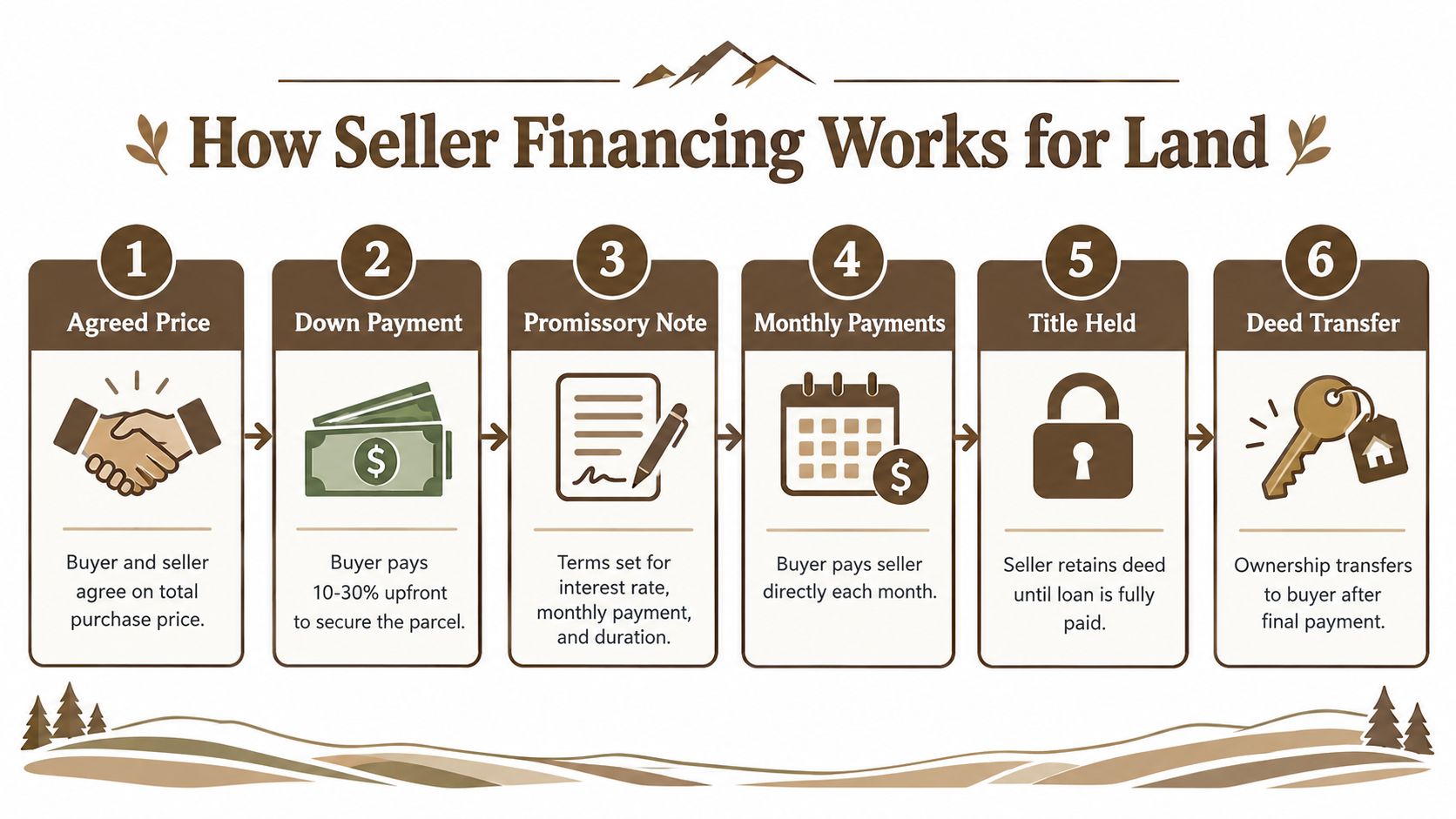
Seller financing means the seller accepts payments directly under an agreement rather than requiring a traditional bank mortgage. The exact rate, term, fees, down payment, and monthly amount vary by property, so read the written terms instead of relying on a general example.
The agreement comes first
A typical structure identifies the purchase price, down payment, interest rate, payment schedule, amortization method, and payoff timeline. Some agreements require a full payoff at the end of the scheduled term, sometimes called a balloon payment. The contract should also state late fees, grace periods, default procedures, insurance responsibilities, taxes, and what happens if the buyer pays early.
The seller may hold legal title during the payment period. Common arrangements use a warranty deed together with a promissory note and a recorded mortgage or land contract, but the documents and process vary by jurisdiction. Ask exactly which document protects each party and whether any lien or contract is recorded before signing.
Payments, payoff, and deed timing
Your monthly payment reduces the balance according to the agreement. Keep copies of statements and payment confirmations, and request a payoff quote before sending the final amount because the exact balance can include accrued interest or other contract items.
Owner-financed buyers generally receive the deed after payoff and completion of the transfer process. Receiving the deed and recording it with the county are separate steps. The deed must be filed with the county clerk or recorder to place the transfer in the public record, and recording fees are commonly charged per document, often in the range of $25 to $100 per document, according to land-purchase closing guidance.
After payoff, confirm who prepares the deed, who pays recording charges, whether a lien release is required, and when the county filing occurs. If a buyer stops making payments, the agreement may define default, notice, cure periods, repossession, or foreclosure. Don't assume missed payments are forgiven or that the remaining principal disappears. The written documents control.
“No-credit-check seller financing” doesn't mean no review. It generally means approval isn't based on a conventional credit-score process. Sellers may still verify identity, the down payment source, contact information, and the buyer's ability to follow the payment arrangement. This explanation of seller financing can help you become familiar with the terminology before comparing offers.
An Evaluation Checklist for Any Parcel
You don't need to solve every land question in one sitting. Start with the records that can quickly reveal whether a parcel deserves a closer look, then call the relevant county or state office for anything that depends on current rules.
Check the parcel and its access
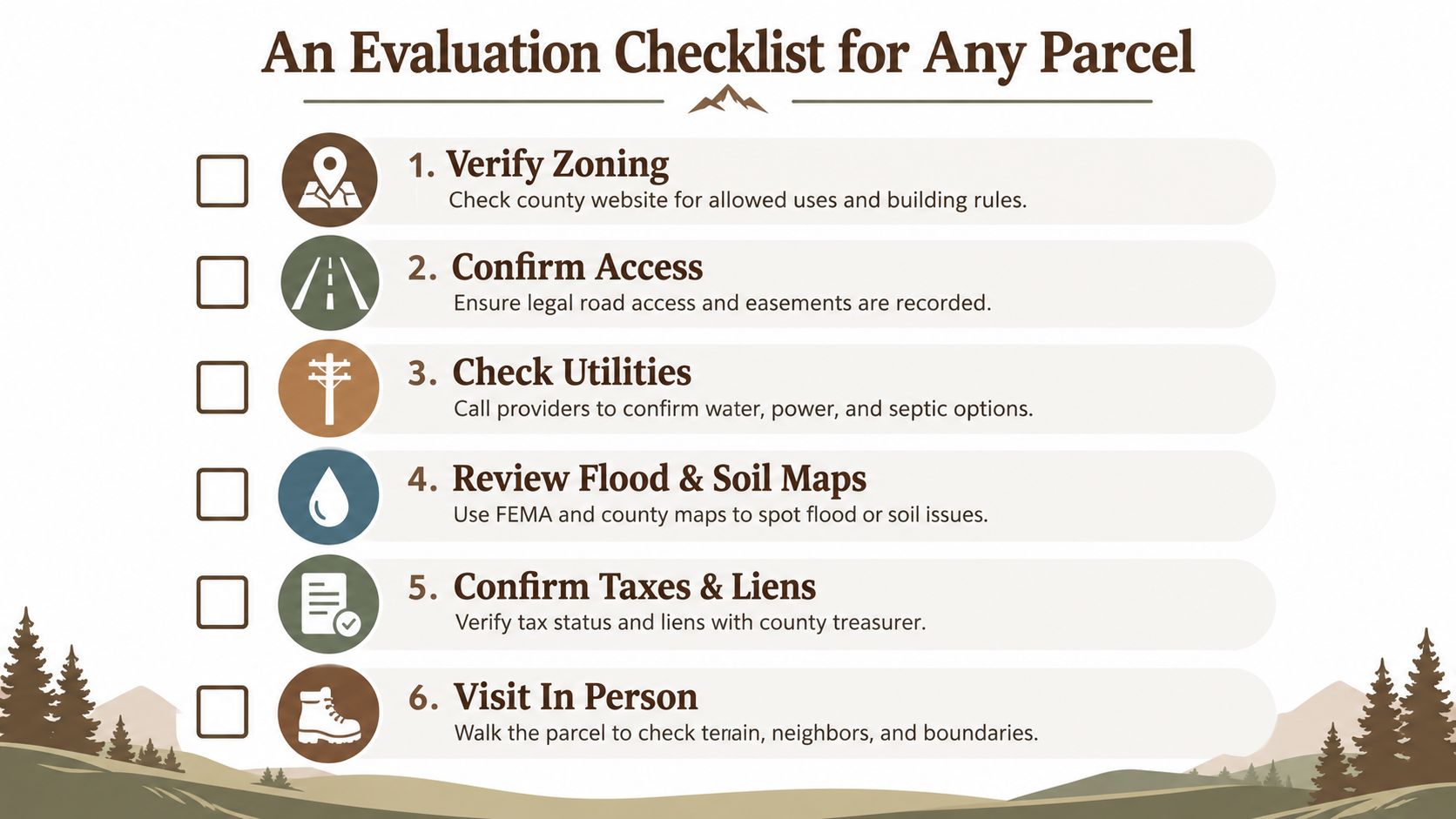
Find the assessor's parcel number, often called the APN, and compare it with the county parcel map. Make sure the listing, map, legal description, and physical location refer to the same land. Look for a public-road connection or recorded easement, then determine whether a private road has a maintenance agreement.
Confirm permitted use
Pull the county zoning map and read the code for the parcel's exact classification. Call planning or building staff with specific questions about camping, RV duration, accessory structures, minimum dwelling size, short-term rentals, and future construction. A general “residential” label doesn't answer every use question.
Review utilities, taxes, and restrictions
Check state water-resource records for well permits and county or health-department records for septic history. Ask whether a new septic evaluation, soil test, or percolation test is required. Utility providers can explain whether service reaches the area, but availability at the boundary doesn't guarantee a connection.
Use the county treasurer's records to review current ownership, assessed information, tax status, and delinquent amounts. Then request HOA or POA covenants, design rules, dues, special assessments, and transfer requirements. A broader due diligence checklist for real estate can help organize record requests without replacing local verification.
- Map check: Confirm the APN, boundaries, road connection, and easements.
- Use check: Verify zoning, camping, RV, building, and outbuilding rules.
- Site check: Visit when possible and observe terrain, drainage, roads, neighboring uses, and boundary markers.
- Document check: Ask whether a survey exists and whether a new survey may be needed.
- Payment check: For seller financing, request the exact payoff method, late-fee terms, default language, deed timing, and recording responsibilities.
Some parcels may have limitations that aren't obvious from photos. For additional land-specific guidance, review this land due diligence resource before committing funds.
Next Steps for Buying With Confidence
Start with a narrow search. Choose the state and county first, then read the local zoning code, check the parcel's access, review annual property taxes, and identify any HOA or POA rules attached to the property. This order keeps you from falling in love with a use that the county or association doesn't allow.
Compare two or three listings side by side rather than judging one parcel in isolation. Keep notes on cost per acre, terrain, road conditions, utility proximity, taxes, association obligations, and the recreational use you want. If you may rent a finished property later, study local demand and operating responsibilities separately. A practical property-management resource for boosting revenue may help you understand the work involved, but it shouldn't replace conservative cash-flow planning.
For seller-financed offers, compare the down payment, monthly payment, interest rate, term length, payoff date, late-fee language, and default process. Ask whether the deed remains with the seller until payoff, is held in escrow, or transfers earlier under a recorded arrangement. Confirm how the final deed and any lien release will be recorded with the county.
Dollar Land Store sells vacant land directly, including seller-financed options and no-credit-check arrangements on applicable properties. Terms vary by parcel, so use the listing details and written agreement to evaluate whether a property fits your plans and budget.
Browse Dollar Land Store to compare available vacant land and review seller-financed options for a potential vacation property. Take your time with the parcel records, county rules, payment terms, and deed process before choosing the land that fits your intended use.