


What Is a Warranty Deed? A Guide for First-Time Land Buyers
Ross AmatoWhen you buy a piece of land, you are purchasing more than just soil and trees—you are acquiring the legal rights to that property. A warranty deed is the legal document that transfers those rights from the seller to you, and it comes with the highest level of protection available for a buyer.
Think of it as the seller's legally binding promise that they own the property free and clear. They are not just handing over the property; they are guaranteeing your ownership against any future claims from anyone, for the entire history of the property. This guarantee is what makes a warranty deed the gold standard in real estate transactions.
Your Strongest Guarantee in a Land Purchase
When you buy a valuable asset, you look for a solid guarantee. A warranty deed provides that for your land. It is the seller's most comprehensive promise, assuring you that the title—the legal term for ownership—is clean and undisputed.
This is especially important for first-time land buyers. Real estate documents can feel complex, but understanding the warranty deed is a crucial step toward making a secure investment. It serves as your primary defense against old ownership disputes that could surface years after you've made the property your own.
Essentially, a warranty deed confirms that the seller (the grantor):
- Legally owns the property and has the absolute right to sell it to you (the grantee).
- Guarantees the land is free from hidden debts, liens, or other claims (these are called encumbrances).
- Promises to defend your title against anyone who might later claim they have a right to the land.
In short, it's more than just a transfer of property. It's a transfer with a promise of security, ensuring you get exactly what you paid for: clear and undisputed ownership.
The Six Covenants That Make a Warranty Deed Powerful
A warranty deed is not just a piece of paper; it is a binding set of promises from the seller to the buyer. These six promises, known legally as covenants, are what give this type of deed its strength. They act as a multi-layered shield, protecting your investment long after the transaction is complete.
Understanding these guarantees is key to seeing why a warranty deed offers the highest level of security when buying land.
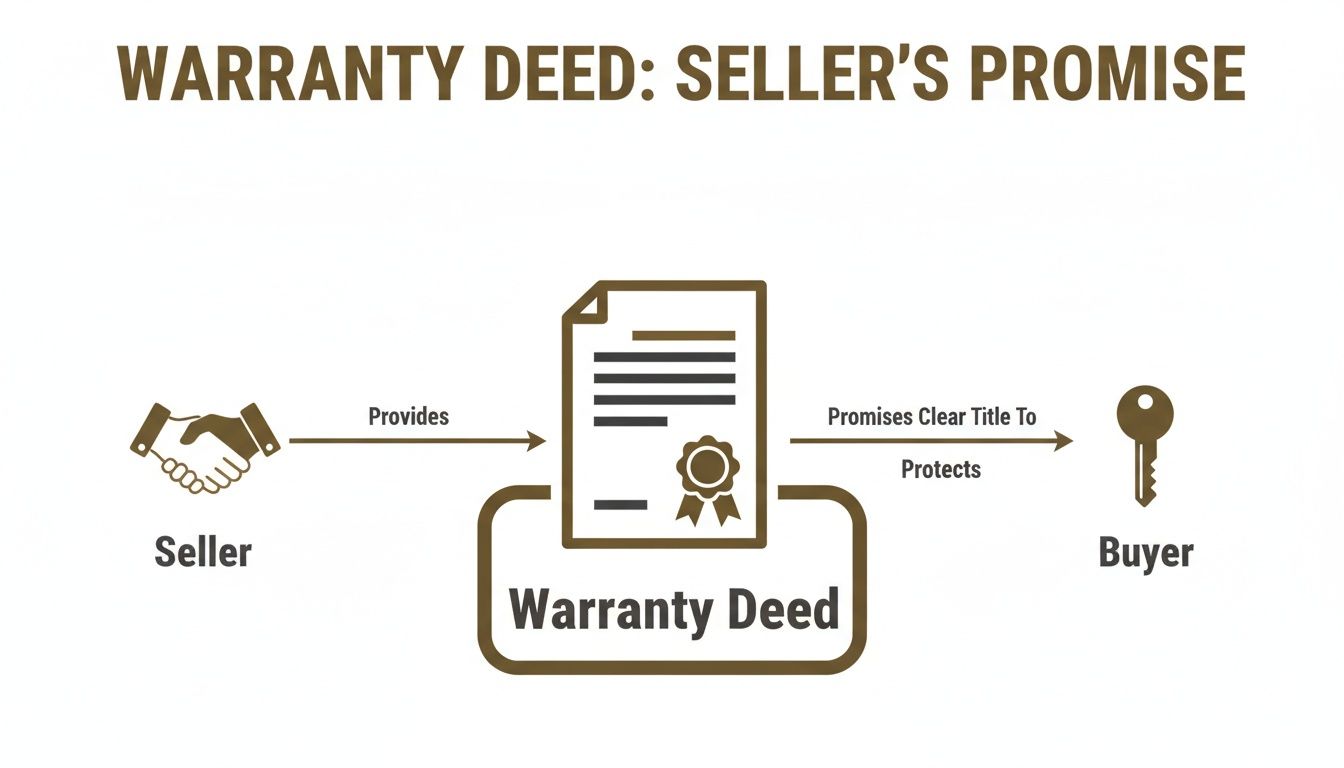
These covenants mean the seller is formally committing to defend your new ownership rights against any potential challenges.
The First Three Covenants: Promises About the Present
These first three promises relate to the state of the property at the moment of sale. They are guarantees about the past and present condition of the title.
- 1. Covenant of Seisin: This is a formal legal term for a simple concept: the seller actually owns the property. It is their guarantee that they have legal possession and are not attempting to sell something that is not theirs.
- 2. Covenant of Right to Convey: This promise goes a step further. Not only does the seller own the land, but they also have the full legal authority to sell it. This means there are no restrictions, liens, or other co-owners who have not agreed to the sale.
- 3. Covenant Against Encumbrances: The seller promises the property is free from any hidden debts, claims, or other burdens. An encumbrance could be an old, unpaid property tax bill or a lien from a contractor who was never paid by a previous owner. This covenant assures you that no unexpected financial baggage is attached to your new land.
The Final Three Covenants: Promises Protecting Your Future
These next three covenants are forward-looking, protecting you from problems that might arise long after you have taken ownership.
- 4. Covenant of Quiet Enjoyment: This term has nothing to do with noise. It is a legal guarantee that your ownership will not be challenged by someone else with a superior claim to the property. If a previously unknown heir suddenly appears with a valid claim, your "quiet enjoyment" has been breached.
- 5. Covenant of Warranty: This is one of the most powerful promises in the deed. The seller guarantees they will defend your title against any and all claims, forever. If someone sues you to claim ownership, the seller is legally obligated to step in and cover the costs to protect your rights.
- 6. Covenant of Further Assurances: If any paperwork problems or title issues arise in the future, this covenant requires the seller to sign any additional documents needed to make your title perfect. It is a promise to help fix clerical errors that could cloud your ownership down the road.
To fully grasp how solid these six promises are, it's helpful to understand the legal framework behind them. These guarantees are governed by the same principles of contract interpretation that ensure agreements are enforced as intended.
Warranty Deed vs. Quitclaim Deed: A Practical Comparison
Not all documents that transfer property are the same. When buying land, you will likely encounter two very different types of deeds: the warranty deed and the quitclaim deed. Knowing the difference is critical for protecting your investment. One offers a rock-solid guarantee, while the other offers practically none.
Think of the difference this way: a warranty deed is like buying a certified pre-owned car. The dealership provides a full history report, an inspection, and a guarantee that the car is free from hidden defects. They stand behind the vehicle and promise to fix issues from its past. You leave with complete peace of mind.
In contrast, a quitclaim deed is like buying a car "as-is" from a private seller. The seller is just handing you the keys and signing over whatever ownership they might have. They make no promises about the car's history, condition, or whether they even legally own it. If a major problem appears later, it is your responsibility.
The Critical Difference in Guarantees
The entire distinction boils down to the guarantees—or the lack thereof. A quitclaim deed simply transfers whatever interest the seller currently has in the property. If the seller has a perfect, clear title, that's what you receive. But if their ownership is flawed or even non-existent, that is what you receive, too. The seller has no liability for any title defects you discover later.
This makes quitclaim deeds risky for buyers in a typical transaction. To learn about the specific situations where this type of deed might be appropriate, you can explore our guide on what a quitclaim deed is.
A warranty deed is the opposite. It is filled with legally binding promises that the title is clear and that the seller will defend your ownership against all future claims. That assurance makes it the standard for any significant real estate purchase, including raw land.
A quitclaim deed transfers potential ownership without promises. A warranty deed transfers guaranteed ownership with legally enforceable promises.
Warranty Deed vs. Quitclaim Deed: Key Differences
This table lays out the critical distinctions between a warranty deed and a quitclaim deed.
| Feature | Warranty Deed | Quitclaim Deed |
|---|---|---|
| Title Guarantee | Yes. The seller guarantees the title is clear and will defend it against all claims. | No. The seller makes no guarantees about the title's validity. |
| Seller Liability | High. The seller is legally responsible for any title defects that arise. | None. The buyer assumes all risk of potential title problems. |
| Common Use Case | Standard property sales, such as buying land from a company or an unknown seller. | Transferring property between close family members or clearing a minor title issue. |
| Buyer Risk | Low. This offers the highest level of protection for a buyer. | Very High. The buyer could end up with a worthless deed and have no legal recourse to recover their money. |
For a land buyer, the choice is clear. A warranty deed provides the security needed to invest with confidence, while a quitclaim deed leaves you exposed to significant risk.
Anatomy of a Warranty Deed: Key Components for Buyers
While a warranty deed is a powerful legal document, its structure is straightforward. Getting familiar with its key parts will give you the confidence to review it and ensure every detail is correct.
Think of it as the official record for your property—every section has a specific and crucial purpose.
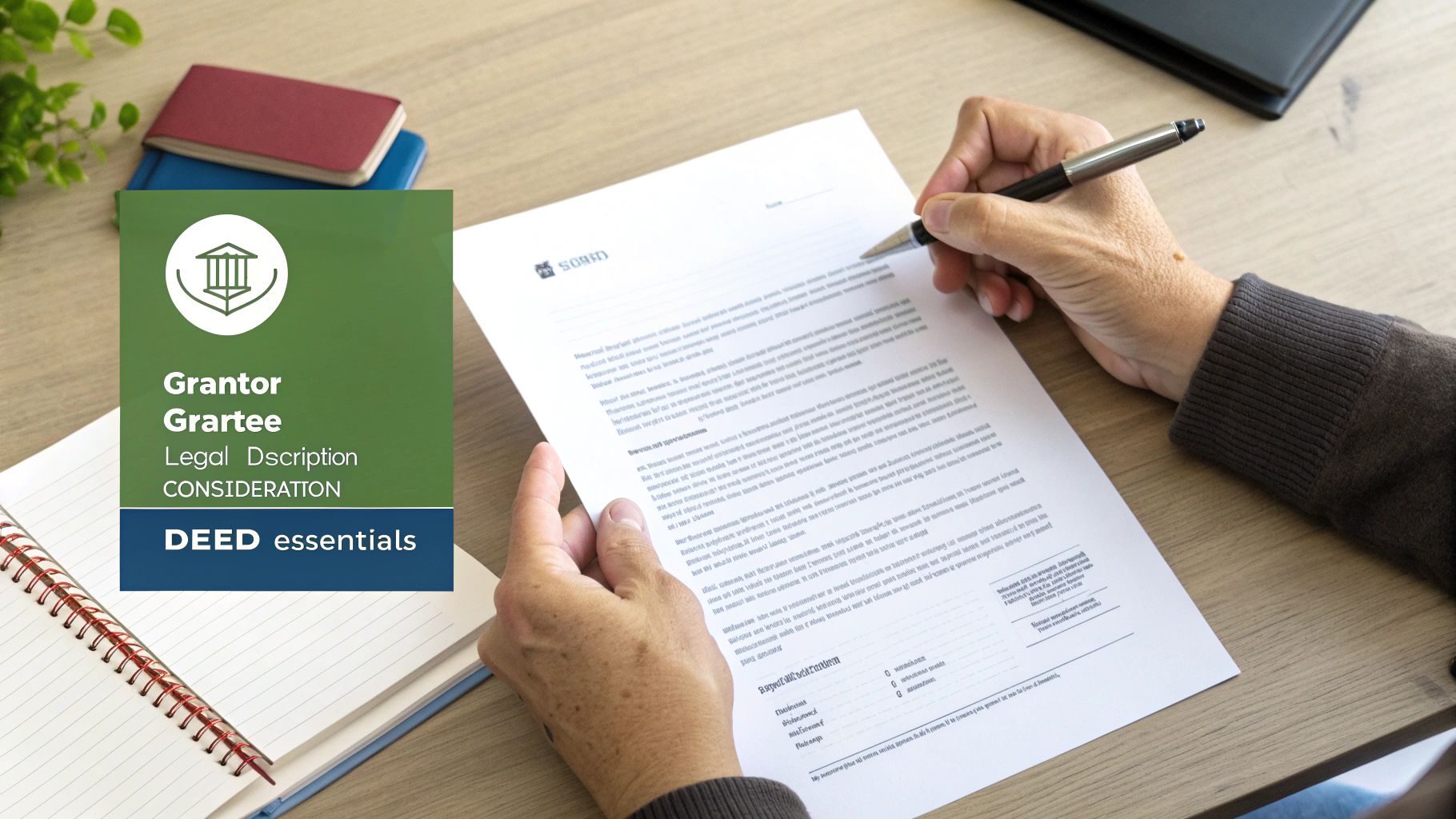
This document is your ultimate proof of ownership, so let's walk through what to look for to ensure your transaction is secure.
Essential Information: Grantor and Grantee
First, the deed must clearly identify the two main parties in the transaction.
- Grantor: This is the seller. Their full legal name and address must be on the deed and match the name on the previous deed that granted them the property.
- Grantee: This is the buyer—you. Your full legal name and address must be spelled correctly. How your name appears here is how you will officially hold title to the land.
Even a small mistake in these names can lead to title issues down the road that may be expensive and time-consuming to fix.
The Heart of the Deed: The Legal Description
For raw land, the legal description is arguably the most important part of the entire document. This is not a street address. It is a formal, precise description that defines the exact boundaries of your parcel.
You will typically see it in one of these formats:
- Lot and Block: Common in platted subdivisions, this refers to a specific lot and block on a recorded map (e.g., "Lot 7, Block B, of the Sunny Acres Subdivision...").
- Metes and Bounds: This describes the property by its boundary lines, using distances and angles from a fixed starting point.
- Sectional (Public Land Survey System): Used for large rural tracts, this system divides land into a grid of sections, townships, and ranges (e.g., "The Northwest quarter of Section 15, Township 2 South, Range 3 East...").
An accurate legal description is non-negotiable. An incorrect one could mean the deed is transferring the wrong property. If you have any doubts, it's a good idea to learn more about how to read property survey maps and cross-reference the information.
Other Essential Elements
Finally, make sure these other key components are present to make the deed legally sound:
- Consideration: This clause states what was given for the property. It may show the actual sale price, but often it uses nominal phrasing like "for ten dollars and other good and valuable consideration" for privacy.
- Granting Clause: This is where you'll find the specific legal language that transfers the property, such as "conveys and warrants." This wording officially makes it a warranty deed.
- Signatures and Notarization: The grantor (seller) must sign the deed in front of a notary public, who then adds their official seal and signature. This step authenticates the document, making it legal and ready for recording.
What This Means for Buyers
Understanding the function of a warranty deed translates directly to your security as a land buyer. It transforms a simple purchase into a protected, long-term asset. This document is the legal foundation that supports your dream of land ownership.
A warranty deed provides peace of mind. It significantly reduces the risk of future title disputes, which can be stressful and expensive. With that protection in place, you can confidently plan for the future—whether that means building a home, using the land for recreation, or holding it as an investment.
The guarantees within a warranty deed also protect your ability to sell or transfer the property later. A clean, warranted title is something future buyers will expect, which makes your land more marketable and helps preserve its value.
A warranty deed is more than just paper; it is a legal instrument that safeguards your financial stake and secures your right to enjoy your property without interference from past title defects.
For any land buyer, getting familiar with basic principles of Real Estate Law is a smart move. It helps you navigate the process and ensure you're making a secure investment. To better understand the financial side of your purchase, you can also learn how to determine land value.
Why Consider Dollar Land Store?
At Dollar Land Store, we believe owning land should be accessible and secure. Our entire process is built on transparency and protecting our buyers, which is why we use a warranty deed to transfer ownership.
When you complete a seller-financed purchase with us, we transfer the property to you using a warranty deed. This is our commitment to providing you with the highest level of title security. We have designed our process to be simple, straightforward, and secure, ensuring first-time buyers can purchase with confidence.
Here's how our approach works:
- Simple Seller Financing: We offer seller financing with no credit checks and low monthly payments, making land ownership attainable for more people. You can learn more about how seller financing works on our blog.
- Transparent Terms: All purchase terms are clearly disclosed from the start. You will know exactly what to expect with no surprises.
- No Agents or Middlemen: We sell land we own directly to you. This removes broker fees and simplifies the transaction.
- Warranty Deed Transfer: Once your final payment is made, we execute and record a warranty deed in your name. This final step ensures you receive a clear and defensible title to your new property.
Our business is built on making the journey to land ownership end as it should: with a secure, properly documented piece of land that is all yours.
Buyer Guidance and Next Steps
Now that you understand what a warranty deed is, you are no longer just browsing properties; you are an informed buyer who knows how to secure a safe investment. Finding the right piece of land is the first step, but ensuring you hold a clear, protected title is the ultimate goal.
Before finalizing any land purchase, consider these final checks for complete peace of mind:
- Verify the Legal Description: Double-check that the legal description on the deed matches the property you intend to buy.
- Confirm All Information: Ensure the grantor's and grantee's names are spelled correctly and all other details are accurate.
- Record the Deed Promptly: Once the sale is complete, the signed and notarized warranty deed must be recorded with the appropriate county office, usually the County Clerk or Recorder. This is the crucial step that makes your ownership part of the public record and protects your rights against future claims.
Conclusion
A warranty deed is the strongest tool a land buyer has for ensuring a safe and secure purchase. It provides a legal guarantee from the seller that the title is clean and that they will defend your ownership against any future challenges. By insisting on a warranty deed, you are protecting your investment and securing your right to enjoy your property for years to come.
With a solid understanding of how a warranty deed works, you are ready to move forward with confidence on your journey to land ownership.