


What Is Off Grid Living? A Guide to Sustainable Land Ownership
Ross AmatoWhen people hear "off-grid," they often picture a survivalist in a remote cabin, completely cut off from the world. While that’s one version, the reality for most land buyers today is a lot more practical and a whole lot less extreme.
At its heart, off-grid living is about independence. It means your property isn’t connected to public utilities like the electric company, city water, or a municipal sewer system. For anyone buying raw, rural land, understanding this concept is often a necessity, as many affordable parcels are located far from existing utility lines. This guide will provide clear, actionable information for anyone considering this self-sufficient path.
Understanding Off Grid Living Beyond The Hype
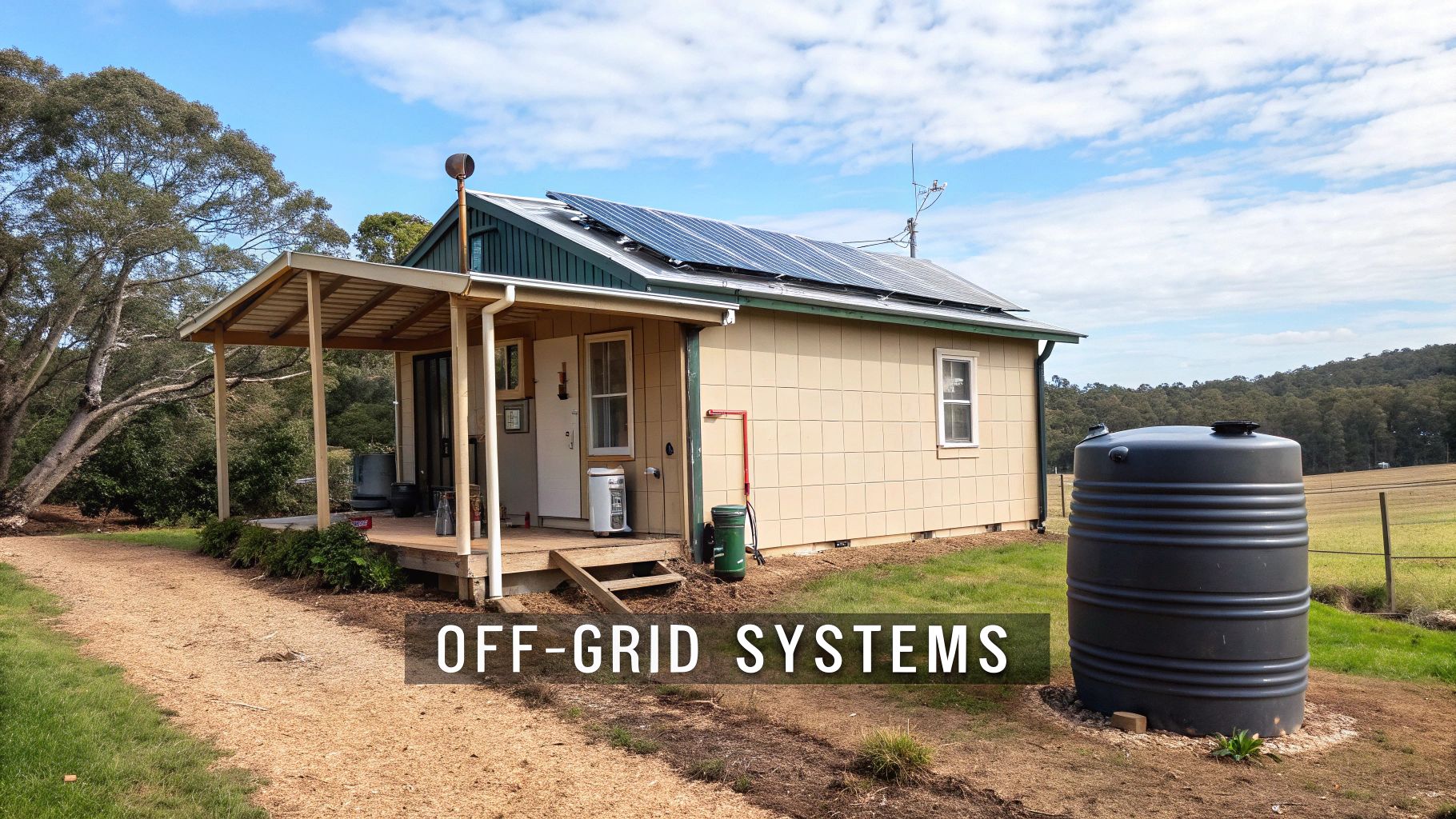
Think of a typical suburban house. Utilities are like a tap—you turn on the faucet, and water appears. You flip a switch, and the lights come on. Someone else manages the source and the infrastructure.
Living off-grid makes you the utility provider. You're in charge of generating your own power, sourcing your own water, and handling your own waste. It’s a hands-on approach that puts you in complete control of your essential resources.
To make it clearer, here’s a quick look at how the essentials differ.
Off Grid Living at a Glance
| Utility | Grid-Connected Source | Common Off-Grid Solution |
|---|---|---|
| Electricity | Public power company | Solar panels, wind turbines, generators |
| Water | Municipal water supply | Private well, rainwater harvesting, spring |
| Waste | Public sewer system | Septic system, composting toilet |
This table shows the fundamental shift: instead of relying on a distant company, you rely on your own systems, right on your own land.
The Spectrum of Self-Sufficiency
It’s important to know that going off-grid isn't an all-or-nothing deal. It’s a spectrum. You can tailor your setup to fit your budget, your goals, and the land you own.
On one end, you might have a simple weekend cabin with a small solar panel to power a few lights and charge a phone. On the other, you could build a modern, high-tech homestead that feels just like a grid-connected house, but runs entirely on its own resources.
Core Components of an Off-Grid Property
No matter how simple or complex your setup is, every off-grid property is built on three pillars that replace traditional utilities:
- Power Generation: Instead of paying an electric bill, you’ll generate your own electricity, most commonly with solar panels but sometimes with wind turbines.
- Water Supply: Rather than tapping into a city pipeline, you’ll get your water from a private well, a rainwater collection system, or even a natural spring on your property.
- Waste Management: Instead of a sewer line, you’ll manage waste with a septic system or an alternative like a composting toilet.
This is what true independence looks like. As you start looking for raw land, especially in rural areas where utilities can be miles away, understanding these basics is the first step toward building a self-reliant future.
The Five Pillars Of Off Grid Independence
Going off-grid means you’re becoming your own utility company. It’s a huge responsibility, and it all comes down to five critical systems. Think of them as the pillars holding up your independent lifestyle. Each one represents a fundamental need you have to source, manage, and maintain all on your own.
This diagram breaks down the three most important systems—Power, Water, and Waste—that really form the foundation of any off-grid home.
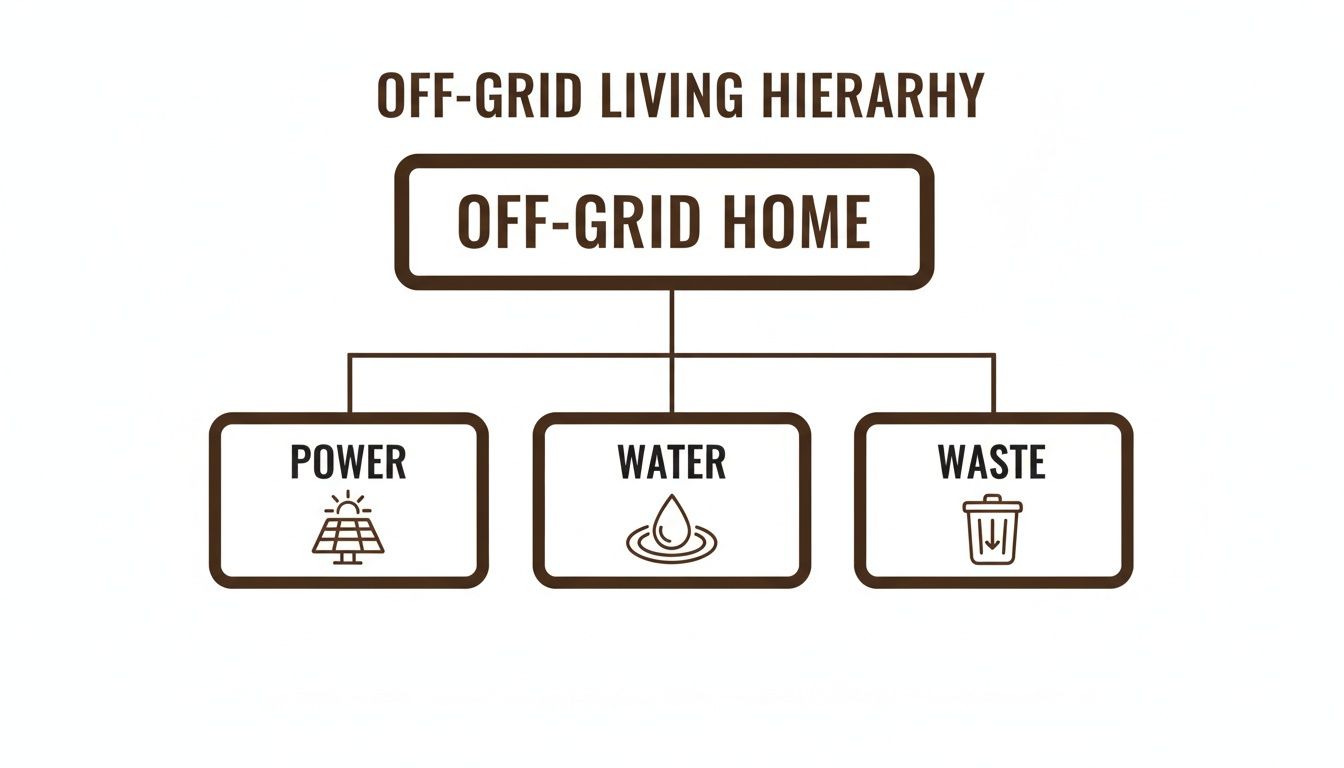
Get these three right, and everything else falls into place. Get them wrong, and you’re in for a world of headaches.
Pillar 1: Power Generation
Electricity is the first thing most people think about. When you’re not connected to the public grid, you have to generate every single watt your home uses. This isn’t just about slapping a few panels on the roof; it’s about building a complete power plant scaled for your family.
By far, the most popular choice is solar power. A typical setup includes:
- Solar Panels: These are your workhorses, catching sunlight and turning it into DC electricity. How many you need depends on your energy usage and how much sun your property gets.
- Battery Bank: Solar panels only work when the sun is out. Batteries are essential to store that power for nighttime use or those inevitable cloudy days.
- Charge Controller: This little device is the guardian of your battery bank. It prevents overcharging and extends the life of your expensive batteries.
- Inverter: Your panels and batteries produce DC power, but your coffee maker and laptop run on AC power. An inverter handles that conversion.
The global off-grid solar market has ballooned from US$2.3 billion in 2018 to nearly US$3.8 billion by 2023. This isn't just a trend; it's a reflection of huge leaps in solar technology that have made it cheaper and more reliable than ever.
In windy areas, a small wind turbine can be a great supplement to solar. And no matter what, a backup gas or propane generator is a smart, common-sense investment for emergencies.
For a deeper dive, check out our guide on how to set up off-grid power systems for your land.
Pillar 2: Water Sourcing
You can’t survive without a reliable source of clean water. Since you can’t just turn on a city tap, you have to find and manage your own supply.
The most common ways to do this are:
- Drilling a Well: This is the gold standard for most off-gridders. A well taps into underground aquifers for a consistent, fresh supply. The biggest variable is cost, which depends entirely on how deep you have to drill.
- Rainwater Harvesting: A catchment system collects rain from your roof and stores it in large tanks called cisterns. Just remember, this water needs to be filtered and purified before you can drink it.
- Natural Springs: If you’re lucky enough to have a natural spring on your land, you’ve hit the jackpot. This can provide clean water with very little infrastructure.
No matter where your water comes from, you'll need a pump (usually solar-powered) to get it to your house and a pressure tank to make sure it comes out of the faucet with decent force.
Pillar 3: Waste Management
What goes in must come out. Managing household waste—especially human waste—is a serious responsibility. You have to do it safely and in a way that meets local health and environmental codes.
Key Consideration: Your property’s soil type dictates your options. The county will likely require a "perc test" (percolation test) to see how well your soil absorbs water before they approve any system.
Your main choices are:
- Septic Systems: This is the most common solution for full-time off-grid homes. A septic tank is a buried container that separates solids from liquids. The liquid then flows into a drain field where it’s naturally filtered by the soil. It works great, but it requires the right soil and a county permit.
- Composting Toilets: These "dry" toilets use zero water—a huge plus when you're managing every drop. They use materials like sawdust to break down solid waste into a safe, compost-like material.
Pillar 4: Heating And Cooling
Keeping your home comfortable without a standard HVAC system requires a different mindset. Your strategy will depend almost entirely on your climate.
For heating, the go-to solutions are:
- Wood Stoves: A classic for a reason. If you have timber on your land, a wood stove provides powerful, satisfying heat that’s hard to beat.
- Propane Heaters: Propane is incredibly versatile. It can run wall heaters, furnaces, and even your refrigerator. You’ll just need a large tank on your property that gets refilled by a local supplier.
When it comes to cooling, the best approach is passive design. This means building smart—orienting the house to avoid the harshest sun, planting shade trees, and creating good cross-ventilation.
Pillar 5: Communications
Even off-gridders need to stay connected, whether it’s for remote work, emergencies, or just keeping in touch with loved ones. The good news is, it’s easier than ever.
- Satellite Internet: Game-changers like Starlink have brought high-speed internet to the most remote corners of the country. The days of digital isolation are over.
- Cell Phone Boosters: If you have even a weak cell signal on your land, a booster can amplify it, giving you a reliable connection for calls and data.
Each of these five pillars is a project in itself, requiring real investment and ongoing work. But understanding them is the first step toward building a realistic plan for your own piece of freedom.
The table below gives you a ballpark idea of what it might cost to get these essential systems up and running. Remember, these are just estimates—your actual costs will depend on your location, your home's size, and your personal needs.
Estimated Startup Costs for Off Grid Systems
| System | Low-End Cost Estimate | High-End Cost Estimate | Key Factors |
|---|---|---|---|
| Power | $10,000 | $40,000+ | Size of solar array, battery capacity, backup generator |
| Water | $5,000 | $30,000 | Well depth, pump type, rainwater tank size, filtration needs |
| Waste | $4,000 | $15,000 | Septic system complexity, soil conditions, local permit fees |
| Heating | $2,000 | $10,000 | Wood stove quality, propane tank installation, chimney costs |
| Communications | $600 | $2,500 | Satellite dish purchase, booster equipment, installation fees |
These numbers can feel intimidating, but remember you're investing in true independence. This isn't just about building a house; it's about building a self-reliant life, free from monthly utility bills.
Navigating The Legal Landscape Of Living Off Grid
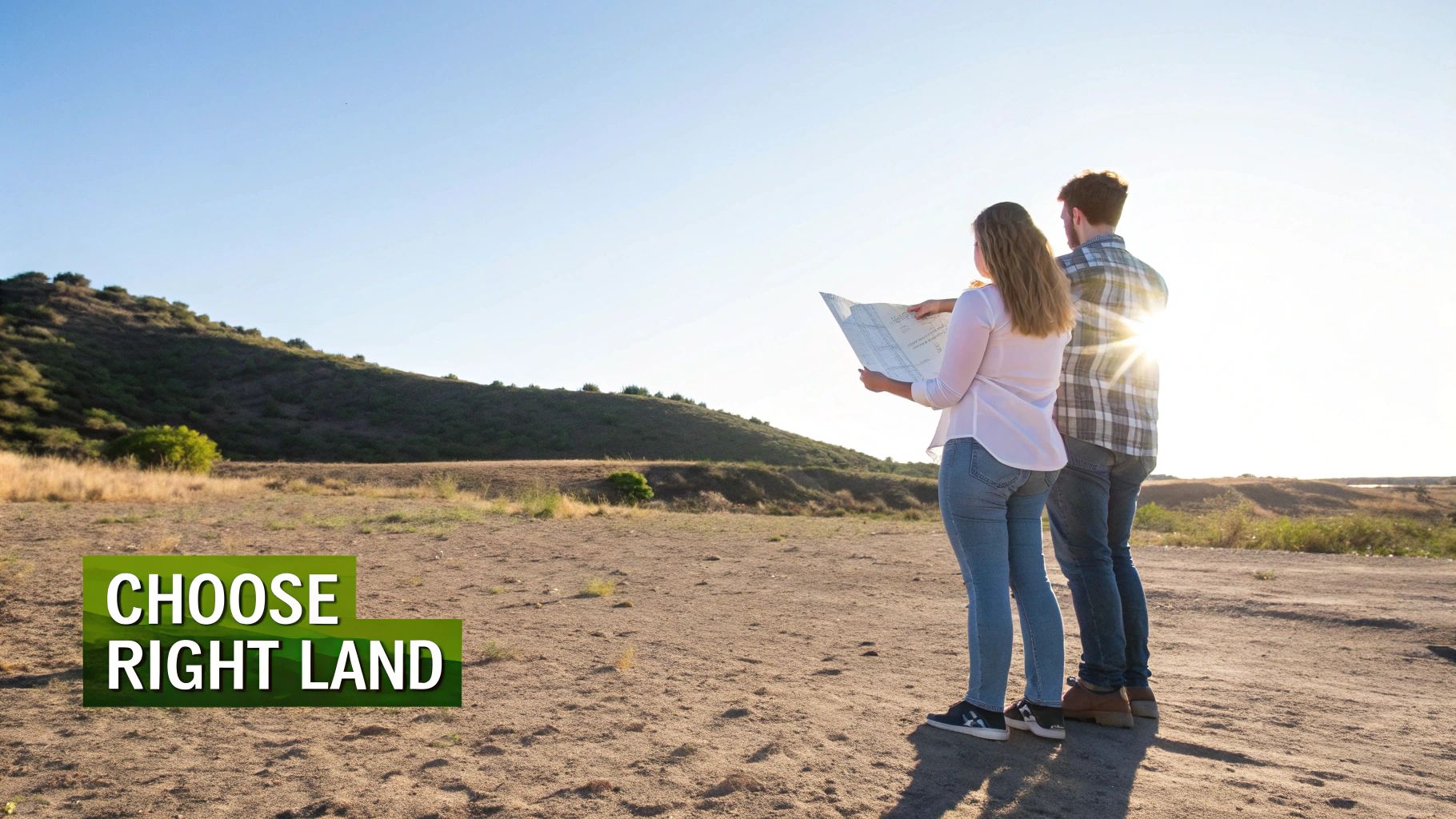
Before you fall in love with a piece of land, you have to ask one critical question: is it even legal to live off-grid here? While the dream itself is alive and well across the United States, making it a reality comes down to a patchwork of state and, more importantly, local county rules.
Ignoring these regulations is one of the biggest mistakes a buyer can make. You could find the perfect parcel, only to discover later that the county won’t let you install the very systems you need to live there. This is where doing your homework—your due diligence—becomes your most important tool.
Zoning Restrictions: What Can You Actually Do With Your Land?
The first hurdle is always zoning. A property's zoning code is the master rulebook that dictates how it can be used. For an off-grid home, you’re typically looking for land zoned as residential, agricultural, or sometimes rural.
Zoning laws set the ground rules for things like:
- Minimum acreage requirements to build a house or put in a well and septic system.
- Building setbacks, which tell you how far your structures have to be from property lines.
- Restrictions on building types, like rules against tiny homes or living in an RV full-time.
It's absolutely essential to confirm that the land you’re considering allows for year-round residential living. Some beautiful, remote parcels are zoned only for recreational use, meaning you can camp for a weekend but can't build a permanent home.
Building Codes And Permits: The Rules For Your Home
Once you know you can build a home, you have to find out how you can build it. That’s where building codes come in. These are the standards for construction that ensure a home is safe and livable. While some very remote counties have almost no codes, most will require permits and inspections.
This covers everything from your foundation and electrical wiring (even for solar!) to your plumbing. If you're planning on using alternative building methods like an earthship or a straw-bale house, you might face extra questions or find they aren't permitted at all. Always ask the county planning department first.
Crucial Reminder: Don't take anyone's word for it—verify every rule directly with the county. Regulations can and do change. Never rely on assumptions or what someone else told you when you're planning your off-grid life.
Water Rights And Sanitation Regulations
Two of the most heavily regulated parts of going off-grid are your water and your waste.
When it comes to water, you need to understand the local water rights. Just because there’s water under your land doesn't automatically mean you have the right to drill a well and use it. In many Western states, water rights are a complex legal puzzle that you must solve before you buy.
For waste, counties have strict public health codes.
- Septic Systems: Almost every county requires a permit to install a septic system. This usually involves a "perc test" to make sure your soil can safely absorb wastewater.
- Alternative Toilets: The rules for things like composting toilets are all over the map. Some counties are fine with them, while others won't allow them as the primary toilet for a permanent home.
For a complete checklist on what to look for in a property, check out our guide on what to look for when buying land.
Your Due Diligence Checklist
The best thing you can do is arm yourself with the right questions. Before you buy, call the county's Planning and Zoning department and have this list ready:
- Zoning: "What is this parcel's official zoning, and does it allow a full-time, single-family home?"
- Minimum Acreage: "What’s the minimum acreage needed to build a home and install a well and septic system here?"
- Building Codes: "Do you have local building codes I need to follow? Are alternative building styles or tiny homes allowed?"
- Sanitation: "Are composting toilets permitted as the only toilet for a permanent residence?"
- Access: "Is the road to this property maintained by the county, or is it a private easement?"
Getting clear, official answers to these questions is the single most important step in turning your off-grid dream into a legal, functional home.
Weighing The Pros and Cons Of An Off-Grid Lifestyle
The dream of going off-grid is a powerful one. It paints a picture of quiet mornings, total freedom, and a life lived on your own terms. But to actually make that dream a reality, you have to look past the romance and get honest about the practicalities.
Committing to this life means embracing both its incredible rewards and its very real challenges.
Pros: The Appeal Of True Self-Sufficiency
The pull of off-grid life goes way beyond just the practical side of things. For many, it’s about the deep sense of accomplishment that comes from being genuinely self-reliant.
- Total Energy Independence: You're no longer at the mercy of power outages or skyrocketing energy prices. Your power plant is right on your property, and you're the one in control.
- A Sustainable Lifestyle: You end up living in closer rhythm with the natural world, using fewer resources and leaving a much lighter mark on the planet.
- Unmatched Privacy and Quiet: Finding a rural, off-grid property gives you a sanctuary from the noise and hustle of modern life. It's space to think, create, and just be.
- Resilience and Security: When you control your own essentials—power, water, and even food—you’re building a homestead that's far less vulnerable to whatever disruptions are happening in the wider world.
Cons: The Unvarnished Truths Of Off-Grid Living
But that independence comes with trade-offs. You have to be prepared for them. The challenges are real, and they demand a certain mindset and a willingness to get your hands dirty. Ignoring them is a surefire way to end up frustrated.
A Note on Responsibility: When you live off the grid, there's no one to call when something breaks. The buck stops with you. Maintenance, troubleshooting, and repairs fall squarely on your shoulders, and usually at the worst possible times.
Here are the main hurdles you’ll need to be ready for:
- High Upfront Investment: Let’s be honest—the initial cost to set up your core systems can be a gut punch. A good solar setup, a well, and a septic system can run into the tens of thousands of dollars. While that money replaces decades of utility bills, finding the upfront capital is a huge barrier for a lot of people.
- The Steep Learning Curve: Get ready to become a part-time electrician, plumber, mechanic, and engineer. The learning curve is steep, and you have to be willing to constantly learn and adapt to keep your homestead running smoothly.
- Constant Maintenance and Troubleshooting: Off-grid systems are definitely not "set it and forget it." Batteries need to be checked, solar panels need cleaning, water filters need changing, and generators need servicing. It’s a constant commitment of your time and effort.
- Potential for Isolation: While the privacy is a massive perk, the reality of living far from neighbors, stores, and services can feel isolating for some. It takes a personality that's genuinely comfortable with solitude and being self-reliant.
Ultimately, deciding to live off-grid is a deeply personal choice. It demands a realistic look at your budget, your skills, your grit, and your personality. But for those who are truly prepared for what it demands, the reward is a life of freedom and satisfaction that’s hard to find anywhere else.
What This Means for Buyers
All the technical talk about solar panels, septic systems, and zoning laws can feel like a lot to take in. So, what does it all mean for someone buying their first piece of land?
It's actually pretty simple: your success starts by choosing the right property from day one.
Instead of getting bogged down in the details of system design, put your energy into finding a parcel with a solid foundation. Think of your land as the platform for your entire off-grid future. If that platform is weak, everything you build on it becomes more difficult and a whole lot more expensive.
Prioritizing Key Land Features
For a first-time buyer, a few property features are completely non-negotiable. Getting these right will simplify everything and save you from massive headaches and costly mistakes down the road.
Your land search should be laser-focused on these critical elements:
- Proven Legal and Physical Access: You absolutely have to be able to legally and physically get to your property. That means verified, year-round road access—not just a faint line on a map.
- Viable Water Options: The land needs to be in an area where drilling a well is a realistic option or where rainwater collection makes sense. Look into local well depths and average rainfall before you even think about buying.
- Good Solar Exposure: For reliable solar power, you need land with clear, unobstructed southern exposure. A heavily wooded, north-facing slope just isn't going to cut it for generating your own electricity.
- Usable Terrain: Steep, rocky ground is a nightmare to build on. You want to find parcels with at least one level, stable spot for your home, any outbuildings, and your septic system.
Learning how to spot these features is a skill that will pay off big time. You can learn more by reading our guide on how to be a smart land investor by doing your homework before buying.
Shifting Your Financial Mindset
Seeing the high upfront cost of infrastructure can be a real gut punch for new buyers. But it's important to look at it differently—this isn't just an expense, it's a long-term investment. The money you put into a solar system, well, and septic tank is money you won't be spending on utility bills for decades to come.
This isn't just a niche idea anymore; it's becoming a smart financial move. The off-grid housing market was valued at US$2.4 billion in 2023 and is projected to climb to US$4.76 billion by 2032, with North America leading the charge. That kind of growth shows that self-sufficiency is being recognized for its long-term value. Discover more insights on the off-grid housing market.
When you focus on finding land with the right natural advantages, you stop feeling overwhelmed by technical details and start feeling confident. The land itself is your single most important asset in creating a successful, sustainable, and truly independent off-grid life.
Why Consider Dollar Land Store?
Finding the right piece of land is easily the biggest—and most important—step in any off-grid journey. Here at Dollar Land Store, our whole mission is to make that foundational step as simple and transparent as possible, clearing away the roadblocks that usually stop people from owning their own slice of the country.
We specialize in tracking down affordable, undeveloped land in states that are perfect for going off-grid. You’ll find most of our properties in places like Arizona and Colorado, where the sunny climate and relaxed regulations create the perfect environment for building a self-sufficient life.
A Direct Path to Land Ownership
Let’s be honest: the biggest hurdles for most aspiring landowners are the upfront cost and the headache of traditional financing. We built our model to solve that problem head-on with straightforward owner financing.
What does that look like in practice?
- No Credit Checks: We believe everyone deserves a shot at owning land, no matter what their credit report says.
- Low Down Payments: Our goal is to make land ownership achievable without needing a huge chunk of cash to get started.
- Transparent Terms: All costs and payment details are clearly stated upfront, so there are no surprises.
- No Middlemen: You work directly with us. That means no real estate agent commissions, no confusing bank negotiations, and no runaround.
This approach cuts right through the usual red tape, helping you secure your own property quickly and without breaking the bank. By keeping a wide inventory of properties and making our terms clear from the very beginning, we put you in the driver’s seat. We want to be a partner you can trust as you take this exciting first step toward independence.
Next Steps: Your Path to Owning Off-Grid Land
You've got the foundational knowledge and a clearer picture of what off-grid living really entails. Now it's time to stop dreaming and start doing. Let's turn that research into real, practical steps toward finding your own piece of land.
1. Get Clear on Your Vision and Budget
Before you even glance at a single land listing, be honest with yourself about what you want. What does "off-grid" look like for you? Is it a small cabin for weekend getaways, or a full-time homestead with gardens? The answer changes the kind of land you need. Once that vision is clear, create a realistic budget that includes not just the land purchase but also the essential systems—power, water, and waste.
2. Research County Rules
This is the part nobody likes, but it's arguably the most important. Once you have a few target areas in mind, become an expert on their local rules. As we've covered, zoning laws, building codes, and sanitation requirements can vary wildly from one county to the next.
Take Action: Don't skip this. A quick phone call or visit to the county planning department's website is one of the smartest investments of time you can make in this entire process.
3. Start Your Property Search
With your goals set, your budget in place, and your research done, you’re finally ready for the fun part. It’s time to start looking at actual properties. A great place to start is by browsing the owner-financed listings at Dollar Land Store. You'll get a real-world feel for pricing and see what kind of parcels are out there that might just match your off-grid ambitions. Contact Dollar Land Store with questions about buying raw land to make your search even easier.
Off-Grid Living: Your Questions Answered
If you’re just starting to explore the idea of living off-grid, you probably have a lot of questions. Here are some straightforward answers to the ones we hear most often.
Can You Live Off Grid And Still Have Internet?
Absolutely. This is one of the biggest myths about modern off-grid life. Thanks to satellite internet services like Starlink and Viasat, you can get high-speed internet almost anywhere. Long gone are the days of being totally disconnected—unless you want to be.
These systems make it entirely possible to work remotely, stream movies, or just stay in touch with family, all without a single wire connecting you to the public grid.
How Much Land Do You Need To Live Off Grid?
There’s no magic number here—it really depends on what you want to do. For a simple cabin and a bit of garden space, one to five acres can be perfect. But if your dream includes raising animals, growing most of your own food, or just having a ton of privacy, you’ll probably want to look for 10 acres or more.
Important: Before you fall in love with a property, always check the local county’s rules. They often have minimum acreage requirements to legally install a well and a septic system, and you don’t want any surprises after you buy.
Do You Still Pay Property Taxes On Off Grid Land?
Yes, you do. Property taxes are a fact of life for every landowner, on-grid or off. The local county assesses taxes based on your land’s value, not its connection to public utilities.
So, even if you’re generating your own power and collecting your own water, you’ll still need to budget for that annual property tax bill.
What Is The Biggest Mistake First-Time Off Grid Buyers Make?
By far, the most common—and most expensive—mistake is not doing enough research on the local rules before buying. We’ve seen people get really excited about a piece of land, only to find out later that they can’t legally do what they planned.
Before you even think about making an offer, you have to dig into the county’s zoning laws, building codes, and especially the water situation. Making sure there's a practical and legal way to get water on the property is the single most important piece of due diligence you can do.
Conclusion
Living off-grid is more than just a lifestyle choice; it's a commitment to self-reliance, sustainability, and true independence. It requires careful planning, a willingness to learn, and a significant upfront investment in both time and money. However, for those prepared for its challenges, the rewards are unmatched: freedom from utility bills, a deeper connection to the land, and the security of knowing you can provide for yourself.
The journey begins with finding the right piece of land—a foundation upon which your entire vision will be built. By focusing on properties with good access, water potential, and favorable regulations, you set yourself up for success from day one.