


A Buyer's Guide to the Cheapest Places to Buy Land in America
Ross AmatoOwning your own piece of America might seem financially out of reach, but it's more attainable than you think. The cheapest places to buy land are often found in vast, less-populated states like New Mexico, Arizona, and Arkansas. Here, raw, undeveloped parcels can be purchased for a fraction of what you might expect, opening the door for first-time buyers to secure a real, tangible asset.
This guide is designed for beginners who want a practical roadmap to finding, researching, and purchasing their own slice of the country.
A Practical Introduction to Finding Affordable Land
For many aspiring landowners, buying property feels complicated and expensive. The reality, however, is that buying raw land can be far more straightforward than purchasing a traditional home. This path allows you to sidestep common challenges like bidding wars, complex bank financing, and the need for a large down payment.
The key is understanding why certain land is so affordable. A low price doesn't mean a property is flawed or undesirable. It usually means the land is:
- Undeveloped: The property is in its natural state, without utilities like public water, sewer, or electricity connected. This "blank slate" is ideal for buyers seeking an off-grid setup or a spot for weekend recreation.
- Rural or Remote: Parcels located away from densely populated cities naturally come with a lower price tag. This is where you find privacy and space that is uncommon in suburban areas.
- Accessible via Unpaved Roads: Properties with dirt or gravel road access are often more affordable than those on paved, county-maintained roads.
What to Expect from This Guide
This guide breaks down the process for anyone new to land buying. We will cover:
- The States with the Best Value: A closer look at specific states and regions where your dollar goes furthest.
- The Factors Driving Land Prices: How to evaluate a property's features and understand the trade-offs between cost and convenience.
- A Step-by-Step Vetting Process: An actionable plan for doing your due diligence so you can buy with confidence.
Buying affordable land isn't about finding a secret loophole; it's about understanding a different part of the real estate market. It’s an opportunity to own a real piece of the country—whether for long-term investment, a private recreational getaway, or the foundation for a future off-grid homestead.
Where to Find the Cheapest Land in America
When searching for the cheapest places to buy land, a few states consistently appear. This is due to their vast open spaces, low population density, and local economies that create incredible opportunities for buyers. Understanding the character of each state is the first step toward finding land that fits your goals.
The American Southwest, in particular, is a prime region for affordable rural land. States like New Mexico, Arizona, and parts of Colorado offer dramatic landscapes and an independent spirit that appeals to first-time land buyers.
The Southwestern Advantage: New Mexico and Arizona
New Mexico and Arizona are known for their sprawling, sun-drenched landscapes. The land here is often high-desert terrain with sparse vegetation and clear night skies, making it a favorite for off-grid living, weekend camping, and long-term "land banking" (holding land as an investment).
- New Mexico: Often cited as one of the most affordable land markets, New Mexico offers excellent value. Large tracts of undeveloped land, especially in counties like Luna and Valencia, allow buyers to own significant acreage without a high price. You can learn more in our detailed guide on Luna County, New Mexico.
- Arizona: Similarly, Arizona offers affordable parcels, especially in its northern and western counties. The major appeal is the rugged beauty and the sense of freedom that comes with owning a piece of the classic American West.
The low prices in these states are driven by a simple supply-and-demand dynamic: there is a massive amount of available raw land and less demand for it compared to crowded coastal states.
Mountain and High Plains Value: Colorado
While Colorado may bring to mind expensive ski resorts, its southern regions and eastern plains present a much more affordable reality. Areas like Costilla County, located in the San Luis Valley, offer some of the most budget-friendly land in the state.
Here, you can find five-acre parcels with stunning mountain views at accessible prices. This type of land is perfect for a recreational basecamp—a spot for hiking, fishing, and exploring the Rockies without the resort-town price tag. The trade-off is typically remoteness and the need for self-sufficiency, as public utilities are rarely available. For many buyers, the lack of utilities is a feature, not a drawback, enabling a true off-grid setup.
This infographic illustrates how buyers use these affordable parcels to achieve their goals.
As you can see, off-grid living, private recreation, and long-term investment are the primary motivations for purchasing raw land.
Ozark Opportunities: Arkansas
Heading east, the landscape changes, but the affordability remains. Arkansas, especially in the Ozark Mountain region, offers a different environment with lush forests, rolling hills, and plentiful water sources.
Land here is well-suited for homesteaders, hunters, or anyone seeking a private, wooded retreat. Unlike the open deserts of the Southwest, Arkansas parcels often feature mature trees and a milder, four-season climate. It provides a green, vibrant alternative to the arid West.
The data supports these trends. New Mexico has established itself as a highly affordable land market, with some rural land prices as low as $725 per acre. That is significantly less than the national average, opening the door for many people to own property.
Decoding What Makes a Parcel of Land Affordable
Have you ever wondered why one five-acre parcel costs $5,000 while a seemingly identical one is listed for $50,000? The answer lies in a handful of key factors that every first-time land buyer should understand.
Just as a fully-equipped new truck costs more than a basic older model, land prices are determined by features, access, and permitted uses. For anyone searching for the cheapest places to buy land in America, knowing what drives these costs—and the trade-offs involved—is crucial.
The Big Three Price Factors
When you see a very affordable piece of land, it almost always lacks one or more of these three expensive features.
-
Utility Access: This is the single biggest price driver. Parcels with existing connections to public water, sewer, and electricity are far more expensive because the infrastructure is already in place. Land without these connections is called "raw" or "undeveloped" land and is significantly cheaper. Buyers of this type of land typically plan for off-grid solutions like drilling a well, installing a septic system, and using solar power.
-
Road Access: The type of access to a property matters. Land with frontage on a paved, county-maintained road is more valuable than land reached by a dirt or gravel road. Even more affordable are parcels with only legal, platted access—meaning a road exists on a map but has not been physically graded. This can be an incredible value but may require a suitable vehicle and a preference for remote settings.
-
Zoning and Permitted Use: What a county allows you to do with the land directly impacts its price. A parcel zoned for residential building will command a higher price than one zoned only for recreational or agricultural use. It is critical for buyers to verify zoning with the local county planning department to ensure their plans, such as building a cabin or long-term camping, are permitted.
The most affordable land is often a combination of all three: it is raw land with no utilities, accessed by a dirt road, and zoned for recreational or agricultural use rather than immediate residential construction.
Topography and Location Nuances
Beyond the big three, a few other characteristics can influence a property’s price.
- Topography: Land that is steeply sloped, rocky, or located in a floodplain is generally cheaper because building on it is more difficult and expensive. A flat, usable parcel is almost always more desirable and therefore costs more.
- Proximity to Towns: The farther a property is from a town with amenities like grocery stores and hospitals, the lower its price will be. A parcel an hour from the nearest town will be much more affordable than one just ten minutes away.
Understanding these trade-offs empowers you to see a property’s real value. A remote parcel with dirt road access isn’t "bad"—it’s a strategic opportunity for a buyer who values privacy and a low entry cost over convenience. To learn more, our article on how to determine land value offers additional insights.
Your Step-by-Step Plan to Find and Vet Cheap Land
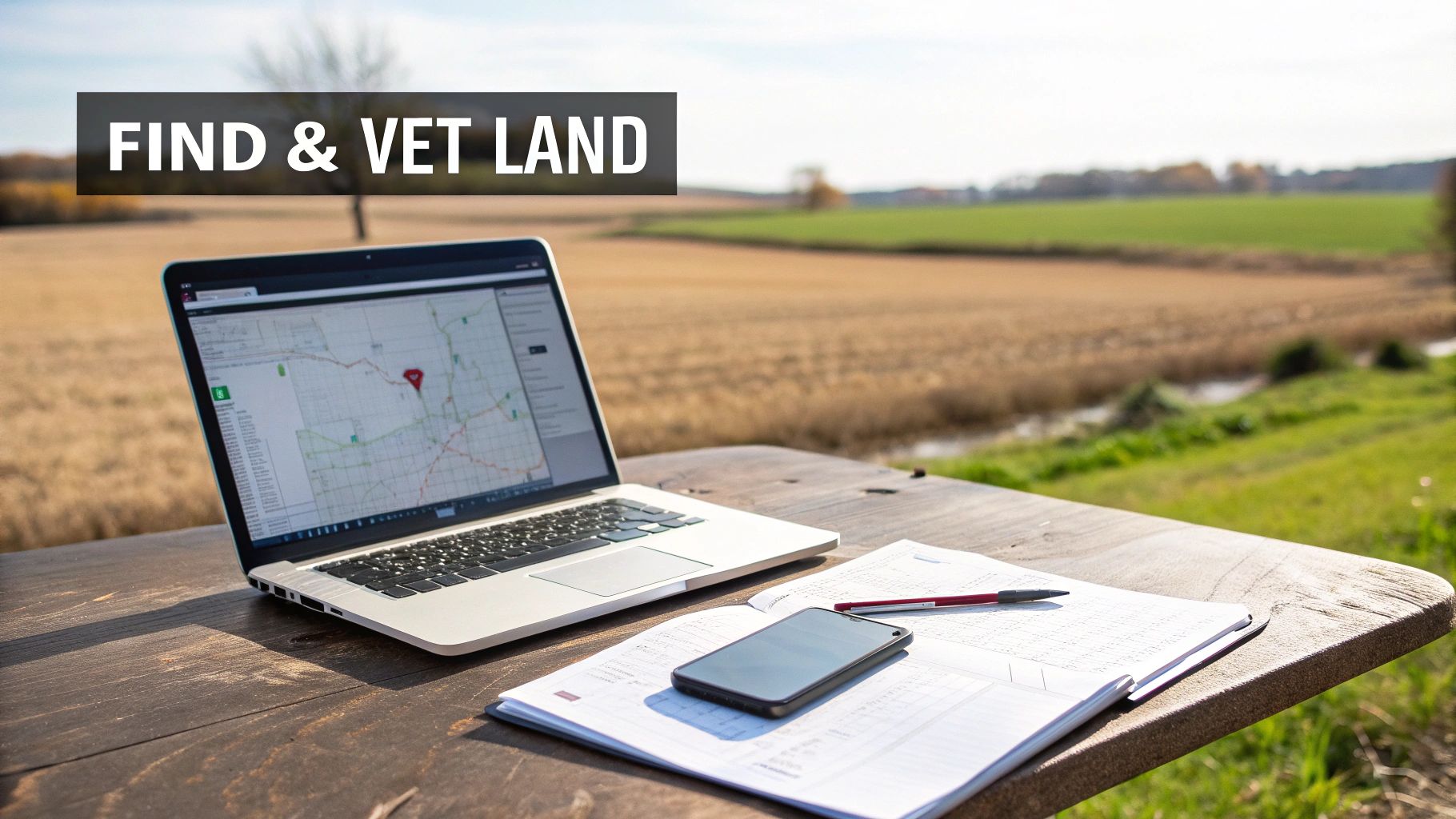
Finding an affordable property is just the first step. True confidence comes from knowing you’ve done your homework to ensure the land is a good fit for your goals.
This is where due diligence comes in—the process of verifying all the details about a property before you buy. Following these steps will help you transition from a casual browser to a smart, informed buyer.
Your search will likely start online with direct sellers. Companies that focus on affordable, raw land often offer a much simpler buying process, especially those providing seller financing. This is a significant advantage as it allows you to sidestep the often-rigid requirements of traditional banks.
Step 1: Start With Online Land Marketplaces
The fastest way to understand the market is to browse specialized online platforms. These websites aggregate listings from across the country, giving you a broad view of what’s available in your price range.
- Filter Your Search: Use search filters to narrow down properties by state, county, acreage, and price. This is how you can quickly find opportunities in affordable regions.
- Look for Key Details: A good listing should be transparent. Pay close attention to those that provide GPS coordinates, the parcel number (APN), and clear information on access and zoning.
- Identify Seller-Financed Deals: Many sellers, including Dollar Land Store, offer owner financing. This is usually highlighted in the listing and makes buying highly accessible, even without a large down payment or a high credit score.
For more tips, see our guide on finding land for sale online.
Step 2: Begin Your Due Diligence Checklist
Once a parcel catches your eye, it's time to begin your research. Never skip this step. Your goal is to confirm the seller’s claims and ensure the land works for your intended use.
The most important part of this process involves contacting the county government where the property is located. To do this, you will need the property’s Assessor’s Parcel Number (APN), which should be provided in the listing.
The APN is a unique code the county assigns to every piece of property for tax and record-keeping purposes. It is the key to unlocking all official information about that specific parcel.
Step 3: Contact the County and Ask the Right Questions
Your first call should be to the county’s Planning and Zoning department. Be prepared with your APN and questions:
- Verify Zoning and Permitted Uses: Ask, "What is this parcel zoned for?" and follow up with, "What uses are permitted?" You need to know if you can camp, build a small cabin, or park an RV, and if there are any time limits on those activities.
- Confirm Legal and Physical Access: Next, check with the Public Works or Roads department. Ask, "Does this property have legal, platted road access?" and "Is the road physically present and maintained by the county?" You need to avoid a "landlocked" parcel with no legal way to reach it.
- Understand Property Tax Obligations: A call to the County Treasurer or Tax Assessor can clarify this. Confirm the annual property taxes and, most importantly, ask if the taxes are current. You do not want to inherit a previous owner's tax liability.
This research phase connects the online listing to the on-the-ground reality. It protects your investment and helps ensure there are no surprises down the road. The most affordable states truly deliver incredible value, with some having average per-acre prices well below the national figures. For more insights, you can see what TheLandGeek.com says about the best states to buy land.
What This Means for First-Time Land Buyers
For a first-time buyer, learning about the cheapest places to buy land in America means one thing: opportunity. The availability of affordable land in states like New Mexico, Arizona, and Arkansas changes the landscape of property ownership. It opens the door for many people who previously thought it was out of reach.
This is about more than just finding a good deal. It’s a direct, accessible path to owning a real, tangible asset—without needing a massive down payment or a perfect credit score. The combination of low entry costs and the common availability of seller financing creates a realistic pathway to making your dream a reality.
A Strategic Decision, Not a Compromise
Choosing an affordable parcel of land is a strategic move. It is not about "settling for less," but about prioritizing what truly matters for your vision.
The key is to match the land's characteristics to your goals:
- For a Weekend Retreat: A remote, recreational parcel with simple dirt road access could be the perfect private escape.
- For a Small Homestead: An agricultural-zoned property in a state with a low cost of living, like Arkansas, offers a practical starting point.
- For a Long-Term Investment: A raw land parcel in an area with growth potential allows you to hold a real asset with very low annual carrying costs.
This opportunity comes with a responsibility that empowers you as the buyer. Since you are not paying a premium for pre-installed utilities, it is your responsibility to conduct your own research. This puts you in control, ensuring you buy with complete confidence.
For the savvy buyer, the current land market offers a unique advantage. While national averages for land value exist, they hide massive price differences from one region to the next. As traditional lenders tighten credit requirements, sellers offering their own financing are creating an exceptional window of opportunity. You can learn more about how 2026 rural land sales predictions are shaping the market.
Ultimately, buying affordable land means you can stop renting a piece of the outdoors and start owning it. You can build equity, create a legacy, and secure your own private space. To brush up on the fundamentals, you might find our guide on the basics of buying plots of land helpful.
Why Consider Dollar Land Store for Your Purchase
At Dollar Land Store, we specialize in affordable, undeveloped rural land in states known for their value. Our entire business is built to serve first-time and early-stage land buyers.
We have removed the complexity often found in traditional real estate transactions. You will not find confusing jargon or hidden fees. Instead, our process is simple and online, with clear, transparent listings that provide key information upfront.
Making Land Ownership Accessible
One of the biggest hurdles for new buyers is financing. Banks often avoid small, rural land loans, which is why seller financing is at the heart of our model.
- No Credit Checks: We believe a person's credit history should not prevent them from owning a tangible asset for their future.
- Low Monthly Payments: Our payment plans are structured to be genuinely affordable, so you can build equity without straining your budget.
- Simple, Transparent Terms: Everything is laid out in a straightforward contract—the purchase price, your monthly payment, and the loan term. There are no surprises.
This approach makes land ownership accessible to a wide range of buyers, regardless of their financial situation.
A Direct and Streamlined Process
Another key difference is that we own every parcel of land we sell. This means there are no real estate agents, brokers, or other middlemen involved. The transaction is directly between you and us. This model results in less paperwork, fewer complications, and a much faster path from finding a listing you love to calling that property your own.
Our goal is to make land ownership realistic and achievable through a transparent process, accessible financing, and a curated inventory of affordable properties.
Buyer Guidance and Next Steps
You've learned the fundamentals of finding and vetting affordable land. The key is to remember the trade-offs between price and features and to always conduct your own due diligence. That is what transforms a casual search into a smart purchase. Now, it's time to put that knowledge into action.
Taking Practical Action
Here’s how you can move forward today:
- Browse Current Listings: The best way to get a feel for the market is to look at actual parcels for sale. You will quickly see what your budget can get you in different parts of the country.
- Learn About Seller Financing: If this concept is new to you, take a few minutes to understand how it works. It is one of the most common and straightforward ways people buy raw land.
- Prepare Your Questions: Start a list of questions for county officials. Having your questions ready about zoning, road access, and property taxes will make you a more confident and prepared buyer.
Once you find a property, you can start thinking about what comes next. Learning practical skills, like how to build a gravel shed foundation for a future storage building, is part of the land ownership journey.
Conclusion
Finding the cheapest places to buy land in America is not about luck; it's about knowledge. By focusing on states like New Mexico, Arizona, and Arkansas and understanding the factors that make land affordable—such as the absence of utilities and paved road access—you can unlock opportunities that many people overlook. Buyers searching for the cheapest land in the us often focus on rural states where large undeveloped parcels remain affordable and accessible for first-time landowners.
The most critical step in this journey is your own research. Verifying zoning, access, and taxes with local county authorities ensures you purchase a property that aligns with your goals. With seller financing options widely available from direct sellers like Dollar Land Store, the path to owning land is more accessible than ever. You have the ability to secure a tangible asset, build equity, and create your own private retreat.
Your dream of owning land is within reach. Take the next step with confidence.
Browse available land at DollarLandStore.com.