


For Sale by Ownner: A Practical FSBO Guide
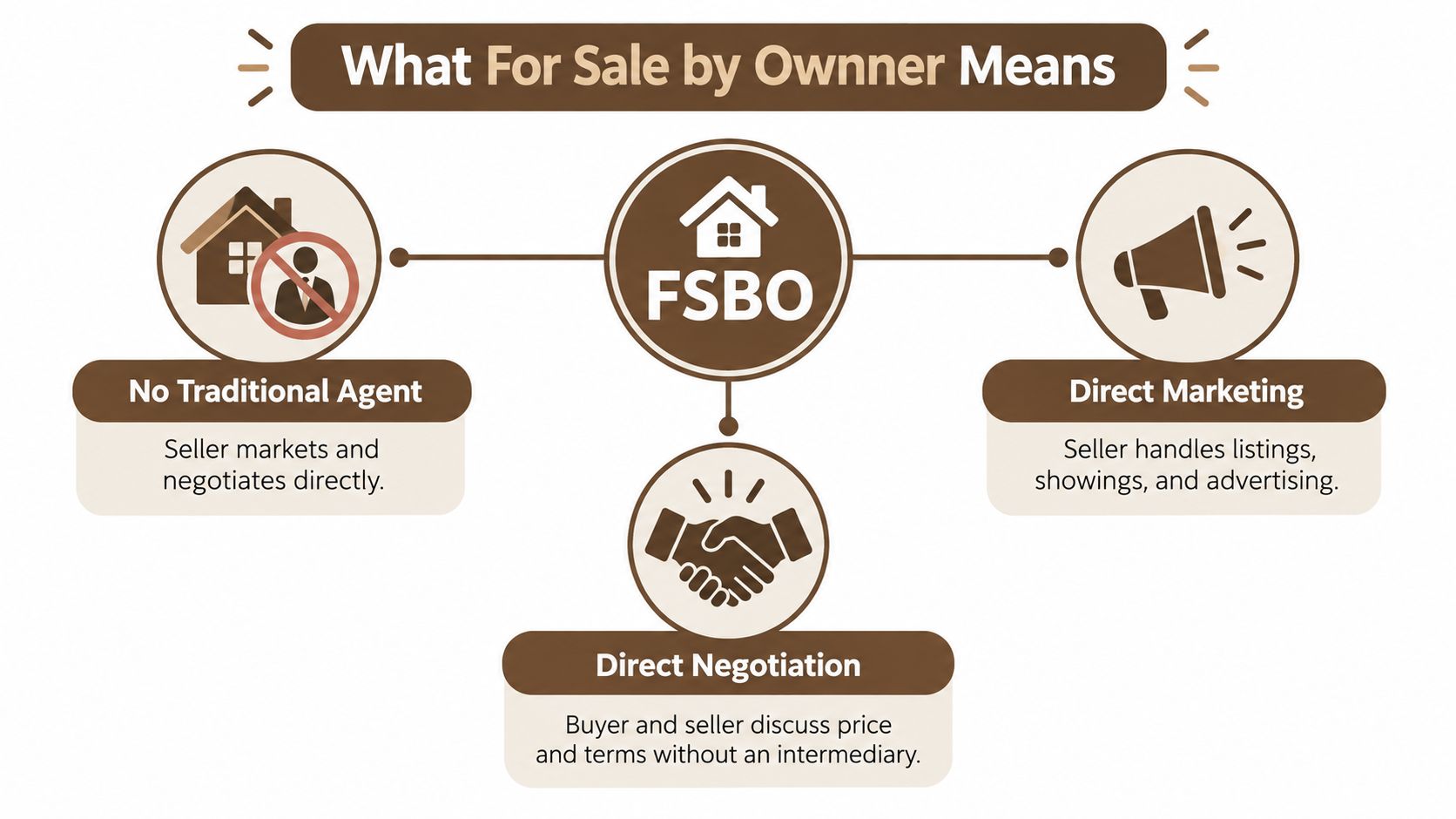
Ross AmatoYou're comparing a wooded vacant lot online with a house advertised directly by its owner, and both seem to promise a simpler purchase. For sale by ownner, more commonly written for sale by owner or FSBO, means the seller markets and negotiates the property without a traditional listing agent. The opportunity is direct communication, but the core question is who handles the work an agent would otherwise help coordinate.
For vacant land, start by comparing the parcel information and purchase requirements, not just the advertised payment. The online buying process provides a useful starting point before you select a property and begin checkout.
What For Sale by Ownner Means
A homeowner selling a house directly and a business selling vacant parcels online may both communicate with buyers without a traditional listing agent. That similarity doesn't make their properties, documentation, or purchase arrangements interchangeable.
FSBO describes a transaction model, not a complete service package. The seller takes responsibility for presenting the property and discussing the sale, but attorneys, title companies, surveyors, lenders, or other professionals may still participate. Buying directly doesn't mean everyone should handle unfamiliar paperwork alone.
Direct contact isn't the same as complete support
Think of buying a used vehicle directly from its owner rather than through a dealership. You can ask the person selling it specific questions, but you still need to decide who checks its condition, reviews its history, and completes the transfer.
With land, the equivalent questions concern the parcel, access, restrictions, title, and purchase agreement. A responsive seller is helpful, but responsiveness isn't a substitute for records that support the answers.
- Seller responsibility: Explain what's being offered, disclose relevant information, and identify the purchase terms.
- Buyer responsibility: Evaluate whether the property and agreement fit the intended purpose.
- Professional assistance: Bring in qualified help where the transaction requires knowledge neither party has.
Houses and vacant land need different questions
A house buyer may focus on the roof, plumbing, and existing living space. A raw-land buyer must first establish what the parcel legally and physically supports.
DLS, operated by Amato-Y, LLC, sells vacant land rather than houses. Most properties are raw and unimproved unless the listing states otherwise, so buyers shouldn't assume that residential infrastructure already exists.
The useful question isn't whether FSBO is universally better. It's whether the seller's preparation and your verification match the responsibilities you're comfortable accepting.
How the FSBO Transaction Differs
A seller transferring property to a relative faces a different challenge from a seller trying to attract an unfamiliar buyer. The first already has buyer access. The second must create it through accurate information, effective marketing, and a credible purchase process.
The residential evidence helps explain that distinction. NAR reported that 60% of FSBO sellers knew their buyer personally, while median sale prices were $360,000 for FSBO homes and $425,000 for agent-assisted homes in its 2025 home-market takeaways.
Buyer access changes the work
| Transaction model | How the buyer arrives | Main issue to evaluate |
|---|---|---|
| Private-network sale | An existing personal relationship | Whether the price and terms received independent scrutiny |
| Open-market FSBO | Advertising and public inquiries | Whether the seller reached suitable buyers and presented the property accurately |
| Online vacant-land sale | Parcel pages and direct purchasing channels | Whether the information supports meaningful due diligence |
Related reporting found that 40% of FSBO sellers didn't actively market their homes, and 30% sold to a friend, relative, or neighbor, reinforcing the difference between private transfers and public listings (Florida Realtors' FSBO reporting).
Lower medians don't prove automatic savings
The residential price comparison doesn't establish that avoiding an agent caused a lower price. Location, condition, property size, seller motivation, personal relationships, and marketing reach can differ between the groups.
It also doesn't establish a discount for vacant land. Home-sale evidence is context, not a land-pricing formula.
NAR's historical series shows FSBO's share declining from approximately 21% in 1985 to 5% in 2025, when 91% of sellers used an agent; the survey covered transactions from July 2024 through June 2025 (NAR's profile highlights).
For your purchase, the practical comparison is narrower: who establishes the price, answers questions, supplies documents, negotiates terms, and coordinates completion?
FSBO Benefits and Trade-Offs
Direct communication can be valuable when you have precise questions. You can ask the seller which documents support the listing, what information remains uncertain, and whether the purchase terms fit your situation.
For sellers, that same direct relationship offers control over presentation, scheduling, and negotiations. But control comes with work, including answering repetitive inquiries and recognizing when a question needs professional help.
FSBO Trade-Offs by Role
| Role | Potential Advantage | Trade-Off to Accept |
|---|---|---|
| Buyer evaluating information | Direct access to the seller's explanations | Independently check important answers |
| Seller managing marketing | Control over photographs, descriptions, and advertising | Prepare accurate materials and respond to inquiries |
| Buyer negotiating | Discuss price and terms without a listing intermediary | Develop a reasoned position rather than relying on a discount assumption |
| Seller setting terms | Decide which proposals to consider | Manage negotiation details and document agreed changes |
| Buyer managing costs | Choose professional assistance for specific needs | Budget for that assistance and parcel-specific work |
| Both parties coordinating time | Communicate directly about progress | Assign responsibility for documents and closing tasks |
Compare the whole job, not just the asking price
A seemingly inexpensive parcel may still require title review, survey work, access investigation, utility research, or permitting assessment. Don't assume every expense applies, but don't treat an unknown expense as nonexistent.
The same discipline applies to marketing. VideoTour.ai's resource on how to sell faster with AI videos offers a presentation angle for sellers evaluating visual tools, not proof that a particular property will sell sooner. Any video should distinguish actual parcel imagery from illustrative material and avoid implying unverified access, improvements, or permitted uses.
Practical rule: Compare the responsibilities included in each purchase route before comparing the apparent savings.
A direct sale can suit someone who likes asking questions, comparing documents, and choosing professional support. It can frustrate someone expecting a fully managed experience without identifying who provides it.
The fit test is straightforward: do both parties want the control enough to accept the preparation and coordination that accompany it?
Check the Parcel Before Negotiating
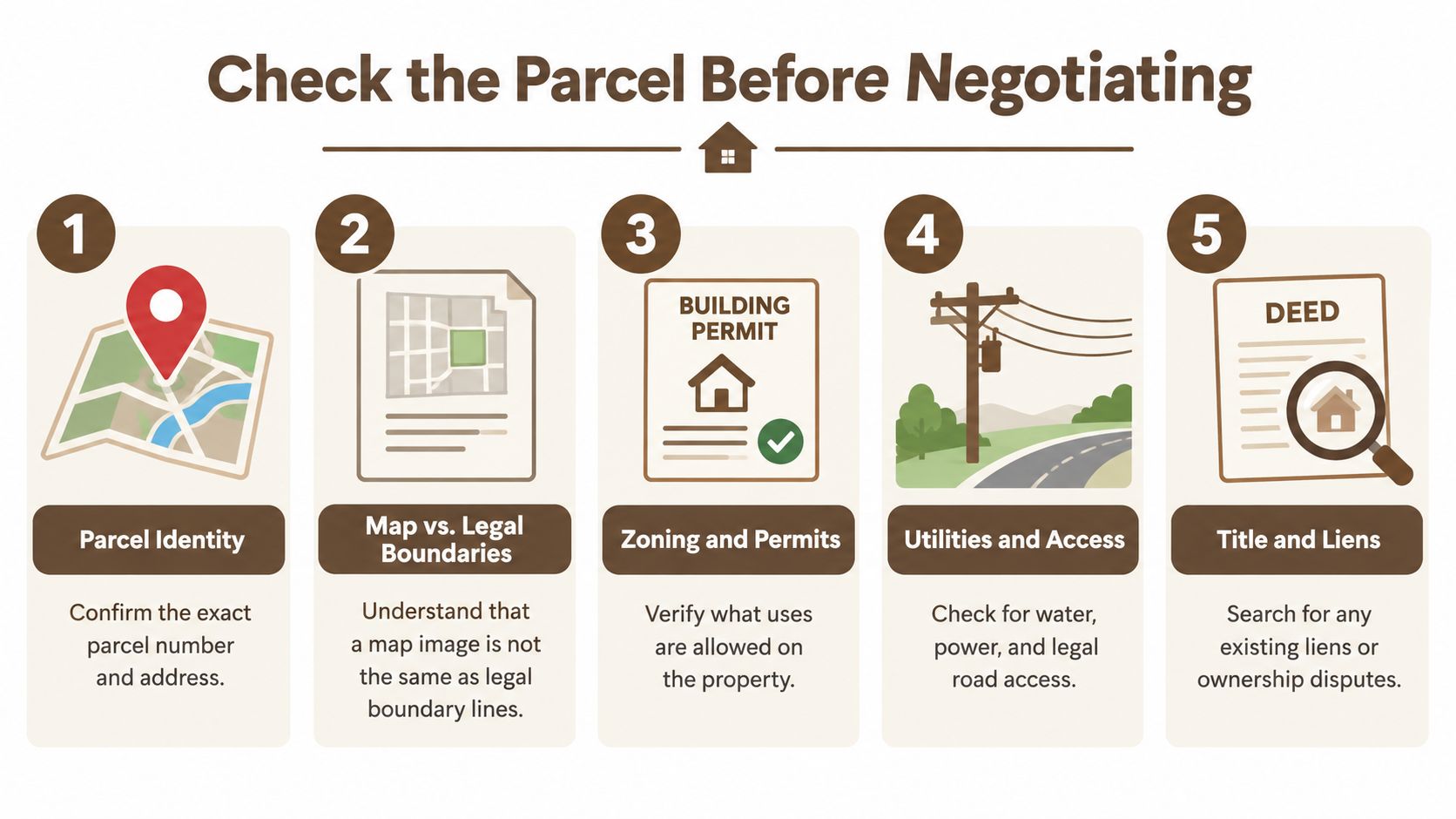
Before discussing a discount, establish exactly what you're buying. A persuasive description can't resolve a mismatch between the advertised location, recorded parcel, and property you intend to inspect.
Start a folder for the listing, seller correspondence, parcel records, disclosures, and answers from local authorities. The land due-diligence guide can help organize that research before you commit money.
Establish identity before suitability
Match the parcel identifier and legal description across the listing and available records. Ask for clarification if a street address, map pin, or description points somewhere different.
Use GIS maps to orient yourself, not to settle boundary disputes. New Jersey's official parcel dataset expressly states that its polygons aren't survey-based legal boundaries and shouldn't determine land ownership (New Jersey's parcel-mapping limitations). That warning is a useful reason to examine the limitations of whichever mapping system you use.
Then direct questions to the appropriate source:
- Planning or zoning office: Ask about your specific intended use, applicable restrictions, and permit requirements.
- County land records and title professionals: Investigate ownership, recorded access, liens, and relevant restrictions.
- Tax office: Confirm the parcel's tax information and ask about outstanding amounts.
- Utility providers and environmental-health officials: Investigate service feasibility, water, wastewater, and septic requirements.
- On-site inspection or qualified local assistance: Assess terrain and physical access rather than relying only on aerial imagery.
Negotiate from verified differences
Review all disclosed charges and compare the asking price with relevant listings. Treat asking prices as seller expectations, not proof of completed-sale value.
Request missing documents before adjusting your offer around an assumption. A road visible on a map doesn't establish legal or usable access, and nearby power doesn't establish an available connection.
Likewise, nearby hiking, fishing, beaches, or campgrounds describe the surrounding region. They don't establish recreation or occupancy rights on the parcel.
For sellers, useful preparation means documenting both supported features and unresolved questions. A candid statement that utility feasibility remains unconfirmed gives buyers a clearer decision than a suggestion that service should be easy.
Negotiate the property you can verify, not the future property you hope to create.
Handle Contracts and Closing
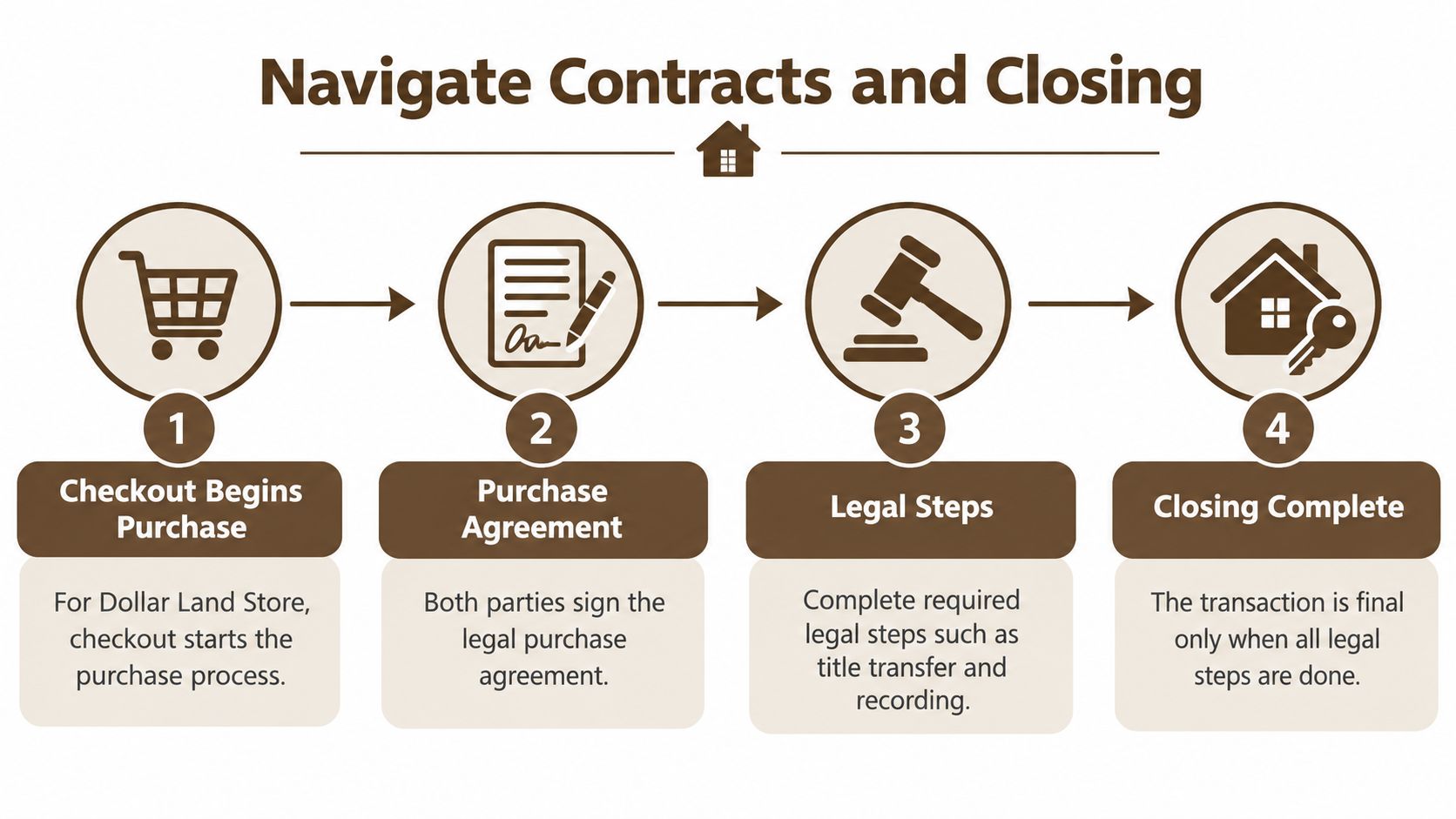
A clicked "buy" button works like an accepted offer on a house: it starts the transaction, it doesn't finish it. Before paying, identify which documents you'll need to sign and which conditions must be satisfied before ownership can transfer.
For DLS purchases, buyers must complete required purchase documents. Financed buyers must also complete payment setup through ZimpleMoney.
Follow the path for your purchase option
Cash and financed purchases follow different sequences, so confirm which track applies to you before assuming a timeline.
| Purchase route | What must happen before deed preparation or transfer |
|---|---|
| Cash | Payment must clear, required documents must be signed, and applicable requirements must be completed before deed preparation begins |
| Financed | The seller retains legal title until payoff and completion of deed-transfer requirements |
DLS prepares the deed packet, and the buyer ordinarily records the deed with the county. Recording isn't automatic, and no particular completion date is guaranteed.
Read the purchase agreement terms explanation alongside the actual agreement. The sample land purchase agreement can help you identify questions, but your signed agreement, transaction-specific documents, checkout disclosures, and applicable law control your purchase.
Ask which disclosures and cancellation rights apply
Certain covered land-developer sales require a property report before the buyer signs. Federal rules also require a boldface cancellation statement allowing cancellation until midnight of the seventh day after signing for covered contracts (federal land-sale disclosure and cancellation requirements).
That coverage is narrower than it sounds. Ask which requirements apply to the specific property and agreement rather than assuming a general rule gives you time to investigate after paying.
Before committing, know what you're signing, what remains unfinished, and who must complete each remaining task.
Amounts paid are generally non-refundable, subject to the signed agreement and applicable law. Review the purchase terms and conditions before making a payment, not after deciding you want a different property.
If a document leaves you uncertain about your obligations, obtain clarification or qualified legal advice before signing.
Compare Real FSBO Land Examples
A listing becomes more useful when you read it as a set of facts to investigate rather than a finished conclusion about suitability. Compare the property description, payment presentation, and missing information separately.
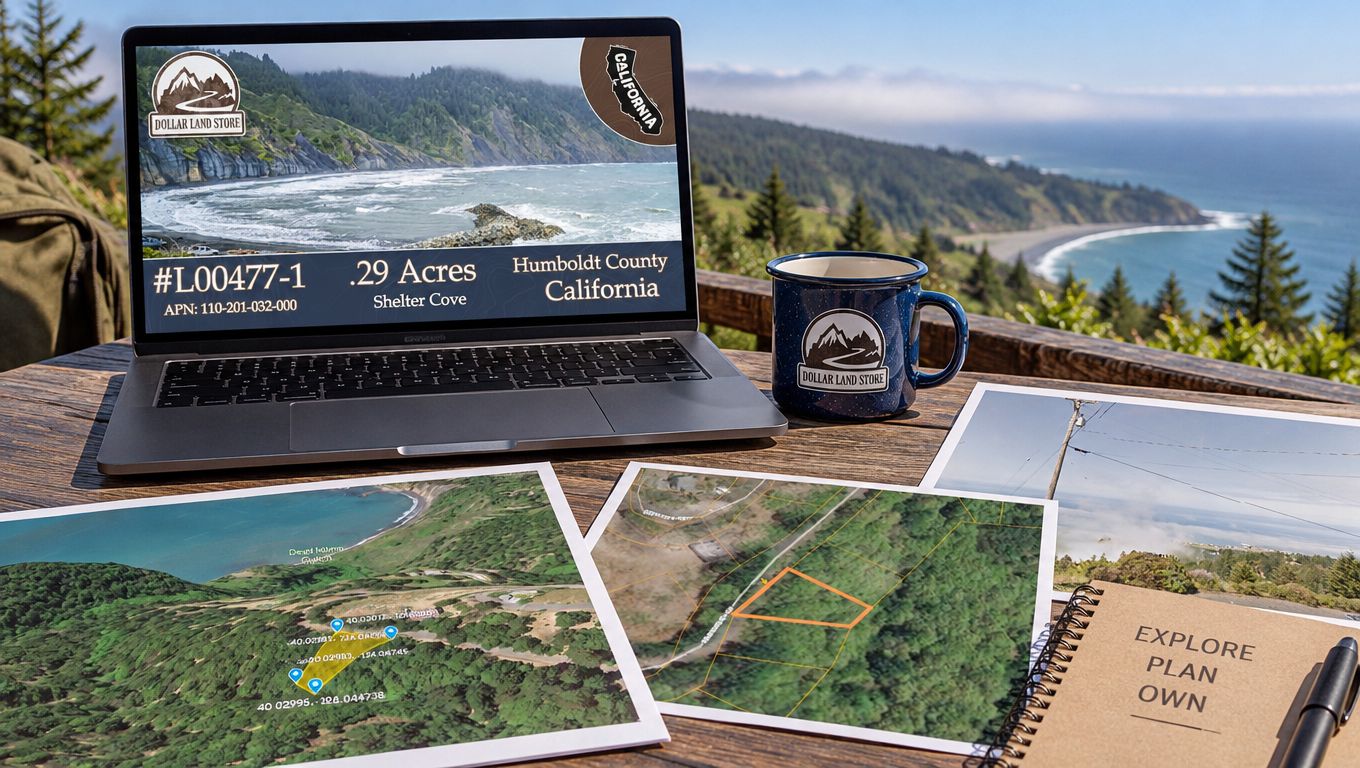
The catalog entry #L00477-1 Own Your Piece of Shelter Cove, California $24,999.00 ($336.88/Month) displays those price and monthly-payment figures and describes a wooded lot in Humboldt County, just over a mile and a half from the Pacific Ocean and Black Sands Beach. Check current availability and the live listing before relying on those details.
Separate the setting from the purchase terms
The linked listing also shows a $1 financing down payment and $199 document fee, with an additional shipping charge disclosed. That down payment isn't the purchase price, and monthly payments follow; the displayed monthly amount doesn't by itself establish the total financed cost.
The coastal setting raises useful questions rather than answering them. What is the parcel's actual terrain? How is it accessed? Which restrictions apply, and what would your intended project require?
| Listing information | What it helps you understand | What it doesn't establish |
|---|---|---|
| Wooded setting | The seller's description of the parcel | Clearing feasibility or development permission |
| Proximity to coastal attractions | Regional location | Beach access, ocean views, or rights across neighboring land |
| Advertised payment | A starting point for budget review | Every charge or the full repayment obligation |
Compare evidence quality as well as property features
When comparing this parcel with a gated-community lot elsewhere, request the other property's governing documents rather than assuming controlled entry is an amenity. Access coordination, association obligations, and occupancy restrictions can matter as much as location.
Don't carry facts from one listing into another. A neighboring parcel's utility connection or a community's recreational facilities don't establish what the property under consideration includes.
Use the guide to determining land value to organize a comparison around supported differences. If you can't verify a competing property's price, restrictions, or purchase terms, leave those fields unresolved rather than filling them with optimistic estimates.
A useful comparison can end with “not enough information yet.” That's a reason to ask another question, not a reason to rush.
Understand Owner Financing Before Committing
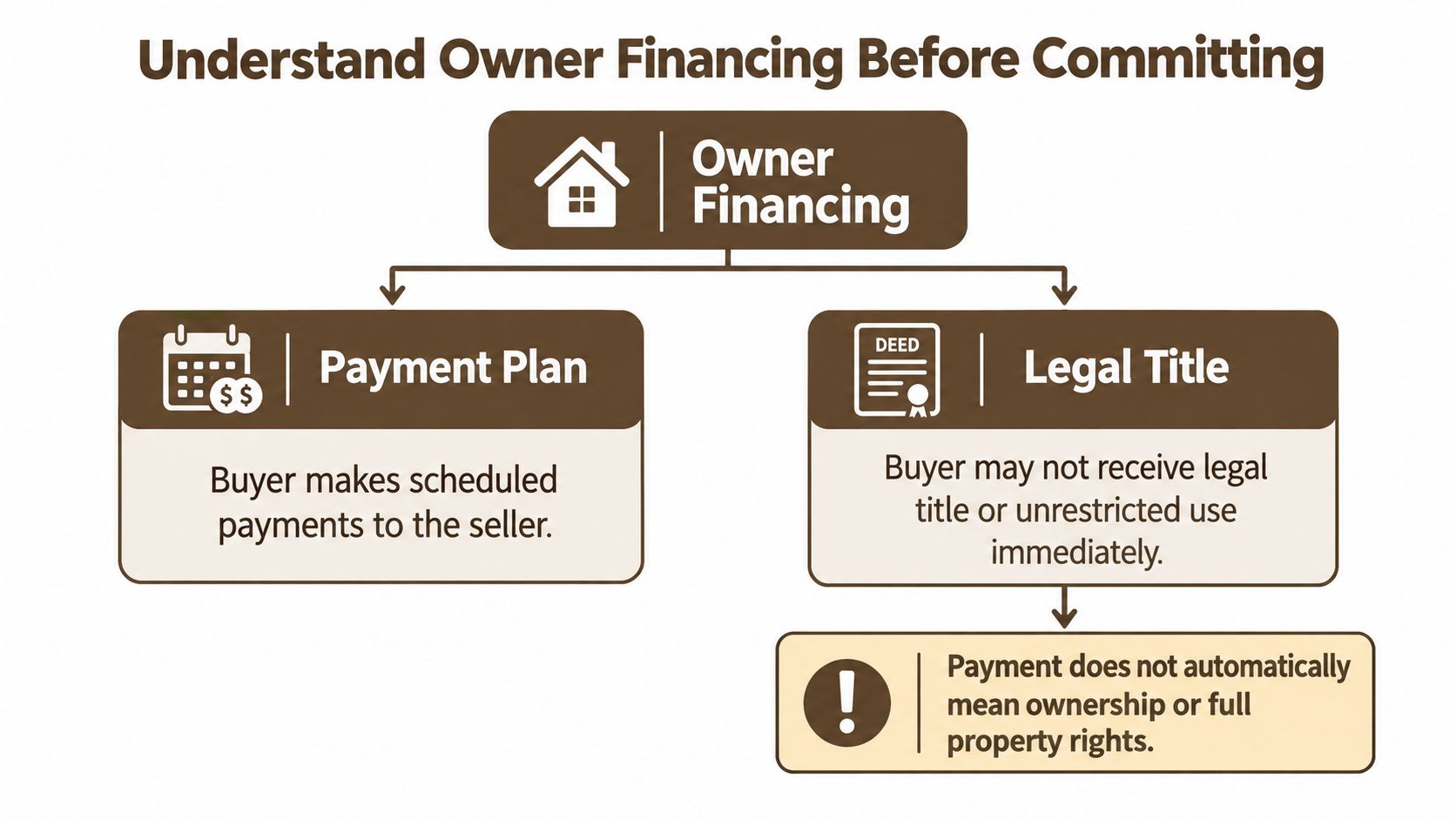
Making payments and receiving legal title aren't necessarily the same event. Seller financing changes how you pay, but the agreement determines your responsibilities and the rights you receive during repayment.
For eligible DLS properties, owner financing doesn't require a traditional bank loan or credit check. Buyers still need to complete the required documentation and payment setup, so this isn't a paperwork-free purchase.
Read the payment terms as separate amounts
The financing information and your transaction disclosures should support a clear distinction between:
- Cash price: The amount applicable to the cash purchase option.
- Down payment: The initial financing payment.
- Document fee: A separately disclosed charge.
- Monthly payment: The scheduled recurring payment.
- Total financed cost: The full amount payable under the financing arrangement.
Don't infer the total obligation from the smallest advertised amount. Exact rates, fees, repayment periods, and other terms need to come from the applicable disclosures.
Buyers may make additional payments or pay off early under their agreement. The seller-financing explanation provides background for understanding the structure.
Separate payment duties from use permission
The CFPB explains that contract-for-deed buyers may bear responsibilities such as property taxes, repairs, and improvements while the seller still holds legal title. It also warns that these arrangements may not require confirmation of clear title, infrastructure, or building-code compliance (CFPB's contract-for-deed guidance).
For vacant land, identify who pays taxes and what happens after default before committing. Don't assume the payment schedule answers those questions.
During DLS financing, living on the parcel, storing belongings or an RV, placing structures, building, or making improvements requires the written permission specified by the agreement. Limited recreational visits may be possible only when both the agreement and local rules allow them.
Keep these separate: A future plan for land isn't present permission to carry it out.
Payoff and deed transfer also don't automatically establish permission for camping, construction, wells, septic, or other uses.
Make a Confident FSBO Decision
FSBO works best as a deliberate choice about responsibility. A buyer wants direct access to a well-described property and accepts the work of comparison, document review, and local verification. A seller wants control and is prepared to provide transparent information and manage negotiations.
It's a poor fit when either party expects someone else to perform work that nobody has agreed to handle. Before proceeding, name the person responsible for unanswered questions, document preparation, title review, and completion tasks.
Use a readiness check
- Identity and parcel facts: Confirm who is selling and which recorded property is included.
- Complete charges: Review the full financial commitment rather than focusing on the initial payment.
- Title timing: Understand the purchase route and the remaining transfer requirements.
- Intended use: Obtain answers from the relevant authority about the actual activity you're planning.
- Access: Investigate both the right to reach the parcel and the practical conditions on the ground.
- Present permissions: Keep eventual possibilities separate from activities currently allowed.
Decide what would make you pause
An unanswered question isn't always a deal-breaker. It becomes one when the answer is essential to your purpose and you're being asked to commit without it.
If you want a future homesite, unresolved suitability questions deserve more attention than attractive scenery. If you want occasional recreation, the applicable access and use rules matter more than nearby attractions.
You can also choose professional help without abandoning a direct purchase. Asking a title professional, surveyor, or attorney to address a defined concern is different from expecting the seller to guarantee every future outcome.
The strongest decision isn't necessarily the fastest purchase or the lowest advertised payment. It's a purchase you can explain clearly: what you're buying, what you owe, what remains uncertain, and why those trade-offs fit your plans.
Dollar Land Store offers vacant land online, with Cash and Easy Financing options where offered, for buyers evaluating a direct purchase. Visit Dollar Land Store to compare current eligible properties by location, parcel information, and purchase option across its approved sales states of Arizona, California, Colorado, Hawaii, Nevada, New Mexico, Oregon, and Utah. Check current availability, since inventory isn't necessarily available in every state or county, and complete your parcel checks before committing.