


A Complete Guide to Buying Hunting Land for Sale
Ross AmatoFor many people, owning a private hunting spot is the ultimate dream. But figuring out how to buy it can feel overwhelming for a first-time buyer. This guide is your roadmap. We’ll walk you through everything, from what makes a piece of land great for hunting to how to navigate the purchase with confidence.
Your Journey to Owning the Perfect Hunting Ground
This article will break down the practical steps of finding and evaluating hunting land for sale. We'll show you how modern options like seller financing are making it more accessible than ever to own your own property. Think of this as more than just a transaction—it’s an investment in a lifestyle of freedom, privacy, and a real connection to the outdoors. Let's get started.
The desire for quality hunting ground has never been higher. In 2023 alone, over 15.4 million hunting licenses were sold across the United States. This high demand means that properties well-suited for hunting are valuable assets.
What This Guide Covers
This is more than just a checklist; it's a game plan for making a smart purchase. We’ll explore the key factors every aspiring landowner needs to know before committing to a property.
Our goal is to guide you from browsing online to closing the deal on a property that’s right for you. You’ll learn how to:
- Spot the Right Features: Understand what makes land truly great for hunting—things like habitat, water sources, and signs of wildlife.
- Handle the Legal Basics: Get a handle on the fundamentals of title checks, zoning rules, and other essential due diligence.
- Understand Financing Options: See how traditional loans compare to flexible alternatives like seller financing.
- Move Forward with Confidence: Follow clear, simple steps to start your ownership journey.
If this is your first time buying, our comprehensive guide on https://www.dollarlandstore.com/blogs/news/finding-land-for-sale is a great place to build your foundational knowledge.
Preparing for Remote Property Ownership
As you begin your search for the perfect hunting spot, remember to think about safety, especially if it’s a remote piece of land. Having reliable communication is a critical part of being a responsible landowner in areas where cell service is unavailable. It’s always a good idea to look into options like a satellite phone in New Zealand to ensure you can always get in touch if needed.
How to Identify High-Quality Hunting Land
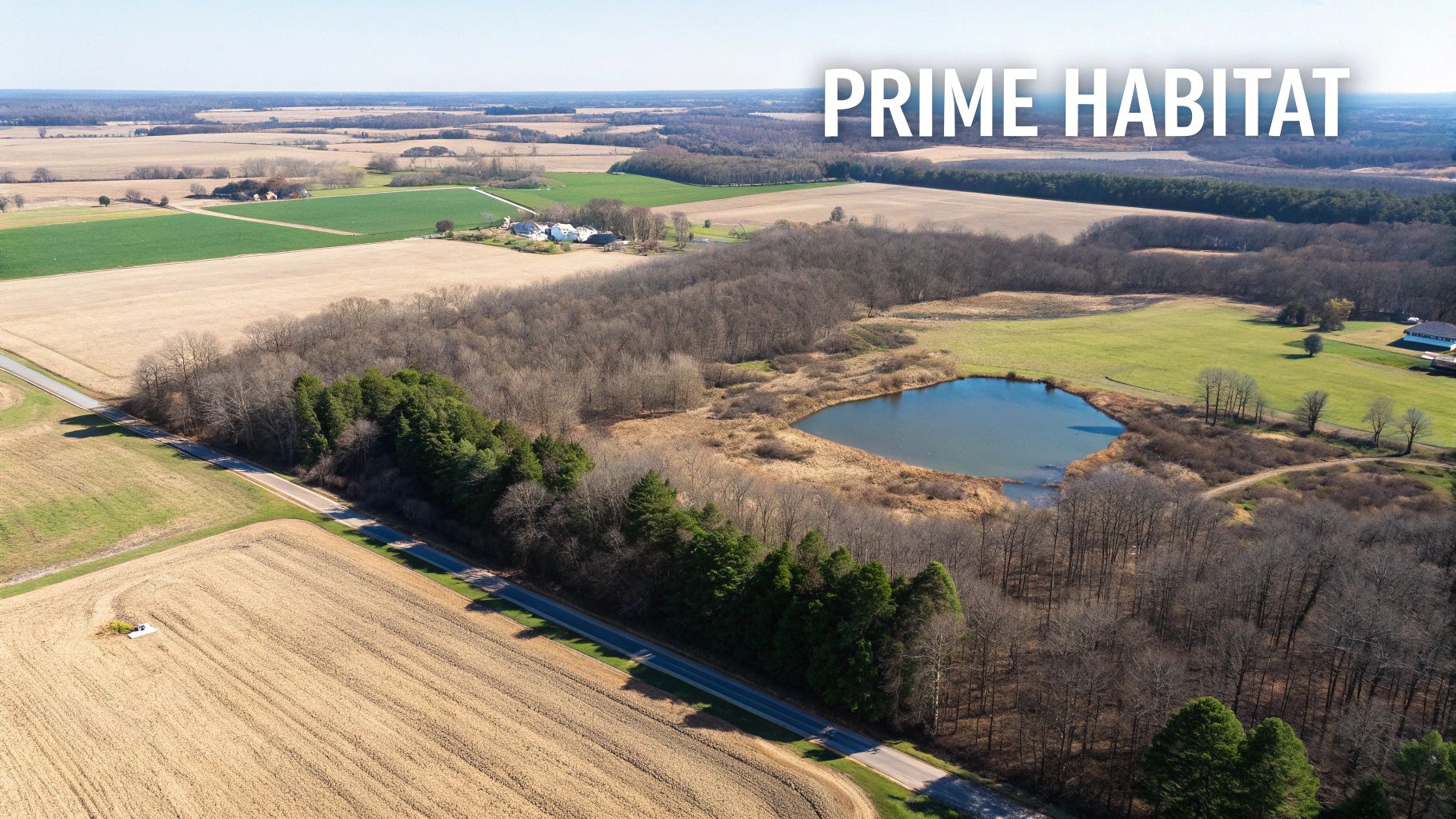
What is the real difference between a decent hunting spot and a truly great one? It rarely comes down to total acreage alone. The secret is in the land itself—the habitat, the water, the layout, and all the details that wildlife relies on to thrive.
Learning to spot these key features is the single most important skill you can develop as a buyer. This section is your field guide to evaluating any piece of hunting land for sale with an informed perspective.
The Core Elements of Prime Hunting Habitat
All wildlife needs just three things: food, water, and cover. The best hunting properties offer a healthy mix of all three. A huge, dense forest or a wide-open pasture isn't enough on its own; the real potential is where different types of terrain meet.
This meeting point is called an edge, and it’s a natural draw for wildlife. A property that blends mature timber with younger, brushy growth and open clearings will almost always attract and hold more game than a uniform landscape.
Water Is a Non-Negotiable Asset
If there’s one feature that’s a must-have, it’s a reliable water source. Animals will always gather around water, making any property with it instantly more valuable for hunting.
When you're evaluating a parcel, look for:
- Year-round creeks or streams: These are ideal, providing a constant water supply.
- Ponds or natural springs: Even a small pond can become a central hub for wildlife in the area.
- Low-lying areas or draws: These spots often collect rainwater, creating seasonal watering holes that can be magnets for game.
A property without a natural water source isn't an automatic deal-breaker, but you may need to consider adding one to keep animals on your land.
To help you keep track of these crucial elements, we've created a simple checklist. Use it on every property you visit to make a fair, side-by-side comparison.
| Hunting Land Feature Evaluation Checklist | ||
|---|---|---|
| Feature | What to Look For | Why It Matters |
| Water Source | Ponds, creeks, springs, or even seasonal wet areas. | Game concentrates around reliable water. A year-round source is a significant asset. |
| Food Sources | Natural browse, mast-producing trees (oaks), or areas suitable for food plots. | Consistent food encourages animals to stay on your property. |
| Cover | Thick, brushy areas, dense woods, or tall grasses. | Provides bedding and security, making wildlife feel safe enough to remain. |
| Edges | Transition zones where different habitats meet (e.g., field meets forest). | These are natural travel corridors and feeding areas, creating hotspots for activity. |
| Topography | Ridges, saddles, draws, and benches. | These features create natural funnels that influence how game moves across the land. |
| Access | Deeded access or a recorded easement directly to the property. | Without legal access, the land may be unusable. This must be verified. |
| Neighboring Land | Low-pressure neighbors, large agricultural fields, or public land sanctuaries. | What happens on adjacent properties directly impacts the quality of your hunting. |
This checklist covers the core fundamentals. If a property checks most of these boxes, it likely has strong potential.
Reading Topography and Verifying Access
The physical contours of the land tell a story. Experienced hunters learn how to read topography to predict where animals will be and how they will travel.
Look for natural funnels—landscape features that pinch animal movement into a predictable path. This could be a saddle between two ridges, a narrow strip of trees connecting two large sections of woods, or a brushy draw leading down to water. Finding these funnels is key to picking ideal stand locations.
Just as important is guaranteed legal access. A property can look perfect on a map, but if you cannot legally drive to it, its value is severely diminished. Never assume that a dirt track leading to the land is a public road. You must confirm that the property has deeded access or a legally recorded easement. Our guide on what to look for when buying land dives deeper into how to verify these critical details.
The Digital Scouting Advantage
Before you visit a property, you can learn a great deal from your computer. Free online tools are incredibly powerful for initial research.
- Google Earth Pro (Desktop): Use the historical imagery slider to see how the land has changed. You can spot old logging roads, clearings that have since grown over, or how water levels fluctuate with the seasons.
- County GIS Maps: Nearly every county has an online GIS (Geographic Information System) map. These are excellent for viewing approximate property lines, owner information, and even topography.
- Hunting Map Apps: Smartphone apps can provide detailed layers showing public vs. private boundaries, topo lines, and other features to help you scout.
Doing this digital reconnaissance first lets you eliminate unsuitable properties and create a shortlist worth visiting in person. It can save a huge amount of time, gas, and frustration.
Navigating the Legal Side of Buying Land
The legal aspects of a land purchase, often called due diligence, can seem intimidating for first-time buyers, but the process is straightforward. It is simply about verifying the facts so you can buy with confidence.
Think of it as the final inspection. You’ve already walked the property to check for water and wildlife—now it’s time to check its legal health. This is the crucial step that secures your investment and helps ensure you can use the land as intended.
Understanding Title and Why It Matters
The single most important legal concept to grasp is clear title. A clear title means the seller has the legal right to sell the property. It is evidence that no one else has a claim against it, like an old mortgage or an unpaid tax bill from a previous owner.
Without a clear title, your ownership could be at risk. An old, unresolved claim—often called a lien or encumbrance—could emerge years later, creating legal and financial problems. This is why ensuring the title is clean is a non-negotiable part of any land purchase.
Key Legal Checks for Every Buyer
Before you finalize the purchase of any hunting land for sale, there are a few core areas you need to investigate. You can usually find this information at the local county government offices where the property is located, such as the County Clerk, Recorder, or Assessor.
- Title Search: This is a review of public records to trace the property's ownership history and check for any outstanding liens. For many transactions, it is wise to have a professional title company conduct a formal search.
- Zoning and Land Use Regulations: Zoning rules dictate what you can and cannot do on your property. Rural land is often zoned for uses like agriculture or recreation. You should contact the county’s planning and zoning department to confirm that hunting, camping, or building a small cabin is permitted.
- Mineral, Water, and Timber Rights: In many states, the rights to resources under the ground (minerals) or on it (timber, water) can be owned separately from the land itself. The property deed should specify which rights are included with your purchase.
- Easements and Access: An easement gives another party the legal right to use a portion of your land for a specific purpose, such as a utility line or a neighbor’s driveway. Understanding local rules is critical, and a hypothetical guide covering the step-by-step hunting regulations for Ontario and Alberta can offer insights into how different jurisdictions handle these details.
If you have specific concerns about getting to your property, you can learn more about how to access landlocked property in our dedicated guide.
How to Finance Your Raw Land Purchase
Financing raw land is different from getting a home mortgage. Many first-time buyers are surprised to learn that traditional banks and credit unions can be hesitant to lend on a vacant parcel. They often see it as a riskier investment without a house to serve as collateral. However, this does not mean owning your own land is out of reach.
There are accessible ways to fund your purchase of hunting land for sale. The key is to understand your options. The two main paths are a traditional bank loan and seller financing.
Traditional Bank Loans for Land
Getting a loan from a bank is possible, but it can be challenging for raw land. Lenders that do offer land loans usually require a significant down payment, often between 20% to 50% of the purchase price. They will also conduct a thorough credit check and require a formal property appraisal, which adds time and cost to the transaction.
This route can work if you have excellent credit and substantial savings. For many aspiring landowners, however, the long approval process and high barrier to entry can be prohibitive.
Before pursuing financing, it's essential to confirm the land is a sound investment from a legal standpoint.
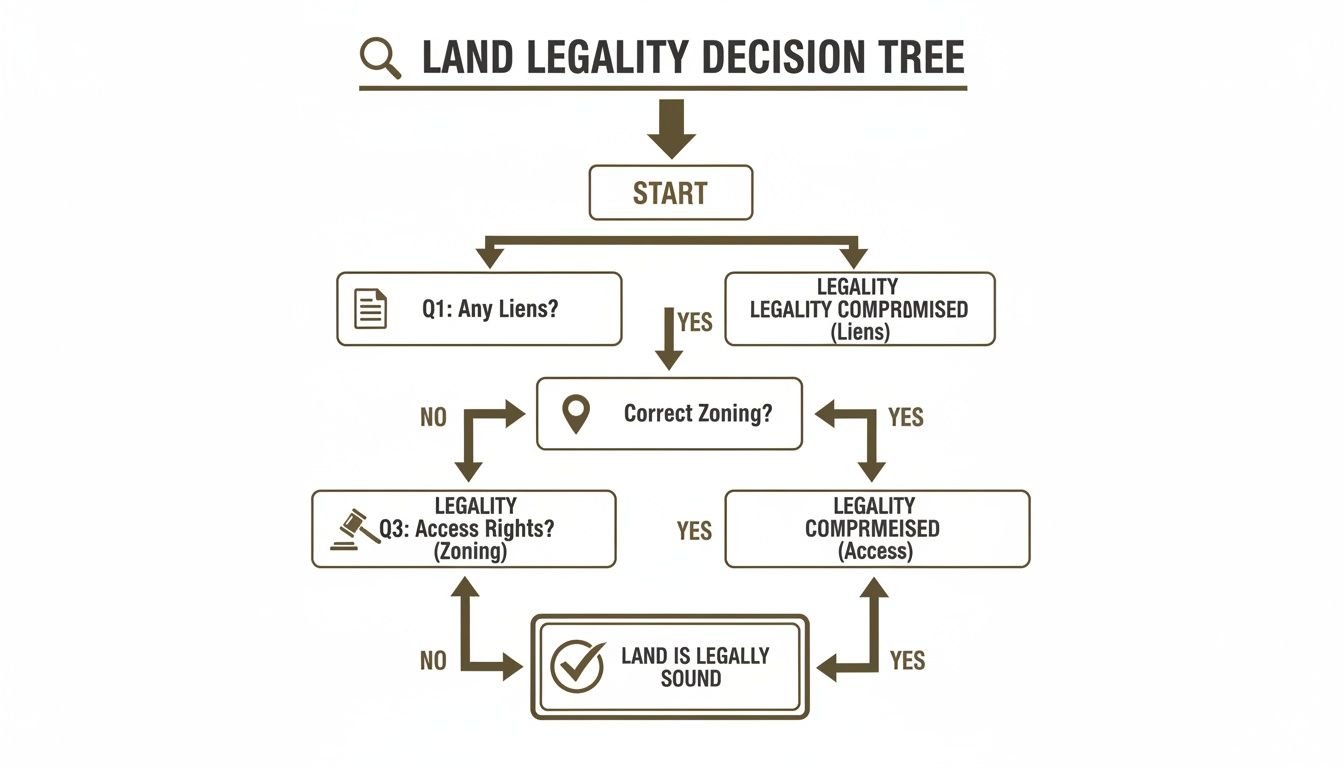
This flowchart illustrates the critical checks every buyer should perform. Confirming a clear title, checking zoning, and verifying property rights are fundamental to a secure land purchase.
Seller Financing: An Accessible Alternative
A more common and direct option is seller financing, sometimes called owner financing. In this arrangement, you make payments directly to the seller over an agreed-upon timeline instead of going through a bank. It removes the institutional middleman from the transaction.
This is an especially common way to buy affordable rural and recreational land. All the terms are laid out in a contract between you and the seller. It has become a popular method for buyers who want to avoid the complexities and strict requirements of traditional lenders.
Comparing Your Financing Options
Understanding the practical differences between a bank loan and seller financing is key to making the right decision. Each has its own pros and cons. For a deeper look, check out our guide on how to finance a land purchase for more details.
Let's compare them side-by-side.
Comparing Land Financing Methods
| Feature | Traditional Bank Loan | Seller Financing (e.g., Dollar Land Store) |
|---|---|---|
| Credit Check | Almost always required. | Often not required. |
| Down Payment | Typically high (20-50%). | Usually very low, sometimes just a document fee. |
| Approval Process | Can take weeks or months. | Fast, often completed within a day or two. |
| Flexibility | Rigid terms set by the bank. | More flexible, with terms agreed upon with the seller. |
| Closing Costs | Higher due to appraisals and bank fees. | Minimal, often just a document processing fee. |
For many first-time land buyers, the accessibility and simplicity of seller financing make it the most practical way to acquire a hunting property.
What This Means for Buyers
For a first-time buyer, buying your own piece of hunting ground is more achievable than ever before. Every step—from inspecting the property to arranging financing—is designed to help you make a smart investment.
The biggest questions usually involve affordability, ongoing costs, and whether the land will hold its value. The good news is that the demand for private recreational land is strong, providing a solid foundation for your purchase.
Budgeting Beyond the Purchase Price
The list price is just the starting point. Smart buyers plan for the ongoing costs of ownership to ensure their land remains a source of enjoyment, not a financial burden.
Consider these annual costs:
- Property Taxes: This is the largest recurring expense. The county assessor's office can provide the exact amount before you buy.
- Habitat Management: This can be as simple as clearing shooting lanes or as involved as planting food plots.
- Liability Insurance: A policy is a wise precaution, especially if you plan on having guests hunt on your property.
When you plan for these costs upfront, they are manageable. They are also part of being a good steward of the land, which can add to its value over time.
A Sound Investment in a Growing Market
Your decision to buy hunting land is supported by strong market trends. A renewed interest in the outdoors has fueled major growth in the recreational land market, confirming that your purchase is a sound long-term asset.
The global fishing, hunting, and trapping market is experiencing significant growth. You can discover more insights about this growing market and what it means for land investors. This trend indicates a strong and lasting demand for private recreational properties. For a first-time buyer, this means that with the right guidance and a clear plan, owning a private piece of land is well within reach.
Why Consider Dollar Land Store?
After you understand what makes a great hunting property, the next step is finding a simple way to buy it. At Dollar Land Store, we specialize in making land ownership straightforward, especially for those looking for hunting land for sale.
Our approach is built on transparency and accessibility. We remove the typical hurdles of buying land—like dealing with banks or real estate agents—so you can focus on owning your own piece of the outdoors.
Our process is defined by a few key principles:
- Affordable Land: We focus on raw, undeveloped land, allowing you to find a property that fits your budget without a large upfront investment.
- Direct Sales: You buy directly from us. There are no middlemen, agents, or brokers, which simplifies the process and reduces fees.
- Transparent Terms: Every detail is clearly stated in our contracts. You will know the exact price, monthly payment, and terms before you sign.
- Seller Financing for Everyone: Our seller financing is a core part of our business. With our process, there are no credit checks. A low down payment and the ability to make the monthly payments are the primary requirements. This makes land ownership accessible to many buyers who may not qualify for a traditional bank loan.
This direct approach allows us to complete transactions quickly. You can secure your property and start planning your first hunt much sooner than with traditional methods.
Buyer Guidance / Next Steps
You've done the reading and now understand what it takes to buy hunting land. Now it's time to put that knowledge to work and begin your search. A little focused planning will save time and help you avoid properties that aren't the right fit.
Build Your Land Checklist
Before you look at listings, create a simple checklist of your requirements. Based on everything covered in this guide, note your must-haves and nice-to-haves.
Consider these key areas:
- Location & Access: How far are you willing to drive? Is county road access or a deeded easement non-negotiable?
- Property Essentials: Do you need a year-round water source? What is the ideal mix of timber and open pasture for the game you hunt?
- Your Budget: Set your maximum budget, factoring in property taxes and any immediate improvements you want to make.
- Your Vision: Do you hope to build a small hunting cabin? Clear a food plot? Knowing what you want to do with the land will shape your search.
Start Searching with a Plan
With that checklist, you can look at properties with a clear purpose. Instead of getting lost in listings, you can quickly identify parcels that match your criteria.
Remember, performing your own due diligence is the most important part of this process. This guide has provided a map, but you are in control of the journey. You have the information needed to evaluate a property, ask the right questions, and make a smart move toward owning your own hunting paradise.
Conclusion
Buying hunting land for sale for the first time is a significant but achievable goal. By focusing on the fundamentals—habitat quality, legal access, and clear title—you can confidently navigate the process. Understanding your financing options, particularly accessible methods like seller financing, opens the door to ownership for a wide range of buyers.
Remember to conduct thorough due diligence by consulting county records for zoning, taxes, and any restrictions. This foundational research protects your investment and ensures your new land meets your expectations. With careful planning and the right information, you can turn the dream of owning a private hunting ground into a reality.
Browse available land at DollarLandStore.com.