


Land Development Guide: First-Time Buyer Tips for 2026
Ross AmatoYou're probably looking at a few parcels late at night, one in the desert, one near foothills, and maybe one with seller financing that looks easy to start. The core question isn't just which lot is cheapest, it's which one fits your budget, access needs, zoning, and long-term plans without turning into a surprise project. Browse available properties here: Dollar Land Store featured land.
What This Land Development Guide Actually Covers
A land development guide for a first-time buyer is not a civil-engineering manual for a subdivision. It's a practical way to decide whether a vacant parcel is worth buying, what it can realistically be used for, and what it may cost to get it ready for your purpose.
That's a big difference. A buyer looking at a raw lot in California, Nevada, Colorado, New Mexico, Arizona, Oregon, or Hawaii usually wants to know simpler things first, like whether the parcel has legal access, whether the zoning supports the intended use, whether utilities are nearby, and whether the road and terrain will make ownership manageable.
Dollar Land Store fits into that kind of search as a direct seller of vacant land with seller financing options and practical buyer education. For some first-time buyers, that can make the early part of the process feel more straightforward, especially when the goal is to compare properties from home instead of starting with a bank application.
The key is to treat land as a sequence of decisions, not a single purchase. You're not only buying acreage, you're buying a set of conditions that affect how you can use it later.
If you want a broader primer before narrowing down a parcel, Dollar Land Store also has a useful overview in what to know before buying land.
Picking the Right Parcel and Running Due Diligence
A first-time land buyer does better by treating the parcel like a working checklist, not a quick impression. A lot can seem affordable until you confirm that the boundaries are clear, the access is legal, and the site fits the use you have in mind.
Start with the map, not the listing photos
A parcel map usually reveals more than a sales description. Check the title description, boundary dimensions, site area, location, and north point, because those details show what the land is on paper. The guide to subdivision and development plans shows why those basics matter, since usable land depends on recorded facts, not just a pin on a map.[^1]
Here is a simple example. A 5-acre Nevada parcel may look like a bargain, but county records might show no clear easement and a road that is difficult enough to raise questions about access. The price can still look attractive, but the core issue is whether the parcel works for your intended use.
Practical rule: if you cannot confirm access, boundaries, and recorded parcel details, you do not yet know what you are buying.
Verify the facts that change the deal
Before you sign anything, pull county records and confirm the basics one by one. Ask about taxes, any HOA or POA fees, recorded easements, and whether access is legal or only physical. A dirt track you can drive on is not the same thing as legal access, and that difference matters when you want to improve or occupy the land.
Some buyers also sketch the lot while comparing it with a house pad or campsite layout. A what to look for when buying land checklist helps you organize those questions before you commit, and a resource like yard planning tool for homeowners can help you test where a driveway, pad, or future structure might fit, even if the sketch is only for planning.
Due diligence is not about becoming an engineer. It is about answering a short set of verifiable questions before money changes hands. If a seller cannot point you to recorded facts, county documents, or a clear parcel map, keep looking.
Zoning, Permitted Uses, and Permits in Plain English
Zoning sounds technical, but for a buyer it usually comes down to one question, what can I do on this parcel? A lot that's zoned for one kind of use may not allow another, and a parcel that works for weekend recreation may not support a future cabin without more review.
Ask the use question first
Start with the intended use, not the acreage. Are you hoping for a future house, a small cabin, an RV stay, a manufactured home, or just camping? The answer determines which rules matter most, and rules differ by jurisdiction.
A parcel zoned one way in one county may feel similar to a parcel in the next county, but the permitted uses can be very different. That's why it's not enough to ask whether the lot is “buildable.” You need to know whether the specific use you want is allowed, whether it is exempt, whether complying development is possible, and whether it meets the relevant development standards.[^2]
Understand the permit path before you assume a green light
For most buyers, the process usually runs through some combination of planning review, site development review, grading approval, and building permits. A land development checklist from NAHB shows that approvals can involve planning commission hearings, subdivision-plan submission, site-development-plan review, impact-fee payment, and separate grading or building permits before homes can move forward.[^3]
That's why a parcel can look simple and still need multiple approvals. The permit path is not one stamp, it's a chain of reviews.
If you want a broader look at permit timing and related steps, the commercial building permit process is a useful comparison point because it shows how permit packages often have to line up before construction can start. For a land buyer, the takeaway is straightforward, verify the parcel's current zoning and permitted uses before you budget for design or improvements.
For a practical overview from Dollar Land Store, see building permit requirements.
Utilities and Access Including Off-Grid Options
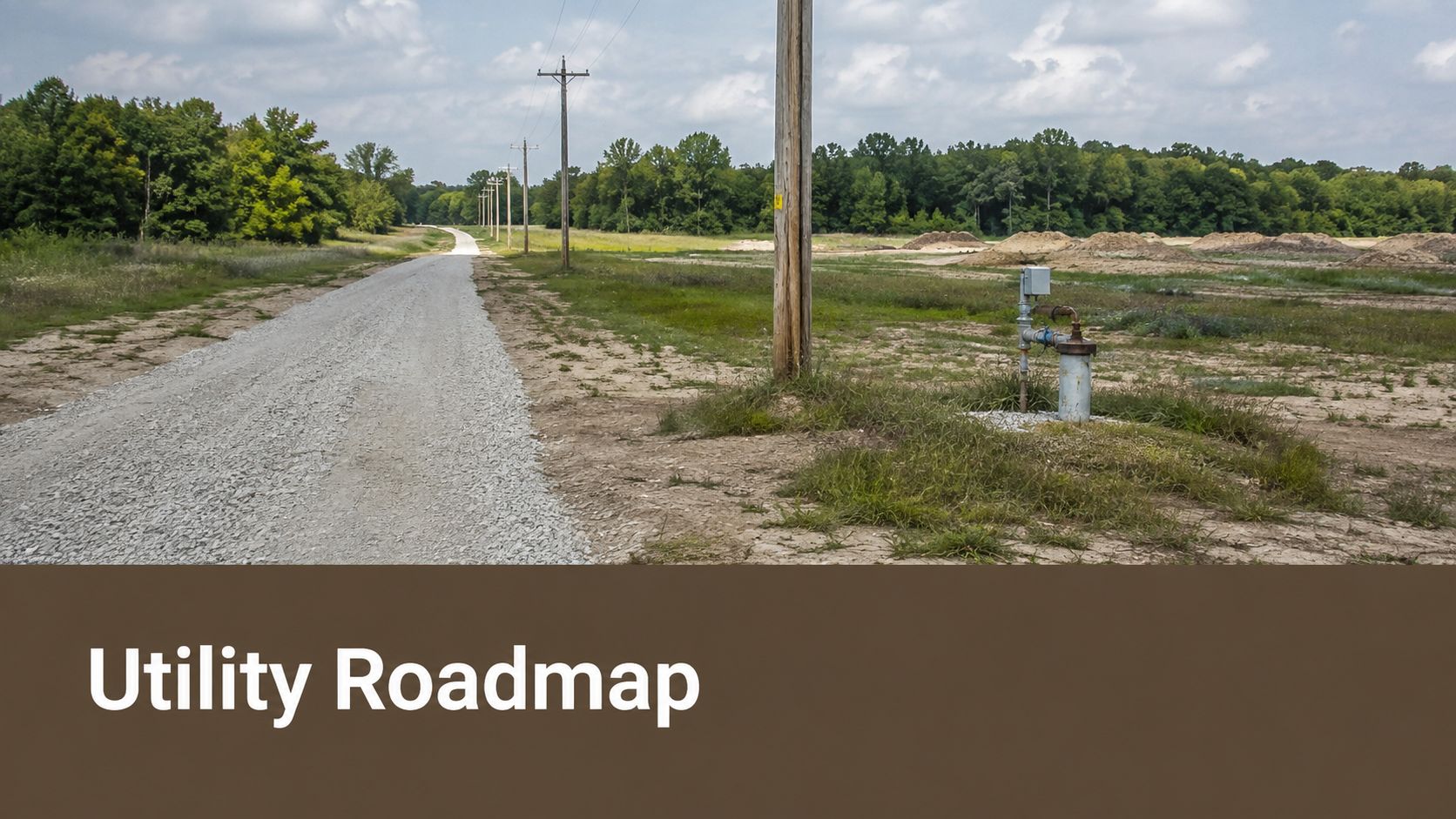
Access usually comes first, because a parcel without usable access changes everything else. After that comes power, water, wastewater, and communication, in that order, because each one affects whether the land is ready for a future build or only for light use.
Road access can be a budget item, not just a convenience
Legal access means you have a recognized right to reach the parcel. A recorded easement or right-of-way may be part of that, and it's not the same as a road you happen to use casually. If the road is dirt, seasonal, or washed out at certain times, ownership can carry extra wear, slower access, and occasional emergency concerns.
A parcel can be reachable and still be inconvenient to live with.
That matters especially in remote Western parcels where distance to town is already part of the equation. Before you commit, verify whether access is documented, whether the road is maintained, and whether the seller can point to recorded records rather than informal use.
Utilities change the timeline as much as the cost
On-grid power is simple in concept, but availability is property-specific. A well may be possible on one parcel and impractical on another. Water can also start with hauling, especially if the goal is occasional use rather than immediate full-time occupancy. Wastewater may involve a septic system, an alternative wastewater system, or a temporary off-grid setup depending on local rules and site conditions.
For buyers considering a remote setup, Dollar Land Store's off-grid power guide is a helpful supplement because it shows how solar and battery planning fit into a land-use plan. A remote Arizona parcel, for example, may make sense for early solar-plus-battery power, hauled water, and a composting toilet while a conventional build waits for future infrastructure.
Some parcels may have limitations that rule out certain utilities, so buyers should independently verify current availability. If the utility path is unclear, ask for records, utility contact information, and a realistic estimate before you assume a full build can happen right away.
Phased Development and Realistic Budgeting
For most first-time buyers, phased development is more realistic than trying to do everything at once. You buy the land, secure access, get the utility plan straight, and then improve the parcel over time as your budget allows.
Start with what makes the parcel usable
A phased plan usually begins with the basics, not the dream build. That might mean a driveway, a cleared pad, a gate, a storage setup, or a simple camping area before any permanent structure is added. On a New Mexico parcel, for example, a buyer may spend the first season using the land for weekend camping, then move toward a small cabin later once the site and finances line up.
The advantage is simple. You spread the work across months or years instead of trying to absorb every cost on day one. That approach also fits buyers who are using seller financing and want the monthly payment to stay manageable while they improve the land gradually.
Budget for the hidden site-readiness work
The sticker price is only part of the story. Soil testing, survey work, utility extensions, drainage corrections, and access improvements can shape the overall cost of ownership more than the listing price does. Property taxes, any HOA or POA fees, and maintenance also sit in the background and should be part of the plan if they apply.
| Common Site Readiness Cost Categories | What It Covers | When To Budget It |
|---|---|---|
| Survey and parcel verification | Boundaries, dimensions, parcel map review | Before purchase or immediately after contract |
| Soil and site testing | Conditions that affect building or wastewater choices | Before final use plan or design work |
| Access work | Driveway, easement-related improvements, road prep | Early, if the parcel is hard to reach |
| Utilities | Power, water, septic, off-grid alternatives | Before full-time use or structure plans |
| Drainage and grading | Slope correction, runoff control, site leveling | Before building or major site use |
For a deeper buyer checklist, Dollar Land Store's what to look for when buying land is a useful companion. The main idea is to match your improvement plan to what you can realistically fund, not to what looks easiest in the listing photo.
Seller Financing, Deeds, and Payoff
Seller financing is a land purchase structure where you make payments directly under an agreement with the seller. It's not a traditional mortgage, and the terms can vary by property, so it helps to read the paperwork carefully and ask how the transfer is handled from the beginning.
How the purchase usually works
A typical owner-financed land deal starts with a down payment, document fees, and agreed monthly payments over a defined term. Dollar Land Store offers direct land sales with seller-financed options, including no-credit-check structures on some properties, which can give buyers a simpler starting point than bank qualification. The exact rate, term, fee, and payment amount depend on the specific parcel, so you should never assume they'll match another listing.
Here's the part many first-time buyers miss. Under an installment arrangement, the buyer generally receives the deed after payoff and completion of the transfer process. Receiving the deed and recording it with the county are separate steps. You don't automatically hold title in the same way a buyer does in a cash closing, so the paperwork matters.
Why payoff timing matters
A simple Colorado example makes this easier to understand. A buyer may start with $1 down plus document fees, make regular monthly payments, and later receive the deed after the final payoff is completed. Only then does the county recording step come into play as a separate administrative action.
Key point: seller financing can be a workable path for land buyers, but the transfer timeline depends on the exact agreement.
If you're comparing options, a direct seller with multi-state inventory can be a practical place to start because you can review the land, financing structure, and monthly payment setup in one place. Just keep the focus on the actual terms for the parcel in front of you, not on what another property offered.
Pitfalls to Watch For Before You Commit
The most common land-buying mistakes usually start with a good assumption that wasn't checked. Buyers see a low price and fill in the blanks, then discover that access, zoning, utilities, or transfer timing doesn't work the way they expected.
Questions that reveal the real situation
Ask these before you commit to a parcel:
- Is the access legal and recorded? A road you can physically drive on is not enough if there's no easement or right-of-way.
- What does the zoning allow? A parcel may be fine for recreation but limited for a cabin, RV stay, or home site.
- Are the utilities available, and at what cost? Don't assume power, water, or septic options are simple just because nearby properties have them.
- Are there HOA or POA fees? Some parcels carry ongoing community costs that buyers miss when comparing raw land listings.
- What happens on seller financing? If you're paying over time, confirm when the deed transfers and how county recording is handled after payoff.
A buyer who asks these questions early is usually doing better than the buyer who focuses only on the lot size and monthly payment. That's because the biggest cost driver is often site readiness, not sticker price.
Match the parcel to the use, not the dream
Some parcels are better for long holds, recreation, or off-grid use than for immediate construction. That doesn't make them bad parcels. It just means the use case has to fit the actual conditions of the land and the local rules.
A final pass should be simple. Confirm the parcel map and access, verify zoning and permitted uses, check taxes and any HOA or POA fees, plan utilities including off-grid options, budget for site readiness, understand deed timing on owner financing, and visit the parcel when possible. If any answer is vague, keep asking until it's clear.
Dollar Land Store offers direct sales of vacant land across the Western United States, along with seller financing on selected properties and straightforward buyer education. If you're comparing parcels and want a practical place to start, visit Dollar Land Store to review available land and see how the buying process works.