


What Is a Property Easement? A Guide for First-Time Land Buyers
Ross AmatoImagine buying a beautiful piece of raw land, only to discover your neighbor has the legal right to drive across it every day. That specific right is an easement.
In simple terms, a property easement is a legal right for someone else to use a portion of your land for a specific purpose, even though you own the property. For first-time land buyers, understanding easements is a critical step toward making a confident purchase. They are a common part of rural land ownership and can significantly impact how you use your property.
This guide will explain what easements are, why they matter, and how to identify them before you buy.
Understanding Property Easements
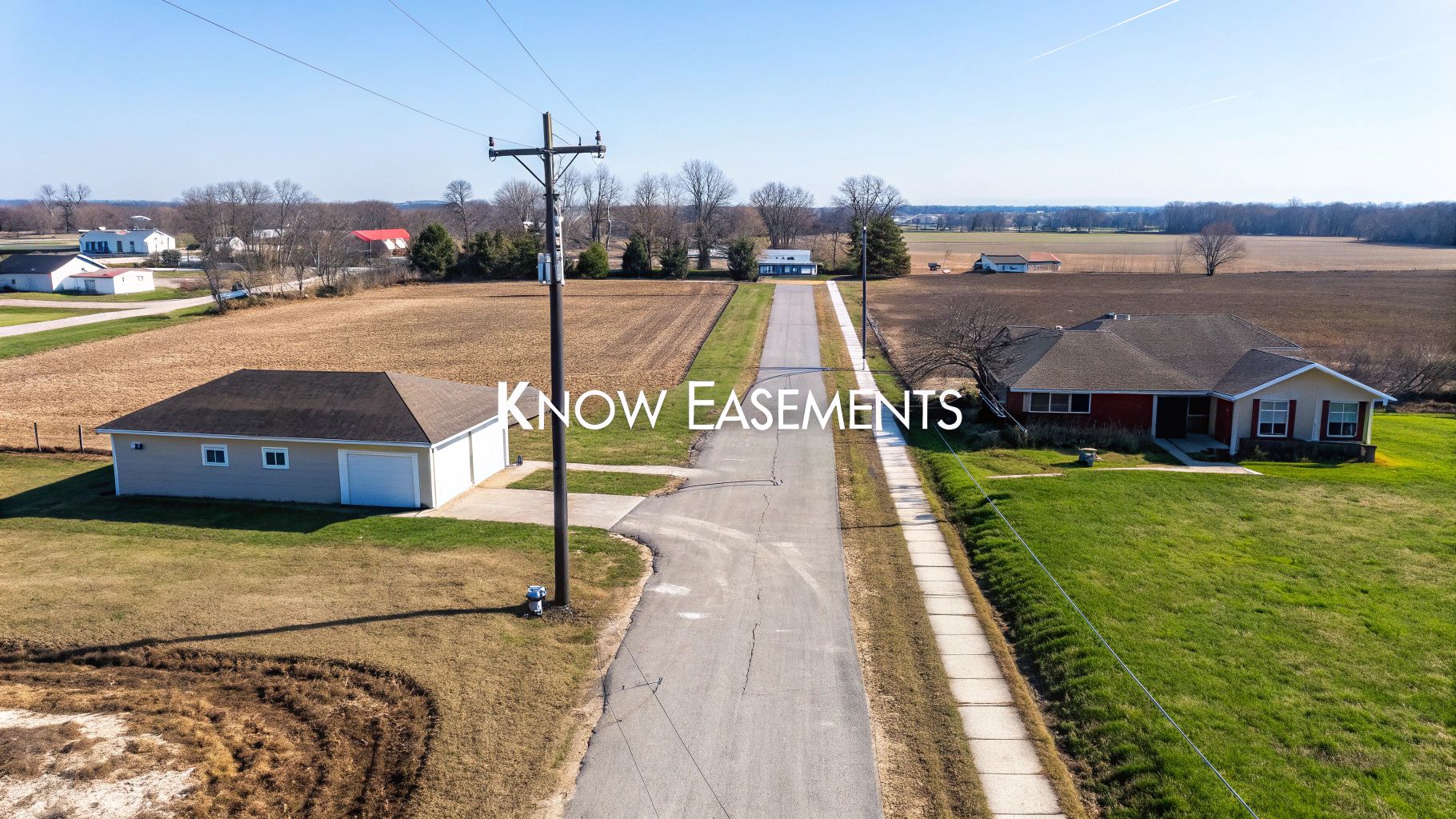
When you're new to buying land, the word "easement" can sound intimidating. But they are a normal and often necessary part of property ownership, especially in rural areas. Think of an easement as a shared rule for a property. While you have the right to own and use your land, an easement grants a specific right to another party to use a small part of it for a defined reason.
This doesn't mean they can host a party on your property or use it however they wish. The right is strictly limited to the purpose defined in the legal document.
Easements are not automatic deal-breakers. In fact, some are essential for a property to be usable. Understanding them is a crucial part of your research before you commit to a purchase.
Why Easements Matter to Land Buyers
For a first-time land buyer, overlooking an easement can lead to major surprises. It can influence everything from your property’s value to where you can build a future cabin or even plant a garden. A thorough investigation into easements is non-negotiable before you buy.
Here’s why this is so important:
- It Defines Access: An access easement might be the only legal way to reach your property if it’s set back from a public road. Without it, you could own a landlocked parcel with no way to get to it.
- It Affects Your Building Plans: A utility easement running through the middle of your land could prevent you from building in your ideal spot.
- It Impacts Privacy: An easement giving a neighbor the right to cross your property means you will have traffic that isn't your own.
- It Can Preserve Natural Beauty: A conservation easement might restrict development, preserving the scenic character of the area, which can be a significant benefit for many buyers.
Key Takeaway: An easement is best understood as a legal permission slip. It grants a specific party the right to perform a specific action on your property, and nothing more. A savvy land buyer investigates, understands, and confirms any easements before closing a deal.
This guide is designed to demystify property easements. By the end, you will have the confidence to identify, evaluate, and understand the impact of any easement you encounter while searching for the perfect piece of land.
Common Types of Easements Explained
Not all easements are the same, and understanding the differences is key. While the legal details can be complex, most easements fall into a few common categories. Knowing these types will help you quickly assess how an easement might affect your plans for a property.
Each type comes down to who benefits from the right and how that right is attached to the land.
Appurtenant Easements: Tied to the Land
The most frequent type you will see, especially in rural and residential settings, is the appurtenant easement. This easement benefits a specific piece of land—known as the dominant estate—by giving it rights over a neighboring piece of land, the servient estate.
Think of it as an easement that “belongs” to the property itself, not to a person or company. A classic example is a shared driveway or an access road that crosses one lot to reach another. If you buy the dominant estate, you inherit the right to use the easement. If you buy the servient estate, you must honor it.
- Hypothetical Example: Imagine you want to buy a 5-acre parcel set back from the main road. The only way in is a dirt path that cuts across the front corner of a neighbor's property. That right-of-way is an appurtenant easement. Your 5-acre lot is the dominant estate (it benefits), and the neighbor’s property is the servient estate (it is burdened by the access).
We cover these situations in more detail in our guide on how to access landlocked property.
Easements in Gross: For Utilities and Companies
Unlike an appurtenant easement, an easement in gross benefits a specific person or entity—like a utility company—rather than a piece of land. These are very common, especially on rural and undeveloped properties.
This easement isn't tied to a neighboring lot; it is a standalone agreement. The most common examples are utility easements that allow power, phone, or water companies to run lines across your land and access them for maintenance.
An easement in gross is a right granted to a company or individual, independent of their land ownership. It's why a power company can have lines crossing dozens of different properties in a single area.
These rights are officially recorded and remain with the land, transferring from one owner to the next.
Prescriptive Easements: Rights from Unchallenged Use
A prescriptive easement is different because it is not written down or formally granted. Instead, it is acquired through long-term, continuous, and open use of someone else’s property without their permission.
Picture a well-worn footpath across the corner of a vacant lot that neighbors have used for decades to get to a park. If that use has been obvious and unchallenged for a period defined by state law (often 10 to 20 years), the users could legally claim a prescriptive easement. This would make it very difficult for a new owner to prevent them from using the path.
Because they are unrecorded, these are the trickiest to find. A physical inspection of the property is your best tool—look for tire tracks, worn paths, or other signs of regular use that don't seem related to the property itself.
Other Important Easement Types
While those three are the most common, you might encounter others. For instance, a Conservation Easement is an agreement that limits development to protect natural resources. These are often established with government agencies or non-profit land trusts to preserve scenic views, wildlife habitats, or agricultural land. They may offer tax benefits but will permanently restrict how the land can be used.
How Easements Impact Your Land's Value and Use
An easement is not just legal text in a deed—it has real-world consequences for how you can use and enjoy your land. It's crucial to understand these impacts before you buy, as they can determine a property’s value and whether it fits your long-term goals, like building a home, setting up a recreational camp, or holding it as an investment.
The effect of an easement can be significant. It can be a major benefit that makes the property usable or a serious restriction that limits your plans.
Potential Downsides of Easements
For most land buyers, the main concern is how an easement might limit their freedom. The restrictions are real and should be taken seriously.
A common issue is a utility easement running through the perfect spot for a future building. This could legally prevent you from constructing a house, barn, or even a septic system in that specific area. Similarly, an access easement for a neighbor might cut across your property in a way that reduces your privacy or usable space.
These limitations often affect the property's market value. A parcel with a restrictive easement that hinders development will typically be worth less than a similar, unencumbered property.
The Upsides of Easements
On the other hand, an easement can be the very thing that makes a piece of land a great purchase. The most obvious example is a deeded access easement. Without it, a property that does not border a public road would be legally landlocked and difficult to use or sell. That guaranteed right-of-way can turn an inaccessible parcel into a valuable asset.
This chart provides a simple visual breakdown of the most common types of easements.
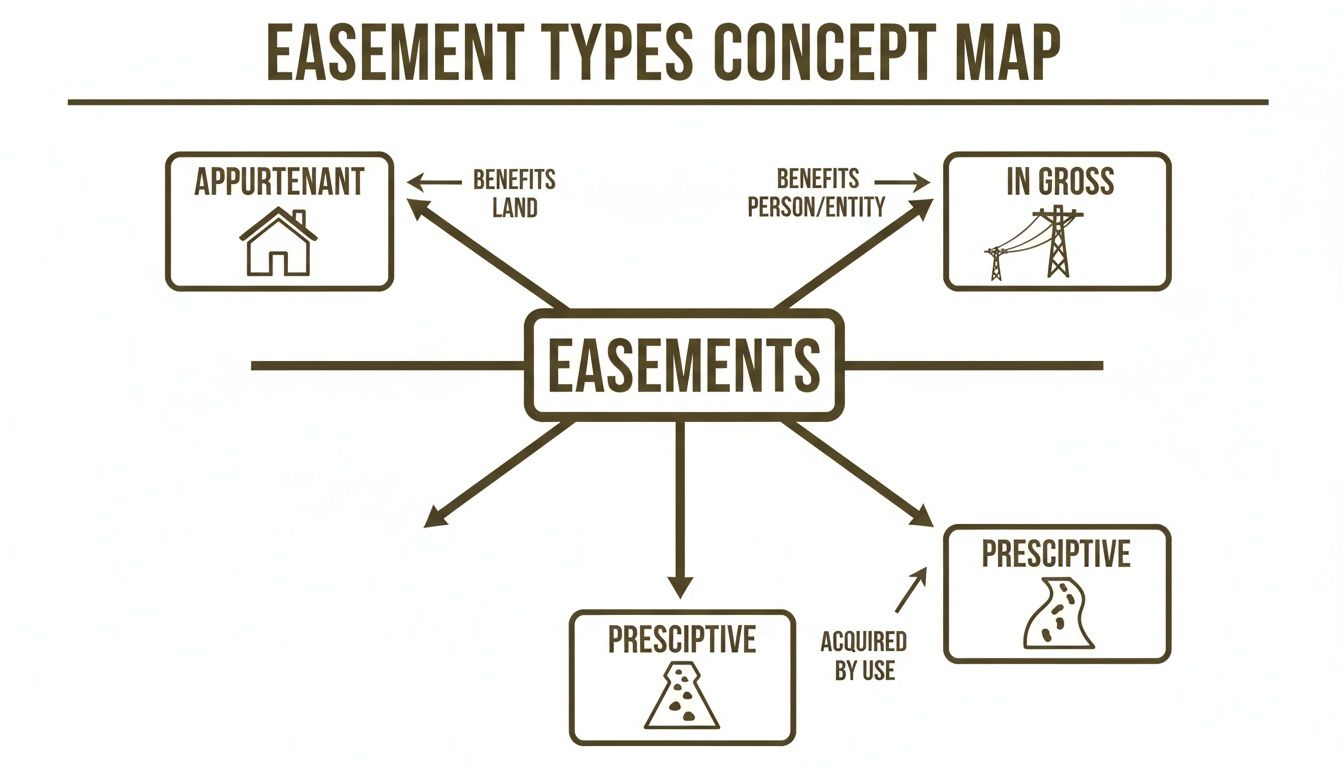
It helps clarify whether an easement is tied to a neighboring property (Appurtenant), a company like a power utility (In Gross), or one that was established through years of unchallenged use (Prescriptive).
Another beneficial type is a conservation easement, which is often found on the rural and recreational land sold by companies like Dollar Land Store.
A conservation easement is a voluntary legal agreement that permanently limits how a property can be used to protect its natural features. While it restricts development, it can offer the owner tax benefits and ensures the land’s scenic beauty remains intact.
For buyers who value untouched nature over development potential, a property with a conservation easement can be an ideal fit. It is a critical piece of the puzzle to consider when you are figuring out what to look for when buying land.
The main takeaway is that no two easements are alike. Each one must be examined closely to understand the rights it grants and the limitations it creates, helping you decide if a property truly aligns with your vision.
A Due Diligence Checklist for Finding Easements
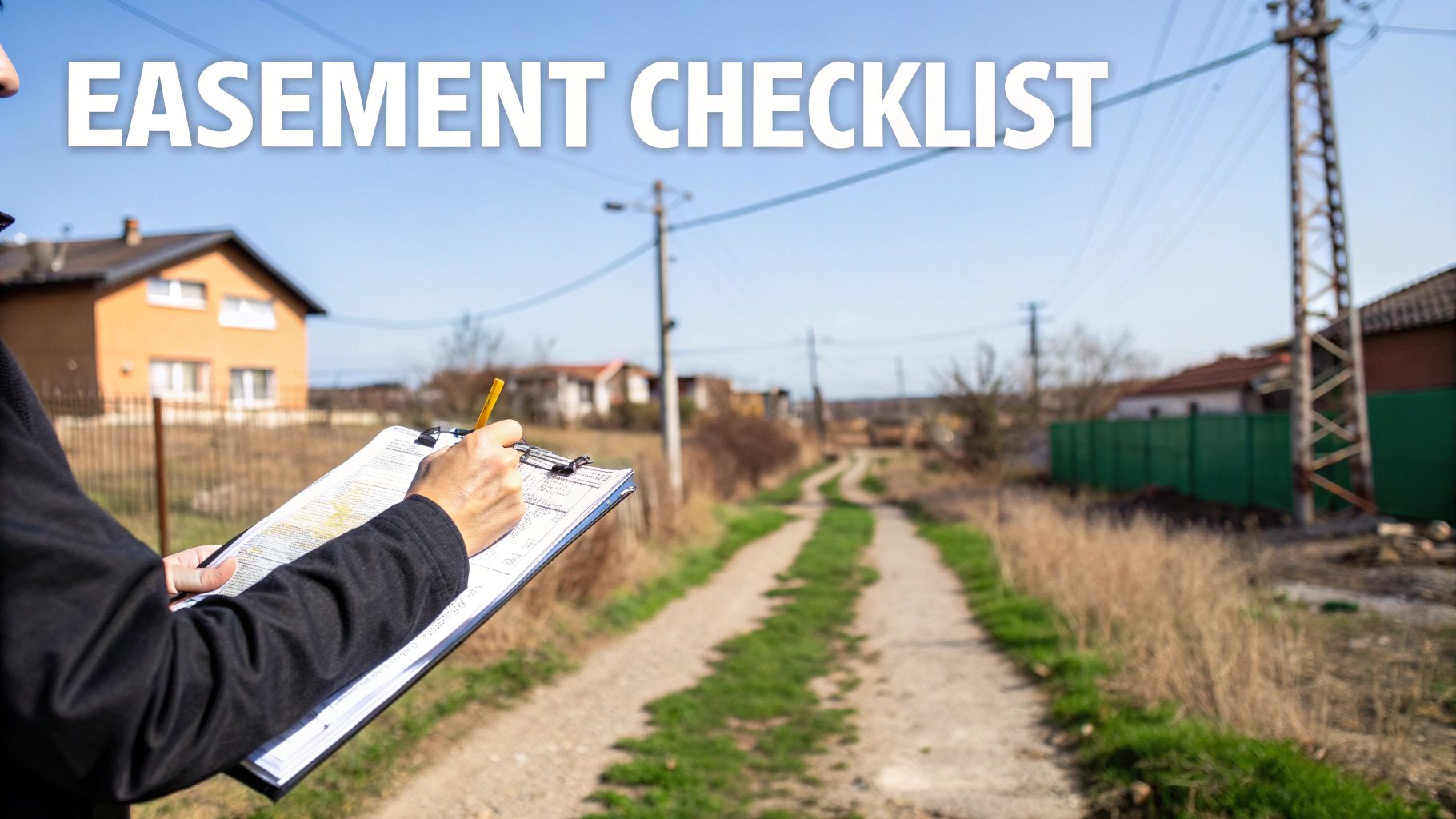
Surprises are the last thing any land buyer wants. Uncovering easements before you commit to a purchase is one of the most important parts of your research, a process known as due diligence. This checklist provides a clear, step-by-step plan to find any recorded or unrecorded easements on a property you are considering.
1. Start with the Paper Trail
The first place to look for recorded easements is in official documents. These legal records are filed with the county and offer the most reliable evidence of property rights and limitations.
Your document review should include:
- The Title Report: This is your most important tool. A preliminary title report from a title company searches public records for any issues tied to the property, including easements and liens. Read every exception listed, as this is where easements will appear.
- The Property Deed: The current deed, and often previous ones, will mention any easements that burden or benefit the land. Look for language that grants rights to others.
- County Recorder’s Office: This is the official repository for all property records. You can visit in person or search online for deeds, plat maps, and other recorded documents related to the parcel.
2. Get a Professional Land Survey
While paperwork is essential, a professional land survey shows the on-the-ground reality. It is one of the smartest investments a land buyer can make.
A surveyor not only marks your property lines but also physically locates and maps any recorded easements, such as a utility right-of-way or an access road. You can learn more in our guide on how to read property survey maps.
A survey can also uncover signs of unrecorded prescriptive easements that would never appear in a title search. This physical check is your best defense against unexpected claims.
3. Be a Property Detective
Not every easement is neatly filed at the courthouse. Some, like prescriptive easements, are created through use, not paperwork. This means you need to look for physical clues when you visit the property.
Explore the entire parcel and keep an eye out for:
- Worn paths or tire tracks suggesting others are cutting across the land.
- Overhead power or telephone lines that indicate a utility easement.
- Manholes, hydrants, or small utility boxes hinting at underground lines.
- Fences or other structures that appear to be encroaching from a neighboring lot.
Always remember that laws and recording practices vary by county. Buyers must verify all information directly with local authorities to ensure accuracy.
What This Means for Buyers
For a first-time land buyer, an easement isn’t just a line on a map—it’s a real-world factor that shapes what you can and can’t do with your property.
The most important thing to remember is that easements are a normal part of land ownership, not an automatic reason to walk away from a deal. A smart buyer doesn’t fear an easement; they investigate it to ensure it aligns with their plans. Think of it like the rules of the road for your property. An access easement might make a beautiful, remote lot usable, while a utility easement could dictate where you can or cannot build. Your goal is to know these rules inside and out before you sign any contract.
The real red flag isn't the easement itself—it's the unknowns. A well-documented easement is a known factor you can plan for. A vague, unwritten agreement is a risk that requires much more investigation. Our guide on what to ask when buying land can help you formulate the right questions for the seller and county officials.
Why Consider Dollar Land Store?
At Dollar Land Store, we believe buying land should be accessible and transparent. Our business is built on selling affordable raw land with a straightforward purchase process, which is especially helpful for first-time buyers.
We focus on transparency by providing all the information we have about a property in our listings. However, we always encourage buyers to conduct their own due diligence. The ultimate source of truth for easements, zoning, and land use rules is always the local county, and we want you to feel confident by verifying those details yourself.
Our simple seller-financing process, with no credit checks and low monthly payments, removes common barriers to land ownership. We are not agents or brokers, which means you avoid middlemen and commissions. We handle the paperwork for a fast contract setup, allowing you to focus your energy on what matters most: researching the property to ensure it’s the right fit for your vision.
Buyer Guidance and Next Steps
Knowledge is power, especially when you’re buying land. Now that you have a solid handle on what a property easement is, you can move forward with much more confidence. The next step is to put that knowledge into action.
Start browsing land listings with your new, informed perspective. As you explore different parcels, you’ll be able to spot potential red flags and ask smarter questions from the start.
Your action plan should always include these core steps:
- Review All Documents: Scrutinize the title report, deed, and any available surveys for specific mentions of easements.
- Walk the Property: Visit the land to look for physical signs of use, such as worn paths, old fence lines, or utility markers.
- Verify with the County: The local recorder's or clerk's office is the ultimate authority. Always contact them to confirm records for the specific parcel you’re interested in.
As you get closer to a deal, you may find it helpful to utilize an AI Contract Generator to assist with understanding the various agreements involved in a land purchase.
This proactive research is the final, essential step in your land ownership journey. It’s what turns a hopeful buyer into a confident owner.
Conclusion
Understanding property easements is not about memorizing legal definitions; it's about knowing how to protect your investment. By learning to identify different types of easements and performing thorough due diligence, you can avoid costly surprises and ensure the land you buy meets your expectations. An easement can be a benefit, a restriction, or simply a neutral fact about a property. The key is to uncover the details early, ask the right questions, and verify everything with local authorities. With this approach, you can navigate the land buying process with confidence and find a property that truly works for you.
Browse available land at DollarLandStore.com.