


How to Start Homesteading with No Money: A Practical Guide
Ross AmatoStarting a homestead with no money isn't about buying a ready-made farm; it's about building one from the ground up by shifting your mindset from buying to building. The process hinges on creative land acquisition, using reclaimed materials for shelter, and becoming resourceful with food and water. This journey is less about having significant savings and more about executing a solid, practical plan.
The Reality of Starting a Homestead Without Savings
The dream of owning a homestead can feel distant when your bank account is low, but it's a common hurdle that can be cleared with a good strategy. The modern approach to starting a homestead with no money is not about saving for a massive down payment. It's about building a self-sufficient life incrementally, starting with the most critical asset: land.
Forget the myth that you need a large bank loan. Success comes from swapping capital for creativity and hard work. This guide will walk you through how accessible financing, clever building techniques, and sustainable practices can make this lifestyle an achievable reality.
Homesteading With and Without Capital at a Glance
To understand the difference, it helps to compare the no-money approach with the traditional path. This table breaks down the core components, showing where strategy and sweat equity replace a large budget.
| Homesteading Pillar | Traditional High-Cost Approach | No-Money Strategic Approach |
|---|---|---|
| Land Acquisition | Large down payment, bank mortgage, high monthly payments. | Seller financing, land leases, work-for-equity, low down payments. |
| Shelter | New construction, professional contractors, expensive materials. | RV/tiny home, reclaimed/salvaged materials, bartering for labor. |
| Food & Water | Installing a well immediately, buying livestock and equipment. | Rainwater catchment, foraging, seed saving, starting small. |
| Income | Relying on savings, seeking large-scale agricultural loans. | Remote work, micro-enterprises (eggs, produce), bartering skills. |
As you can see, the "no-money" route is really the "low-money, high-resourcefulness" route. It's about being smart with every step.
The Core Pillars of a No-Money Homestead
To avoid feeling overwhelmed, it helps to break the journey into a few key areas. Each one tackles a fundamental need and offers a low-cost way to meet it.
- Creative Land Acquisition: This is about looking beyond traditional mortgages. Options include seller financing, leasing a parcel, or even trading labor for a piece of land.
- Low-Cost Shelter: Your first home on the land needs to be immediate, legal, and affordable. An old RV or a tiny cabin built with salvaged wood are practical starting points. You can learn more in our guide on off-grid living for beginners.
- Sustainable Food and Water: Establish your systems from day one. Rainwater catchment barrels and a small, high-yield garden will immediately cut living costs and reduce dependence on outside resources.
Recent trends in the land market can work in your favor. While rural land prices have increased, they often remain more affordable than urban or suburban properties, creating an opportunity for aspiring homesteaders.
A successful homestead is measured not by the money invested, but by the self-sufficiency gained. The ability to provide for yourself with skills, labor, and knowledge is the ultimate return on investment.
To get into the right frame of mind, you might try a practical no spending challenge that actually works. It’s excellent training for building a self-reliant life on a lean budget.
Securing Land Without a Bank Loan
The dream of homesteading always starts with the land. For many, the traditional path—saving up a huge down payment and applying for a bank mortgage—is not feasible. The good news is, you don’t need a bank. There are several practical ways to acquire a piece of property without involving conventional lenders.
This flowchart lays out the two main routes you can take, depending on your financial starting point.
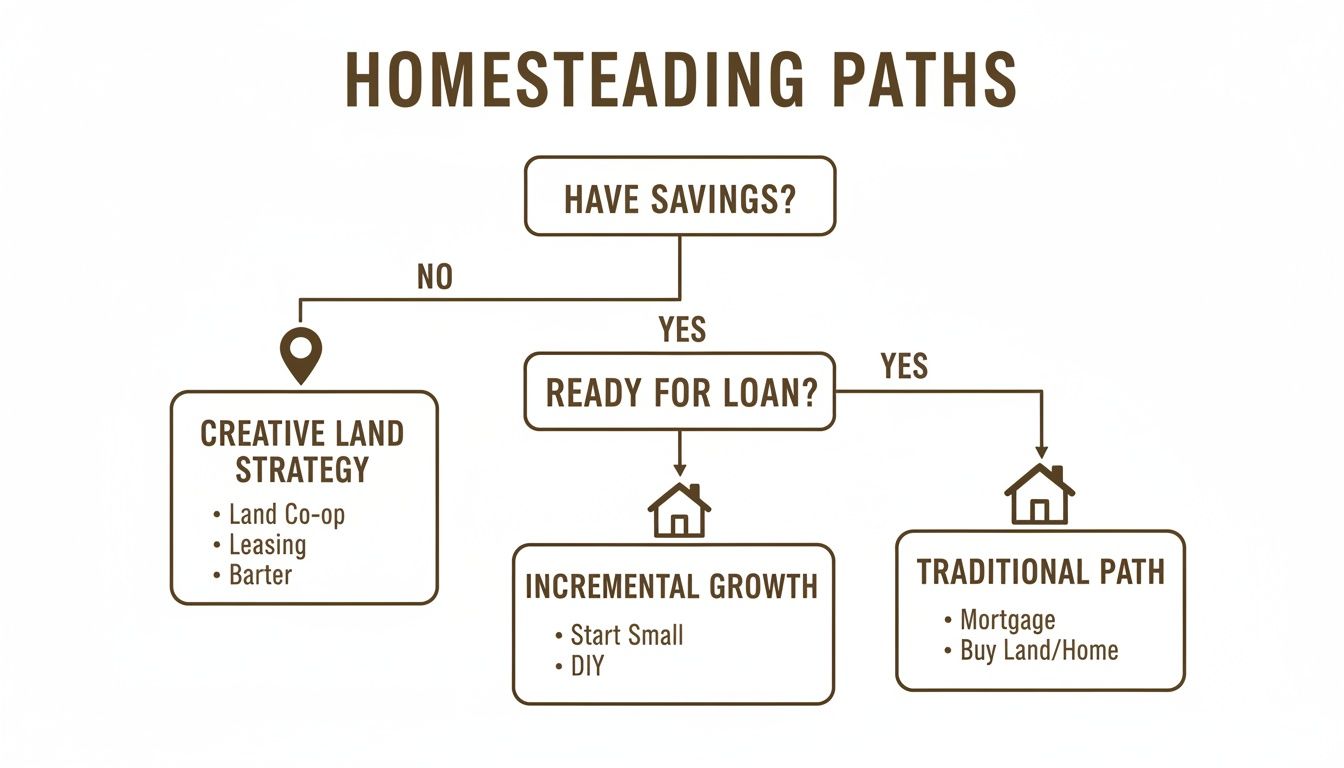
As you can see, having no savings doesn't mean the dream is over. It just means it's time to get creative.
Understanding Seller Financing
For many people, the most straightforward path is seller financing, sometimes called owner financing. In this arrangement, the person or company selling the land also provides the financing. You make your payments directly to the seller over time, instead of paying a lump sum upfront.
This approach is a game-changer for anyone figuring out how to start a homestead with no money because it eliminates significant red tape.
Seller financing often features:
- No credit checks. Your credit history is typically not a factor in the approval process.
- Low down payments. Some properties may be available with a very small down payment plus a standard document fee.
- Manageable monthly payments. Terms can be structured to make land payments affordable and predictable.
This method can make acquiring land a more straightforward process. You can learn more about the details in our guide on what seller financing is in real estate.
Exploring Other Creative Land Acquisition Methods
While seller financing is a powerful tool, it’s not your only option. Depending on your skills and circumstances, other strategies can help you get on your own piece of land.
Land Leasing
Leasing is a fantastic way to start without a long-term commitment. A land lease lets you use a property for a set period in exchange for rent. It’s an ideal way to build your skills, save money, and determine if the lifestyle is right for you before purchasing.
If you choose this route, look for a long-term lease (e.g., five years or more) that permits your intended activities, such as planting gardens, raising animals, and placing temporary structures. Always get the terms in writing.
Work-for-Equity and Caretaking
If you have more time and skill than cash, a work-for-equity or caretaking arrangement could be your solution. This involves trading your labor for a place to live and land to work. You might find opportunities managing a larger property for an absentee owner or restoring a neglected farm.
These arrangements are often found through word-of-mouth or community forums. The key is a clear, written agreement that outlines expectations, how your "equity" is earned, and the timeline.
Comparing Low-Cost Land Acquisition Methods
A detailed comparison of the most viable methods for securing homesteading land with little to no upfront capital can help you choose the best path.
| Method | Upfront Cost | Pros | Cons | Best For |
|---|---|---|---|---|
| Seller Financing | Very Low | No credit checks, immediate ownership, predictable payments. | Interest rates may be higher than banks; inventory is specific to the seller. | Aspiring homesteaders with little savings but steady income. |
| Land Leasing | Low (First/Last Rent) | Low risk, tests commitment, less responsibility for land taxes. | No equity, temporary, restrictions on land use. | Beginners testing the lifestyle or saving for a down payment. |
| Work-for-Equity | None to Low | No cash needed, builds skills, potential for future ownership. | Requires a clear legal agreement; can be unstable. | Skilled individuals with experience in farming or land management. |
| Caretaking | None | Free housing and land access in exchange for labor. | Often no path to ownership; duties can be demanding. | People seeking experience without the financial burden of ownership. |
The Non-Negotiable Step: Due Diligence
No matter how you acquire land, this step is critical. Do your own research. Before you sign any agreement, you must verify all information with local county authorities.
- Zoning & Land Use: Call the county planning and zoning department. Can you legally live there? Are chickens allowed? Can you park an RV or build a tiny home? Never take anyone's word for it; verify independently.
- Access: Review a map, then visit the property. Is there legal and physical access to your land? A path that looks like a road may not grant you legal right-of-way.
- Water: Water is the lifeblood of your homestead. What are the local regulations for drilling a well or collecting rainwater? In some areas, water rights are a complex and critical issue.
Acquiring land without a bank loan is not just possible; it's a common starting point for many homesteaders. Your resourcefulness is the key that unlocks the dream.
Building Your First Shelter for Almost Nothing
Once you have land, the next hurdle is a safe, dry place to live. Don't focus on building a traditional house immediately—that’s a long-term goal, not a day-one necessity. When starting a homestead with limited funds, the focus is on speed, practicality, and minimizing costs.
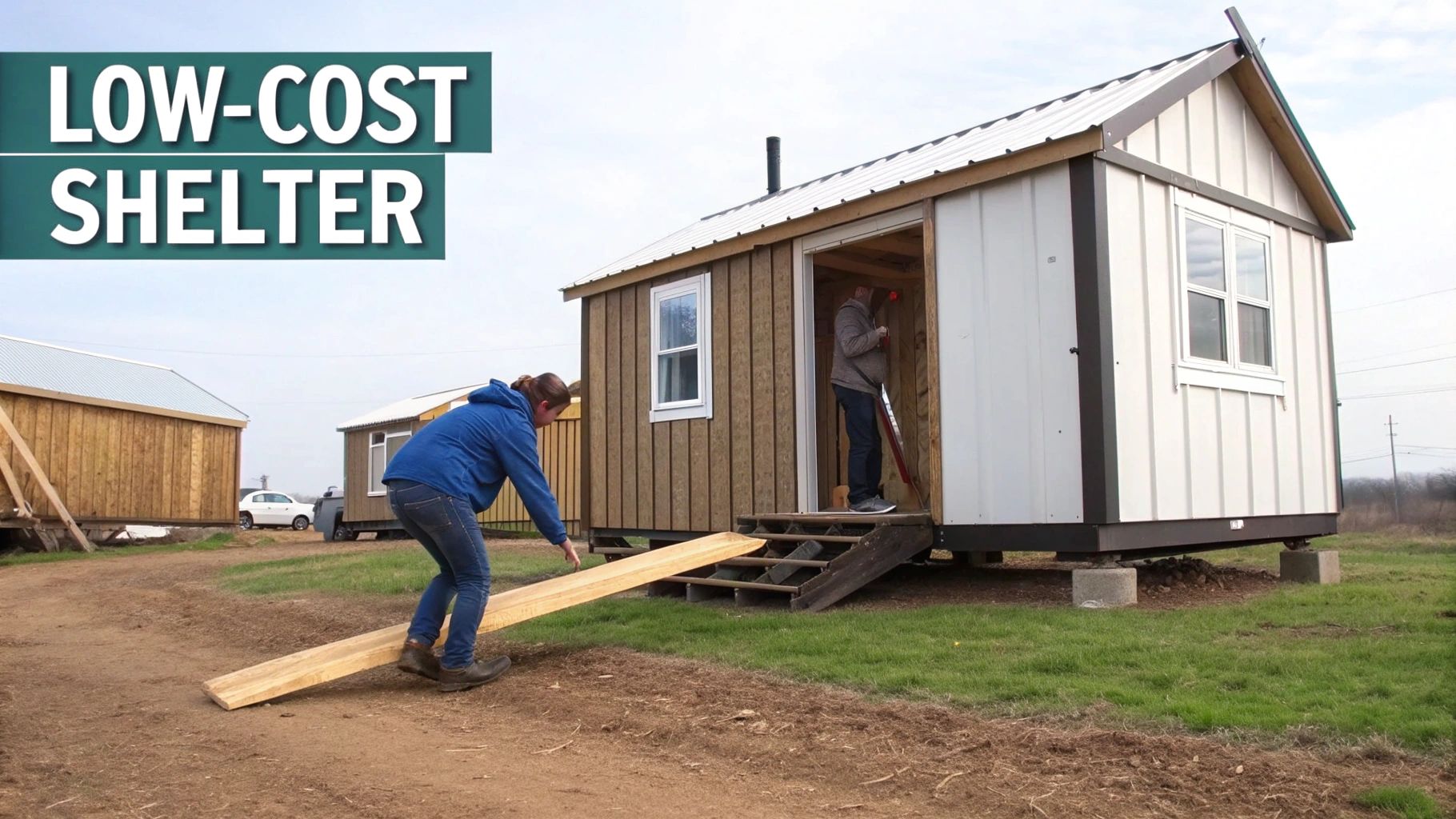
Your first home on the land might have wheels. Before moving anything onto your property, you must understand local regulations. Every county has its own rules for temporary or mobile structures, and a call to the planning and zoning department is the most important first step.
Temporary Structures and County Rules
Living in an RV, a yurt, or a tiny home on wheels can be a fantastic way to get started. It's affordable and allows you to live on-site while you build. However, the rules can vary dramatically from one county to the next.
Some jurisdictions may allow you to live in an RV for 180 days a year with few requirements. Others may require a septic system to be installed before you can stay for an extended period. When you call the county office, ask specific questions:
- What are the regulations for living in an RV on private land?
- Do I need a permit for a temporary structure like a yurt or a shed?
- Does it matter if the structure is on wheels versus a permanent foundation?
Getting these answers directly from the source will save you from significant headaches and ensure your homesteading adventure starts on the right side of the law.
Building with Reclaimed and Natural Materials
Your best construction tool isn't a large budget; it's creativity. The land around you and materials that others discard can become your new hardware store. This mindset drastically cuts costs.
Consider structures you can build from:
- Salvaged Lumber: Look for demolition sites, browse online marketplaces, and never underestimate the utility of free shipping pallets.
- Cob or Earthbags: You can build incredibly durable, well-insulated walls for next to nothing using the clay, sand, and straw from your own property.
- Reclaimed Materials: People renovating their homes often give away old windows, doors, and metal roofing. Check local classifieds to find free materials.
The best shelter is one built from materials that were headed for the landfill. Your first home can be a powerful statement of resourcefulness, proving comfort doesn't come with a big price tag.
The goal is a safe, livable space. It doesn’t have to be perfect or your forever home. This first shelter is your base camp, where you'll live while slowly and thoughtfully building something more permanent.
The Power of Bartering for Labor and Supplies
Money is just one form of currency. Your skills and time are also valuable, especially in a rural community. Bartering is a traditional homesteading skill that can get your shelter built without using your cash.
First, take an inventory of what you can offer. Are you skilled in web design, writing, or small engine repair? Can you offer childcare or run errands for a neighbor?
For example, you could trade your expertise in building a simple business website for 20 hours of a local carpenter's time to help frame your cabin. Or you could offer to write promotional flyers for a local farm stand in exchange for a pile of old barn wood.
This practice isn’t just about saving money. It builds genuine community ties and helps you get your shelter built with the skills you already possess.
Securing Your Food and Water on a Shoestring Budget
Food and water are the absolute foundation of a homestead. Get these two elements right, and you're well on your way. You don't need a large budget to make it happen. With a little ingenuity, you can set up systems that reduce your living costs from the very first season.
Simple Rainwater Catchment and Filtration
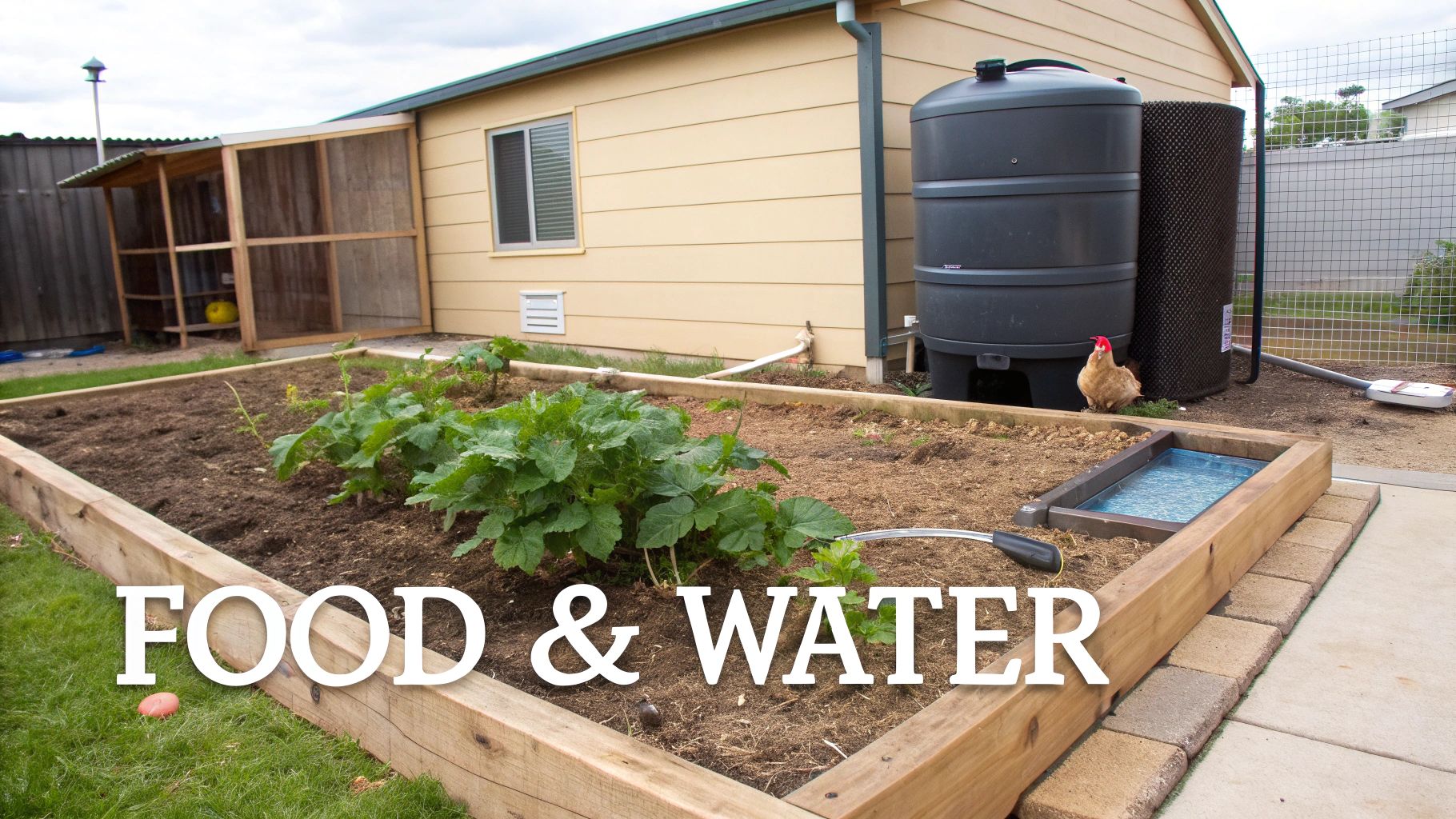
Before considering the expense of drilling a well, look up. A rainwater catchment system is the fastest and cheapest way to get a reliable water source for your garden, animals, and—with proper filtration—for your personal use.
You can set up a basic system for almost nothing. All it takes is a roof (a shed or even a temporary tarp shelter will work), some gutters to channel the water, and a food-grade barrel for storage. Look for used barrels from food processing plants or check local online marketplaces—they’re often free or very cheap.
For drinking water, filtration is essential. Here are a few low-cost methods:
- Multi-Stage Filtration: This sounds complex but is simple to build. You can create a gravity-fed filter with a few buckets. The top bucket is layered with gravel, sand, and charcoal to remove contaminants, allowing cleaner water to drip into a storage bucket below.
- Boiling: It’s a time-tested method for a reason. Boiling filtered water for at least one minute is a reliable way to kill pathogens.
- Solar Water Disinfection (SODIS): In a pinch, you can fill clear plastic bottles with water and leave them in full sun for at least six hours. The UV rays are effective at killing most microorganisms.
These methods are ideal for getting started. Down the road, you may want a more permanent source. When you're ready, it helps to understand the price of drilling a water well.
Building Soil and Finding Seeds for Free
A great garden requires great soil, but you don't have to buy it. Permaculture techniques like sheet mulching (or "lasagna gardening") are game-changers. Simply layer organic materials—cardboard, newspaper, grass clippings, wood chips—directly on the ground. This smothers weeds and decomposes into rich soil over time.
Once your garden beds are prepped, it's time for seeds. Forget expensive seed catalogs.
- Seed Libraries: Check your local public library. Many have programs where you can get seeds for free. The idea is to return seeds from your own harvest at the end of the season.
- Seed Swaps: Find local gardening groups or attend community events. Gardeners often have extra seeds and are happy to trade.
- Saving Seeds: This is an easy-to-learn traditional skill. You can save seeds from produce like tomatoes, peppers, and squash.
A single potato can yield pounds of food, and a handful of saved bean seeds can feed you for a season. Your first garden isn't about growing exotic crops; it’s about calories and reliability.
Focus on crops that provide the most nutritional value for your effort, like potatoes, winter squash, beans, and hardy greens like kale.
Foraging and Finding Low-Cost Protein
Your land is more than just a garden plot. Learning to safely forage for wild edibles is an excellent way to supplement your diet for free. Get a good field guide for your region and start small. Learn to identify one or two common plants, like dandelions or plantain, with absolute certainty. Never eat anything you cannot identify with 100% confidence.
For a steady source of protein, start with small, low-cost livestock. Chickens are a classic choice for eggs and meat, and rabbits are known for reproducing quickly in a small space. You can often feed them with garden scraps and foraged greens, which keeps costs down and turns "waste" into valuable protein.
Making a Living from Your New Homestead
A homestead that cannot support itself financially is not truly self-sufficient. Eventually, you will need to generate cash flow, but you don’t need a large investment to get started. The goal is to lean into practical, low-cost income streams that fit a rural lifestyle, turning your skills and land into reliable income.
Your property is more than just a place to live—it's a launchpad for small ventures. Even a modest parcel of land has earning potential, which is key to ensuring your homestead is sustainable.
Start With What You Already Know
The fastest way to generate income is to use the skills you already possess. Many jobs can now be done remotely, making online work a homesteader's best friend. If you have a background in web design, writing, virtual assistance, or digital marketing, a reliable internet connection is all you need to maintain a steady income.
This strategy provides immediate financial stability, helping cover land payments and other bills while you get your land-based projects established.
Launching Small-Scale, Land-Based Businesses
Once you are more settled, the land itself becomes your primary asset for generating income. These micro-enterprises do not require much capital to start and can grow with your homestead.
- Market Gardening: Even a small, well-managed garden can produce a surplus of high-demand produce like salad greens, heirloom garlic, or specialty herbs. Selling at a local farmers' market or starting a small Community Supported Agriculture (CSA) program connects you directly with customers.
- Selling Eggs and Poultry: A small flock of chickens is a classic homestead business for a reason. Fresh, free-range eggs are always in demand and can provide a consistent stream of cash.
- Handmade Goods: Use materials from your land to create products. You could craft simple wood items, make soaps and salves with garden herbs, or sell jams and preserves from your harvest surplus.
Your first homestead business doesn't need to be complicated. Find a simple need in your local community—like fresh eggs or reliable firewood—and fill it. Profitability often follows practicality.
These ventures do more than just bring in money; they connect you to your community and deepen your relationship with your land. To explore more ideas, see our guide on how to make money with vacant land.
Lean Into the Barter Economy
Never underestimate the power of a good trade. In many rural areas, skills and goods are as valuable as cash. Bartering allows you to get things you need—from building supplies to help with a repair—without spending money.
Identify what you can offer. Can you trade a dozen eggs for a bag of animal feed? Or offer a few hours of computer help in exchange for someone mending a fence? This informal economy builds strong community ties and makes your resources stretch further.
What This Means for First-Time Land Buyers
If you want to start a homestead but lack significant savings, the dream is not out of reach—it simply requires a smarter plan. The entire journey begins with acquiring that first piece of land. That is the true starting line.
The traditional real estate model, which often demands a 20% down payment and a high credit score, can feel like an insurmountable barrier. However, non-traditional paths like seller financing change the entire equation. This approach removes banks from the process, meaning you don't need their approval or a large sum of cash upfront. If you have a steady source of income, land ownership can become an achievable goal.
The real takeaway for a first-time buyer is this: Your drive and willingness to get your hands dirty are worth more than your bank balance. Finding the right financing is the key that unlocks the door.
This path requires hard work, a commitment to learning new skills, and resilience. But it is a proven and accessible way to acquire your own slice of land. It’s for anyone who feels excluded by the conventional system but is ready to take the first step toward a more self-sufficient life.
Why Consider Dollar Land Store?
For anyone dreaming of a homestead but facing a tight budget, the biggest obstacle is often acquiring land. Dollar Land Store was founded to make that crucial first step—owning your own piece of ground—a reality.
Our approach centers on making raw, affordable land accessible through straightforward seller financing. This creates a direct path to ownership for people who are ready to begin their journey, without the complexities of bank loans.
We designed our process with first-time buyers in mind, particularly those who find the traditional real estate market inaccessible. The process is simple:
- No credit checks. Your past financial history does not prevent you from buying land with us.
- Low down payments. Getting started is affordable, often requiring a minimal down payment plus a standard document fee.
- A transparent process. You see all terms upfront, with no real estate agents or hidden commissions.
- A simple, fast contract setup. We handle the paperwork efficiently so you can focus on your land.
Our role is to simplify the transaction so you can invest your energy and resources into building your homestead, not navigating a complicated buying process. We provide a clear path to get the land you need so you can move forward with your dream.
Buyer Guidance / Next Steps
We've outlined the roadmap. Starting a homestead with little money is not a fantasy—it’s a practical path built on resourcefulness and a willingness to do things differently. The entire journey begins with a single decision.
The most powerful thing you can do now is to stop dreaming and start looking. Exploring what is actually for sale transforms the abstract idea of "land" into a tangible goal.
Turning "Someday" into "Soon"
Browsing real land listings gives you a solid feel for prices, locations, and the types of properties that are genuinely within reach. It grounds your budget in reality and makes the process feel more manageable. This is the moment "someday" starts to look more like "soon."
Once you see what's possible, you can zero in on what makes sense for you. Here’s how to maintain momentum:
- Learn About Financing: Dig into how seller financing works. Understanding the terms and payment structures will give you the confidence to act when you find the right property.
- Ask Questions: Never hesitate to ask for more information. A clear understanding is your best tool. Inquire about property access, zoning, and any potential restrictions. Always verify this information independently with the county.
- Take Stock of Your Resources: Revisit the list of your personal skills, potential income streams, and the low-cost strategies we discussed. See how your resources align with the properties you're considering.
The path is laid out. Your vision of a self-sufficient life is waiting to become your reality, and it all starts today with the simple act of looking at the land that's available.
Conclusion
Starting a homestead with no money is a journey of resourcefulness, not riches. Success is defined by practical skills, strategic planning, and a commitment to building a self-sufficient life from the ground up. By focusing on creative land acquisition through methods like seller financing, embracing low-cost shelter solutions, and developing sustainable food and water systems, the dream of owning land is within reach for anyone, regardless of their savings. The most important step is the first one: deciding to begin. With determination and a clear plan, you can turn your homesteading vision into a tangible reality.
Explore seller-financed land options through Dollar Land Store.